Year: 2016

Layered Post-Transition-Metal Dichalcogenides (X-M-M-X) and Their Properties

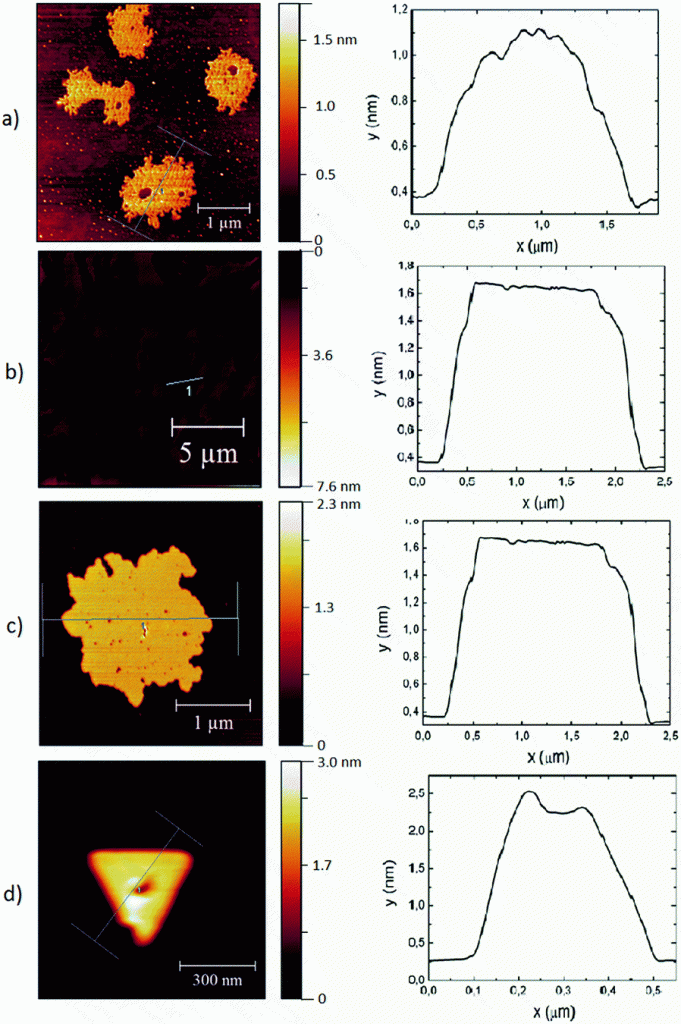
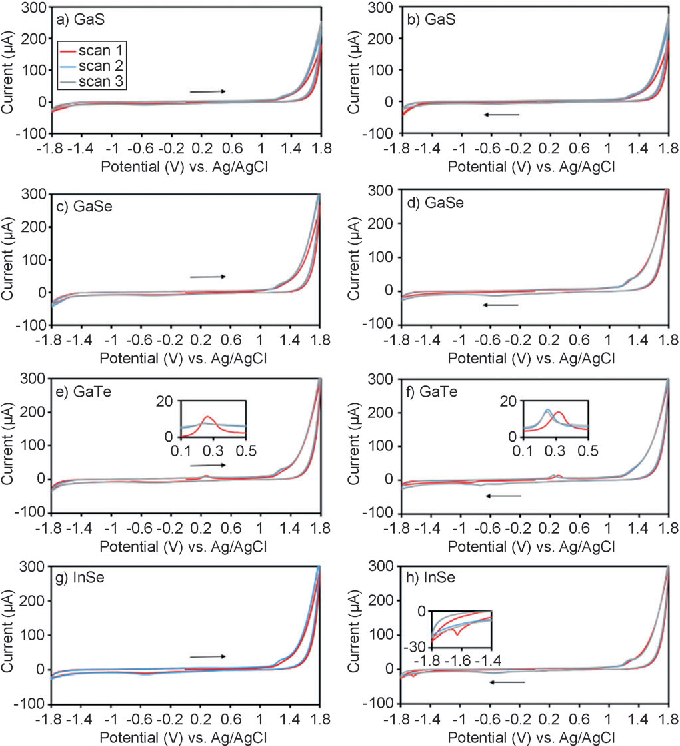
A(III)B(VI) chalcogenides are an interesting group of layered semiconductors with several attractive properties, such as tunable band gaps and the formation of solid solutions. Unlike the typically sandwiched structure of transitionmetal dichalcogenides, A(III)B(VI) layered chalcogenides with hexagonal symmetry are stacked through the X-M-M-X motif, in which M is gallium and indium, and X is sulfur, …

Layered Post-Transition-Metal Dichalcogenides (X-M-M-X) and Their Properties Read More »
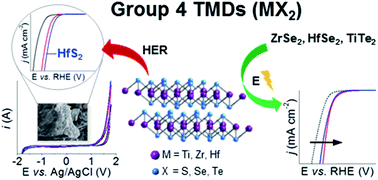
Catalytic properties of group 4 transition metal dichalcogenides (MX2; M = Ti, Zr, Hf; X = S, Se, Te)

Interest in layered transition metal dichalcogenides (TMDs) has proliferated due to their properties, making them promising materials for electrochemical applications. Despite this, almost exclusive attention has been placed on group 6 TMDs. Hitherto, there has been a lack of understanding of the electrochemical behaviour of group 4 TMDs, which could serve as promising materials for …

Catalytic properties of group 4 transition metal dichalcogenides (MX2; M = Ti, Zr, Hf; X = S, Se, Te) Read More »

MoSe2 Nanolabels for Electrochemical Immunoassays

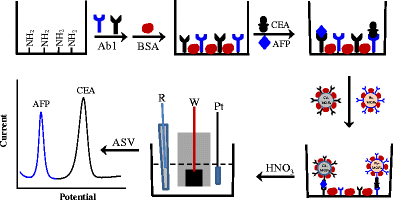
There is huge interest in biosensors as a result of the demand for personalized medicine. In biomolecular detection, transition-metal dichalcogenides (TMDs) can be used as signal-enhancing elements. Herein, we utilize a solution-based electrochemical exfoliation technique with bipolar electrodes to manufacture MoSe2 nanolabels for biomolecular detection. Prepared MoSe2 nanoparticles (NPs) exhibit electrocatalytic activity toward the hydrogen …

MoSe2 Nanolabels for Electrochemical Immunoassays Read More »

Lithium Exfoliated Vanadium Dichalcogenides (VS2, VSe2, VTe2) Exhibit Dramatically Different Properties from Their Bulk Counterparts

Ultrathin 2D transition metal dichalcogenides (TMDs) have attracted widespread attention due to their excellent electrical, optical, and electrochemical properties. Ultrathin vanadium disulfide is a metallic member of two dimensional materials aside graphene which does not possess a bandgap in the electronic structure. Research on vanadium disulfide reveals its versatile application, such as supercapacitor, battery material, …

Lithium Exfoliated Vanadium Dichalcogenides (VS2, VSe2, VTe2) Exhibit Dramatically Different Properties from Their Bulk Counterparts Read More »

Simple Synthesis of Fluorinated Graphene: Thermal Exfoliation of Fluorographite

Fluorinated graphene can be prepared directly by thermal exfoliation of fluorographite. The exfoliation was performed in a dynamic nitrogen atmosphere at various temperatures and the exfoliation products were analysed in detail by GC-MS. The structure and properties of all prepared fluorinated graphenes with various contents of fluorine were characterized by a number of analytical techniques. …

Simple Synthesis of Fluorinated Graphene: Thermal Exfoliation of Fluorographite Read More »

Exfoliation of Layered Topological Insulators Bi2Se3 and Bi2Te3 via Electrochemistry

Among layered materials, topological insulators such as Bi2Se3 and Bi2Te3 are lately attracting much attention due to particular electronic properties and, especially with Bi2Te3, excellent thermoelectric properties. Methods of preparation of few-layered nanosheets of Bi2Se3 and Bi2Te3 range from the bottom-up chemical vapor deposition or hydrothermal synthesis from oxide precursors to the top-down mechanical exfoliation …

Exfoliation of Layered Topological Insulators Bi2Se3 and Bi2Te3 via Electrochemistry Read More »

Electrochemical catalysis at low dimensional carbons: Graphene, carbon nanotubes and beyond – A review

Nanocarbons, such as graphene, carbon nanotubes and other carbon nanomaterials show very interesting and useful electrochemical and electrocatalytic properties. These can be harnessed in various applications, from sensing and biosensing devices to energy storage and generation devices, such as supercapacitors, batteries or catalysts in the fuel cells. Here we review progress made towards understanding the …

Electrochemical catalysis at low dimensional carbons: Graphene, carbon nanotubes and beyond – A review Read More »

Microwave Exfoliation of Graphite Oxides in H2S Plasma for the Synthesis of Sulfur-Doped Graphenes as Oxygen Reduction Catalysts

Tuning the electronic and chemical properties of graphene can be carried out through heteroatomic doping, enabling its use as an electrocatalyst. Sulfur-doped graphene has been suggested to be a viable alternative to traditional Pt-based catalysts for oxygen reduction under alkaline conditions. Herein we present a fast and efficient route to synthesize S-doped graphenes through the …

Microwave Exfoliation of Graphite Oxides in H2S Plasma for the Synthesis of Sulfur-Doped Graphenes as Oxygen Reduction Catalysts Read More »

Graphane Nanostripes

Graphane, the hydrogenated counterpart of graphene, was shown to exhibit properties such as tunable band gaps through varied degrees of hydrogenation, fluorescence, or ferromagnetism. Graphane nanostripe properties have also been theoretically predicted. Herein, we show that graphane nanostripes can be prepared by opening carbon nanotubes using Birch reduction in liquid ammonia utilizing potassium as a …

Graphane Nanostripes Read More »

Impact electrochemistry on screen-printed electrodes for the detection of monodispersed silver nanoparticles of sizes 10-107 nm

Impact electrochemistry provides a useful alternative technique for the detection of silver nanoparticles in solutions. The combined use of impact electrochemistry on screen-printed electrodes (SPEs) for the successful detection of silver nanoparticles provides an avenue for future on-site, point-of-care detection devices to be made for environmental, medicinal and biological uses. Here we discuss the use …

Impact electrochemistry on screen-printed electrodes for the detection of monodispersed silver nanoparticles of sizes 10-107 nm Read More »

Layered SnS versus SnS2: Valence and Structural implications on Electrochemistry and Clean Energy Electrocatalysis

Despite the far-reaching applications of layered Sn chalcogenides to date, their electrochemistry and electrochemical and electrocatalytic properties remain a mystery. The bulk of current research highlights promising uses of layered Sn chalcogenides with limited discourse on the relevance of Sn valency or crystal structures to their properties. We therefore examine the electrochemistry of orthorhombic SnS …

Layered SnS versus SnS2: Valence and Structural implications on Electrochemistry and Clean Energy Electrocatalysis Read More »

Graphene Oxide Sorption Capacity toward Elements over the Whole Periodic Table: A Comparative Study

Water pollution is a worldwide environmental problem. Wastewater from industrial processes, surface and ground waters can all contain various metal ions, such as toxic Hg2+, Pb2+, Cd2+, Cu2+, As3+, Sb3+, Bi3+, and so on. Consequently, efficient methods for removing impurities from such waters are in high demand. Since the large surface area of graphene oxide …

Graphene Oxide Sorption Capacity toward Elements over the Whole Periodic Table: A Comparative Study Read More »

Black Phosphorus Nanoparticle Labels for Immunoassays via Hydrogen Evolution Reaction Mediation

Black phosphorus is an emerging layered material. Its nanoparticles show an increased bandgap when compared to bulk materials and they are typically fabricated by ultrasonication of macroscopic black phosphorus crystals. Here we fabricate black phosphorus nanoparticles (BP NPs) by solution based electrochemical exfoliation with bipolar electrodes, which induces opposite potentials on the opposite ends of …

Black Phosphorus Nanoparticle Labels for Immunoassays via Hydrogen Evolution Reaction Mediation Read More »

Contrasts between Mild and Harsh Oxidation of Carbon Nanotubes in terms of their Properties and Electrochemical Performance

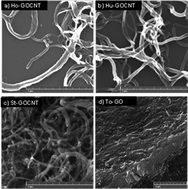
Fundamental studies and electrochemical applications of carbon nanotubes (CNTs) have impacted a wide range of disciplines. A key issue for CNT electrochemistry is to understand how the physical, chemical, and electronic properties of different CNT materials affect their electrochemical performance. We investigate the differences arising from CNTs undergoing mild (H2O2) or harsh (HNO3) oxidation processes. …

Contrasts between Mild and Harsh Oxidation of Carbon Nanotubes in terms of their Properties and Electrochemical Performance Read More »

Phosphorus and Halogen Co-Doped Graphene Materials and their Electrochemistry

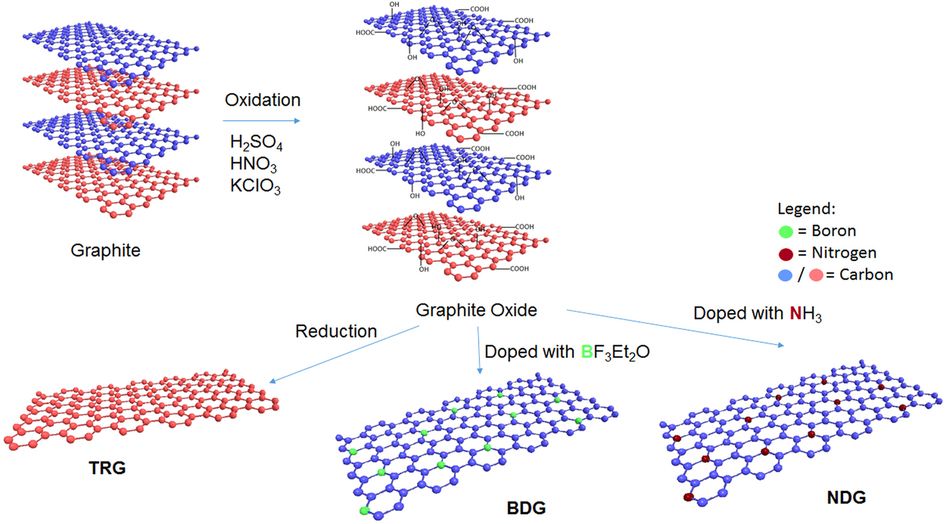
Doping of graphene materials with heteroatoms is important as it can change their electronic and electrochemical properties. Here, graphene is co-doped with n-type dopants such as phosphorus and halogen (Cl, Br, I). Phosphorus and halogen are introduced through the treatment of graphene oxide with PX3 gas (PCl3, PBr3, and PI3). Graphene oxides are prepared through …

Phosphorus and Halogen Co-Doped Graphene Materials and their Electrochemistry Read More »

Motion Control of Micro-/Nanomotors

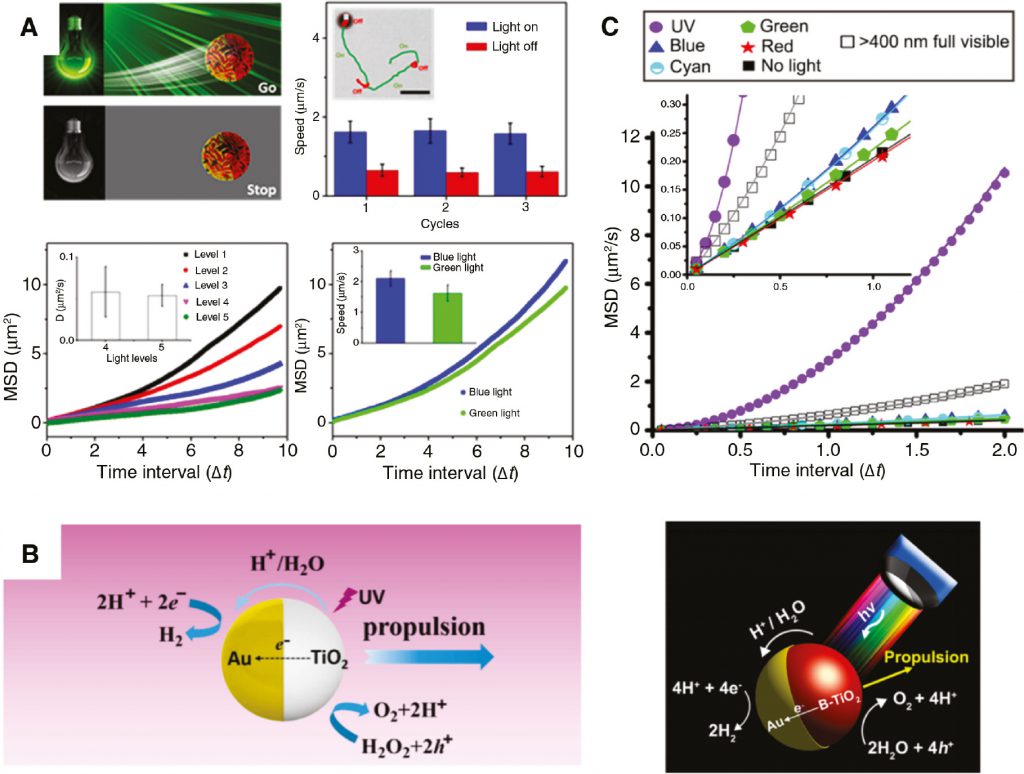
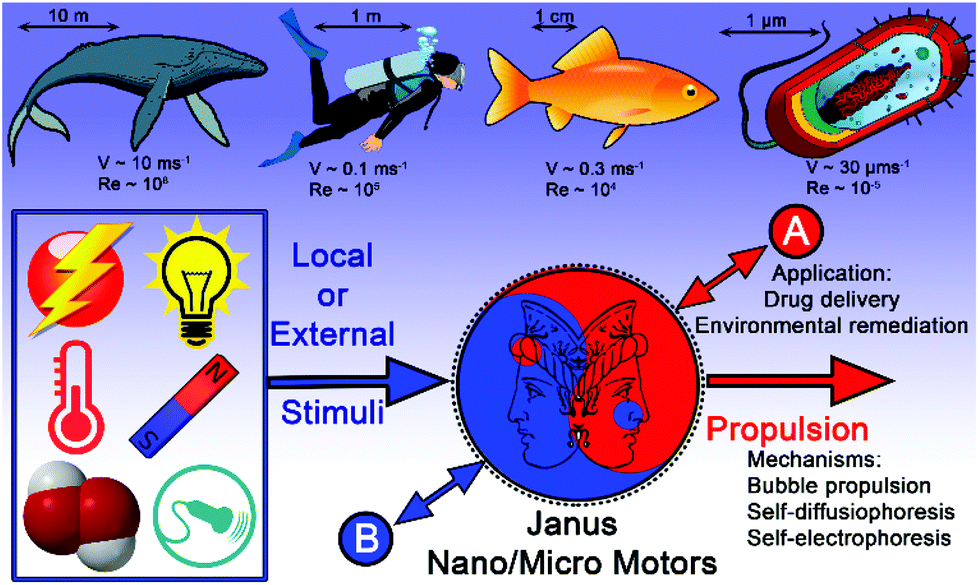
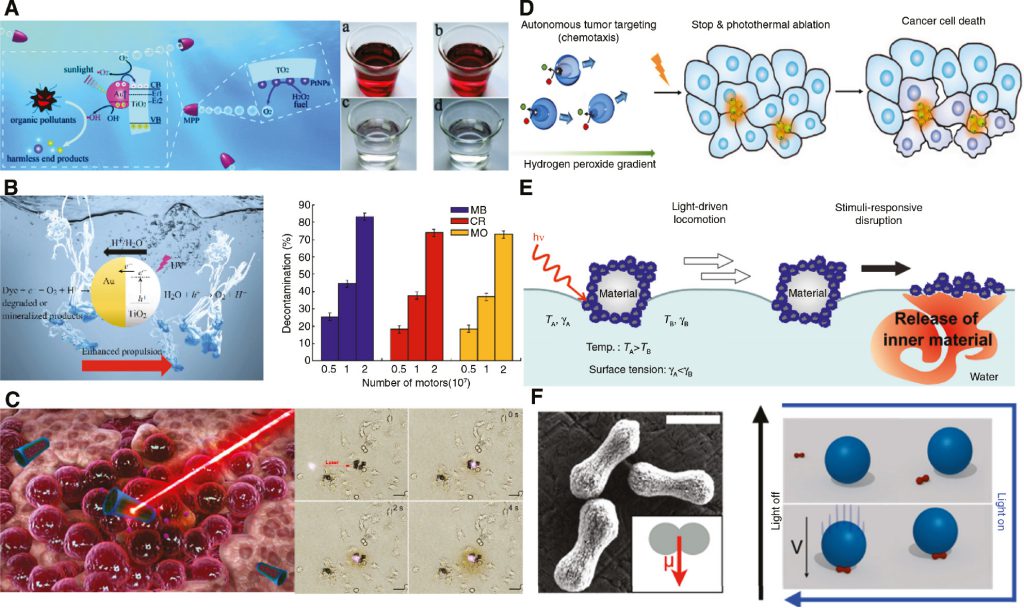
As we progress towards employing self-propelled micro-/nanomotors in envisioned applications such as cargo delivery, environmental remediation, and therapeutic treatments, precise control of the micro-/nanomotors direction and their speed is essential. In this Review, major emerging approaches utilized for the motion control of micro-/nano-motors have been discussed, together with the lastest publications describing these approaches. Future …

Motion Control of Micro-/Nanomotors Read More »

MoS2/WS2-Graphene Composites through Thermal Decomposition of Tetrathiomolybdate/Tetrathiotungstate for Proton/Oxygen Electroreduction

MoS2 and WS2 have been prepared on a conductive graphene support by thermal reduction of tetrathiotungstate/tetrathiomolybdate and graphite oxide. Whereas the catalytic properties towards hydrogen evolution are strongly influenced by the Magneli phases formed as a byproduct during the synthesis, the catalytic activity towards oxygen reduction of these composite materials is not affected by this …

MoS2/WS2-Graphene Composites through Thermal Decomposition of Tetrathiomolybdate/Tetrathiotungstate for Proton/Oxygen Electroreduction Read More »

Synthesis of Graphene Oxide by Oxidation of Graphite with Ferrate(VI) Compounds: Myth or Reality?

It is well established that graphene oxide can be prepared by the oxidation of graphite using permanganate or chlorate in an acidic environment. Recently, however, the synthesis of graphene oxide using potassium ferrate(VI) ions has been reported. Herein, we critically replicate and evaluate this new ferrate(VI) oxidation method. In addition, we test the use of …

Synthesis of Graphene Oxide by Oxidation of Graphite with Ferrate(VI) Compounds: Myth or Reality? Read More »

Nitroaromatic explosives detection using electrochemically exfoliated graphene

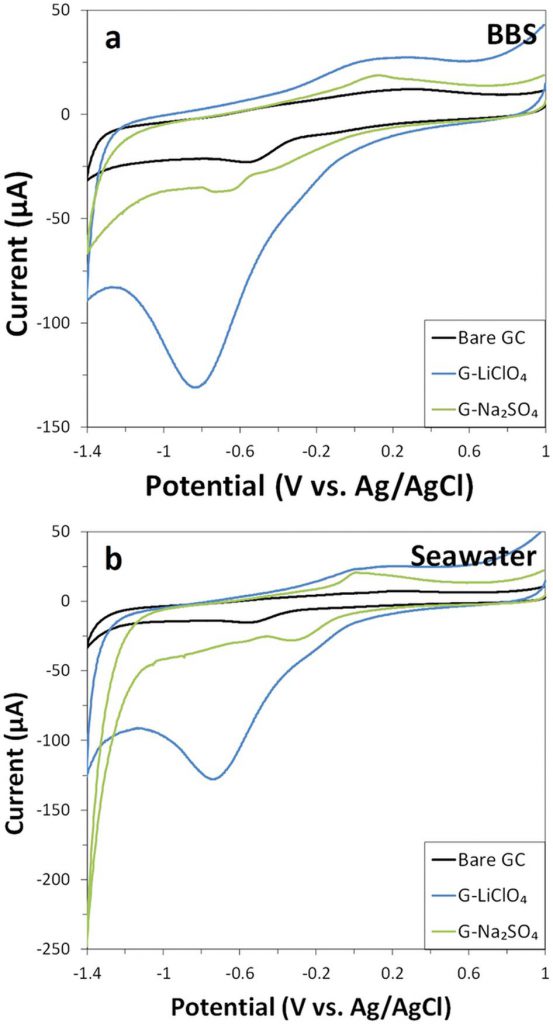
Detection of nitroaromatic explosives is of paramount importance from security point of view. Graphene sheets obtained from the electrochemical anodic exfoliation of graphite foil in different electrolytes (LiClO4 and Na2SO4) were compared and tested as electrode material for the electrochemical detection of 2,4-dinitrotoluene (DNT) and 2,4,6-trinitrotoluene (TNT) in seawater. Voltammetry analysis demonstrated the superior electrochemical …

Nitroaromatic explosives detection using electrochemically exfoliated graphene Read More »

Doped Graphene for DNA Analysis: the Electrochemical Signal is Strongly Influenced by the Kind of Dopant and the Nucleobase Structure

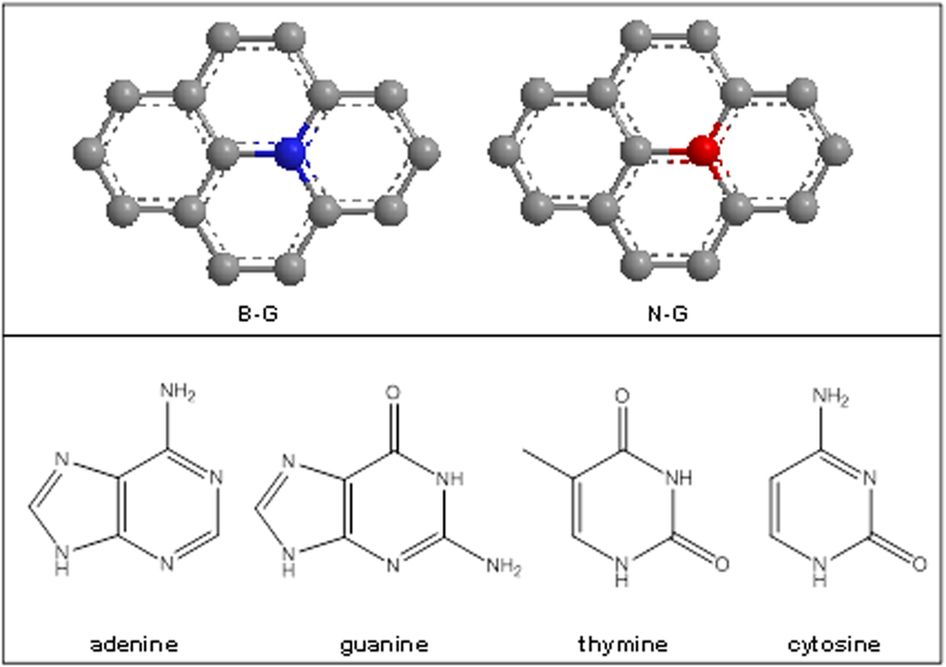
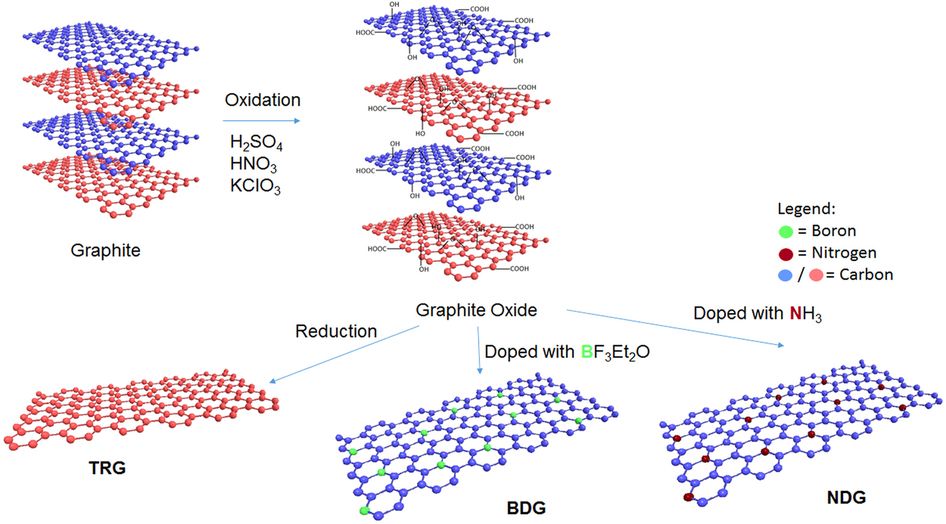
Doping graphene with heteroatoms can alter the electronic and electrochemical properties of the starting material. Contrasting properties should be expected when the doping is carried out with electron donating species (n-type dopants) or with electron withdrawing species (p-type dopants). This in turn can have a profound influence on the electroanalytical performance of the doped material …

Doped Graphene for DNA Analysis: the Electrochemical Signal is Strongly Influenced by the Kind of Dopant and the Nucleobase Structure Read More »

Catalytic DNA-Functionalized Self-Propelled Micromachines for Environmental Remediation

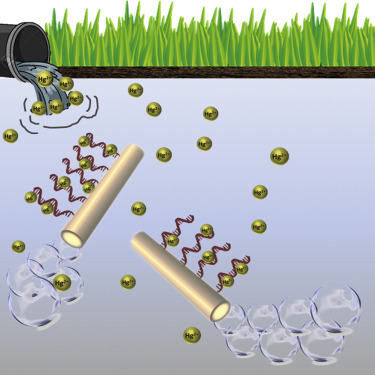
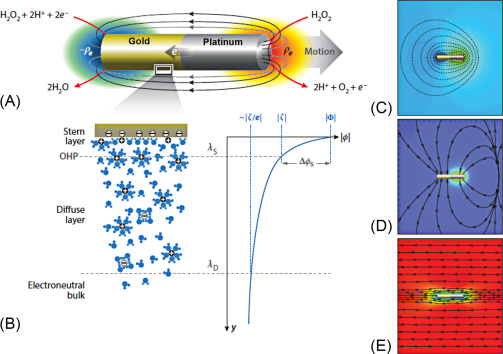
Toward addressing mercury contamination, DNA-functionalized microtubes that can serve as the next generation of self-propelled catalytic micromachines to remove Hg(II) from aqueous solution are described. The microtubes, prepared via the electrodeposition method, are composed of an inner platinum catalytic surface for self-propulsion and a gold outer surface for functionalization with DNA. The highly specific and …

Catalytic DNA-Functionalized Self-Propelled Micromachines for Environmental Remediation Read More »

Negative Electrocatalytic Effects of p-Doping Niobium and Tantalum on MoS2 and WS2 for the Hydrogen Evolution Reaction and Oxygen Reduction Reaction

Transition-metal dichalcogenides (TMDs) are at the forefront of research for their promising catalytic abilities and unique materials properties. With great interest in the study of mono- or few-layered TMDs, we seek to fundamentally explore the effects of doping on bulk TMDs, particularly MoS2 and WS2 for the hydrogen evolution reaction (HER) and oxygen reduction reaction …

Negative Electrocatalytic Effects of p-Doping Niobium and Tantalum on MoS2 and WS2 for the Hydrogen Evolution Reaction and Oxygen Reduction Reaction Read More »

Self-Propelled Supercapacitors for On-Demand Circuit Configuration Based on WS2 Nanoparticles Micromachines

The miniaturization of energy storage microcapacitors to develop portable electronic devices has been of high recent interest. Here, microsupercapacitors microrobot is fabricated using membrane template-assisted electrodeposition of WS2 nanoparticles (WS(2)NPs)/polyaniline (PANI) and platinum (Pt) layers. The microrobot navigates in the microchannel and attaches itself as part of the electrical circuit. The attached WS(2)NPs-PANI/Pt microrobots enhance …

Self-Propelled Supercapacitors for On-Demand Circuit Configuration Based on WS2 Nanoparticles Micromachines Read More »

Top-Down and Bottom-Up Approaches in Engineering 1T Phase Molybdenum Disulfide (MoS2): Towards Highly Catalytically Active Materials

The metallic 1T phase of MoS2 has been widely identified to be responsible for the improved performances of MoS2 in applications including hydrogen evolution reactions and electrochemical supercapacitors. To this aim, various synthetic methods have been reported to obtain 1T phase-rich MoS2. Here, the aim is to evaluate the efficiencies of the bottom-up (hydrothermal reaction) …

Top-Down and Bottom-Up Approaches in Engineering 1T Phase Molybdenum Disulfide (MoS2): Towards Highly Catalytically Active Materials Read More »

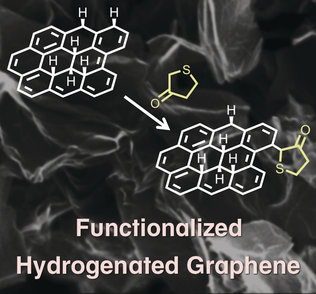
Functionalization of Hydrogenated Graphene: Transition-Metal-Catalyzed Cross-Coupling Reactions of Allylic C-HBonds

The chemical functionalization of hydrogenated graphene can modify its physical properties and lead to better processability. Herein, we describe the chemical functionalization of hydrogenated graphene through a dehydrogenative cross-coupling reaction between an allylic C-H bond and the -C-H bond of tetrahydrothiophen-3-one using Cu(OTf)(2) as the catalyst and DDQ as the oxidant. The chemical functionalization was …

Functionalization of Hydrogenated Graphene: Transition-Metal-Catalyzed Cross-Coupling Reactions of Allylic C-HBonds Read More »

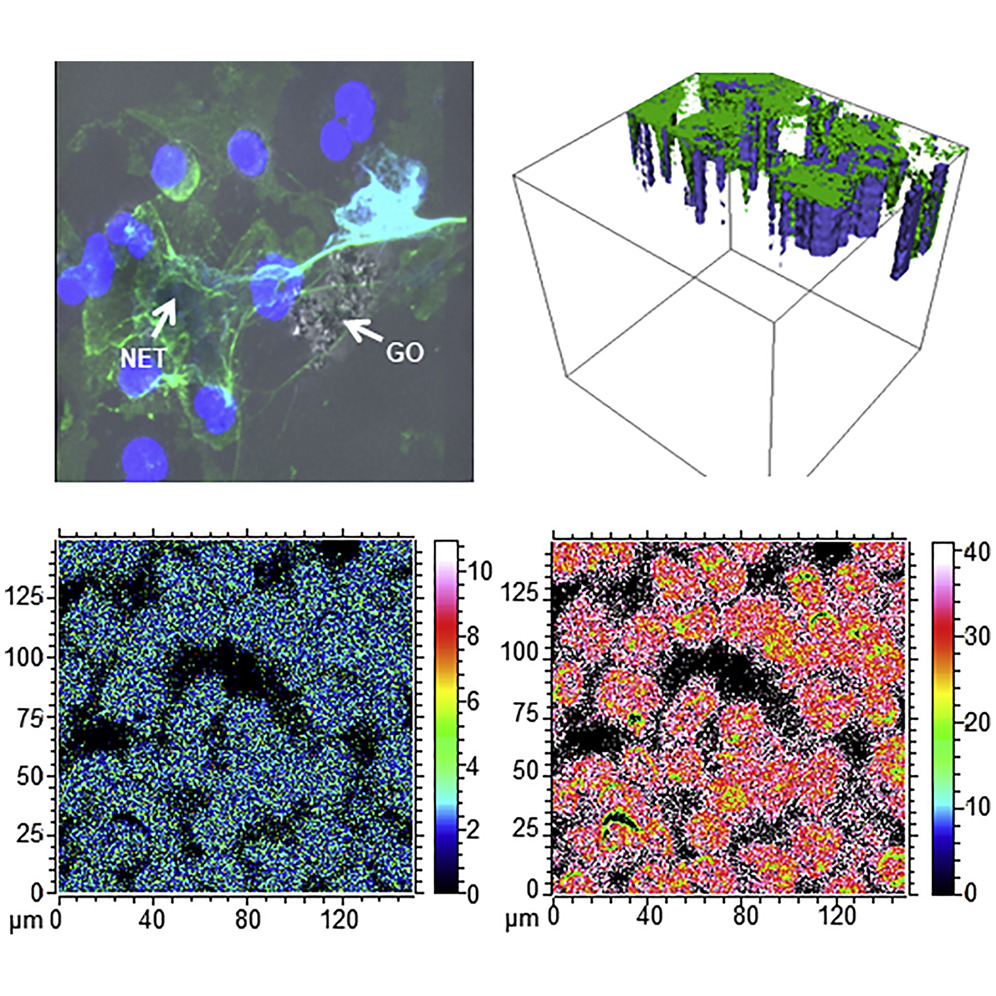
Graphene Oxide Stimulates Cells to Ruffle and Shed Plasma Membranes

The application of graphene oxide is wide ranging. Although it is known to be toxic to cells, its exact effect on cells remains an open question. In this issue of Chem, Dichtel and coworkers show that graphene oxide stimulates the ruffling and shedding of plasma membrane of several mammalian cell lines.

Ball-milled sulfur-doped graphene materials contain metallic impurities originating from ball-milling apparatus: their influence on the catalytic properties

Graphene materials have found applications in a wide range of devices over the past decade. In order to meet the demand for graphene materials, various synthesis methods are constantly being improved or invented. Ball-milling of graphite to obtain graphene materials is one of the many versatile methods to easily obtain buLk quantities. In this work, …

Ball-milled sulfur-doped graphene materials contain metallic impurities originating from ball-milling apparatus: their influence on the catalytic properties Read More »

Sulfur Doping Induces Strong Ferromagnetic Ordering in Graphene: Effect of Concentration and Substitution Mechanism

Imprinting ferromagnetism to a graphene structure by substitution of carbon atoms with sulfur is reported. S-doped graphene (4.2 at%) shows strong ferromagnetic properties with saturation magnetization exceeding 5.5 emu g(-1) at 2 K, which is among the highest values reported for any sp-based system. The remarkable magnetic response is attributed to delocalization of electrons from …

Sulfur Doping Induces Strong Ferromagnetic Ordering in Graphene: Effect of Concentration and Substitution Mechanism Read More »

Self-Propelled Micromotors Monitored by Particle-Electrode Impact Voltammetry

Self-propelled micromotors, as the next frontier of smart miniaturized machines, are able to carry out a plethora of tasks and operations. To date, the evaluation of their capabilities and behavior has been carried out by optical microscopy coupled with computationally intensive imaging software. The use of particle-electrode impact voltammetry serves as an alternative means of …

Self-Propelled Micromotors Monitored by Particle-Electrode Impact Voltammetry Read More »

Aromatic-Exfoliated Transition Metal Dichalcogenides: Implications for Inherent Electrochemistry and Hydrogen Evolution

In the face of rising energy demand and depleting energy resources, energy sustainability has proven to be a formidable environmental and economic challenge, and the search for environmentally friendly energy sources is exigent. To this end, much research has been focused on improving the efficiency of the hydrogen evolution reaction (HER), which generates hydrogen gas, …

Aromatic-Exfoliated Transition Metal Dichalcogenides: Implications for Inherent Electrochemistry and Hydrogen Evolution Read More »

Layered Platinum Dichalcogenides (PtS2, PtSe2, and PtTe2) Electrocatalysis: Monotonic Dependence on the Chalcogen Size

Presently, research in layered transition metal dichalcogenides (TMDs) for numerous electrochemical applications have largely focused on Group 6 TMDs, especially MoS2 and WS2, whereas TMDs belonging to other groups are relatively unexplored. This work unravels the electrochemistry of Group 10 TMDs: specifically PtS2, PtSe2, and PtTe2. Here, the inherent electroactivities of these Pt dichalcogenides and …

Layered Platinum Dichalcogenides (PtS2, PtSe2, and PtTe2) Electrocatalysis: Monotonic Dependence on the Chalcogen Size Read More »

Templated Electrochemical Fabrication of Hollow Molybdenum Sulfide Microstructures and Nanostructures with Catalytic Properties for Hydrogen Production

MoS2 is known to possess promising catalytic properties toward the hydrogen evolution reaction (HER). However, current synthetic procedures of nanostructured MoS2-based materials with high-density active edge sites are tedious and require high temperatures, costly instrumentation, and often rather toxic solvents. The electrochemical deposition (ED) of molybdenum sulfide films from solution-based precursors represents a more-viable approach, …

Templated Electrochemical Fabrication of Hollow Molybdenum Sulfide Microstructures and Nanostructures with Catalytic Properties for Hydrogen Production Read More »

From Nanomotors to Micromotors: The Influence of the Size of an Autonomous Bubble-Propelled Device upon Its Motion

Synthetic autonomously moving nano and micromotors are in the forefront of nanotechnology. Different sizes of nano and micromotors have been prepared, but the systematic study of the influence of their sizes on motion is lacking. We synthesized different sizes of tubular micro/nanomotors by membrane template assisted electrodeposition. The influence of dimensions on the dynamics of …

From Nanomotors to Micromotors: The Influence of the Size of an Autonomous Bubble-Propelled Device upon Its Motion Read More »

Nanostructured MoS2 Nanorose/Graphene Nanoplatelet Hybrids for Electrocatalysis

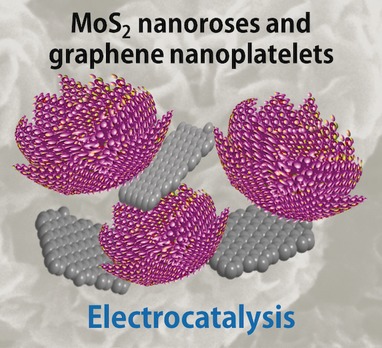
Tailoring and enhancing electrocatalytic activity is of the utmost importance from the viewpoints of sustainable energy and sensing. MoS2 and graphene show great promise for the electrocatalysis of many reactions. Given that both graphene and MoS2 are highly anisotropic in nature, with edge planes that are several orders of magnitude more catalytically active than basal …

Nanostructured MoS2 Nanorose/Graphene Nanoplatelet Hybrids for Electrocatalysis Read More »

Facile labelling of graphene oxide for superior capacitive energy storage and fluorescence applications

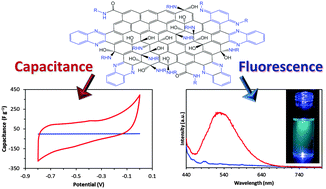
The majority of supercapacitor research studies on graphene materials today have been based upon developing electrochemical double-layer capacitors (EDLCs) using reduced graphenes. In contrast, graphene oxide (GO) is often neglected as a supercapacitor candidate due to its low electrical conductivity and surface area. Nonetheless, we present herein a fast (1 h) labelling of GO with …

Facile labelling of graphene oxide for superior capacitive energy storage and fluorescence applications Read More »

Covalent functionalization of MoS2

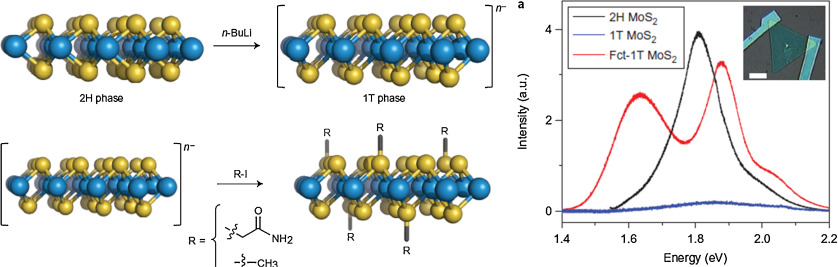
MoS2 nanosheets have been used extensively in catalytic, electronic, optoelectronic and electrochemical research due to their diverse properties that are often determined by the method of fabrication. Fine tuning of the colloidal behaviour, specific interactions and further reactivity of the materials is typically achieved by subsequent surface modifications. Arguably the most permanent of these involve …

Covalent functionalization of MoS2 Read More »

Graphene-Amorphous Transition-Metal Chalcogenide (MoSx, WSx) Composites as Highly Efficient Hybrid Electrocatalysts for the Hydrogen Evolution Reaction

Layered transition-metal dichalcogenides (TMDs) show promising electrocatalytic properties towards the hydrogen evolution reaction (HER). A series of graphene-amorphous TMD composites were prepared under hydrothermal conditions. Materials with varying contents of MoSx and WSx were synthesized from ammonium tetrathiomolybdate and ammonium tetrathiotungstate precursors in the presence of graphene oxide and diethylene glycol as a reducing agent. …

Graphene-Amorphous Transition-Metal Chalcogenide (MoSx, WSx) Composites as Highly Efficient Hybrid Electrocatalysts for the Hydrogen Evolution Reaction Read More »

Fe-0 Nanomotors in Ton Quantities (10(20) Units) for Environmental Remediation

Despite demonstrating potential for environmental remediation and biomedical applications, the practical environmental applications of autonomous self-propelled micro-/nanorobots have been limited by the inability to fabricate these devices in large (kilograms/tons) quantities. In view of the demand for large-scale environmental remediation by micro-/nanomotors, which are easily synthesized and powered by nontoxic fuel, we have developed bubble-propelled …

Fe-0 Nanomotors in Ton Quantities (10(20) Units) for Environmental Remediation Read More »

Improving the Analytical Performance of Graphene Oxide towards the Assessment of Polyphenols

The presence of oxygen functionalities on graphene surface has enormous influence on its electrochemical and electroanalytical properties. The oxygen-containing groups on graphene platforms can strongly affect the electrochemical response, being either detrimental for the heterogeneous charge transfer or promoting a favourable interaction with the specific analyte. In this study, by electrochemically reducing graphene oxide material …

Improving the Analytical Performance of Graphene Oxide towards the Assessment of Polyphenols Read More »

Electrochemical Delamination and Chemical Etching of Chemical Vapor Deposition Graphene: Contrasting Properties

Recent advancements in chemical vapor deposition techniques for the growth of graphene have enabled access to large-area and high quality graphene film for various applications. The key step in determining the quality of the final graphene films is the transfer process to desired substrates, with the goal of minimizing the amount of structural and chemical …

Electrochemical Delamination and Chemical Etching of Chemical Vapor Deposition Graphene: Contrasting Properties Read More »

Photochromic Spatiotemporal Control of Bubble-Propelled Micromotors by a Spiropyran Molecular Switch

Controlling the environment in which bubble-propelled micromotors operate represents an attractive strategy to influence their motion, especially when the trigger is as simple as light. We demonstrate that spiropyrans, which isomerize to amphiphilic merocyanines under UV irradiation, can act as molecular switches that drastically affect the locomotion of the micrometer-sized engines. The phototrigger could be …

Photochromic Spatiotemporal Control of Bubble-Propelled Micromotors by a Spiropyran Molecular Switch Read More »

Layered Black Phosphorus: Strongly Anisotropic Magnetic, Electronic, and Electron-Transfer Properties

Layered elemental materials, such as black phosphorus, exhibit unique properties originating from their highly anisotropic layered structure. The results presented herein demonstrate an anomalous anisotropy for the electrical, magnetic, and electrochemical properties of black phosphorus. It is shown that heterogeneous electron transfer from black phosphorus to outer- and inner-sphere molecular probes is highly anisotropic. The …

Layered Black Phosphorus: Strongly Anisotropic Magnetic, Electronic, and Electron-Transfer Properties Read More »

Bottom-up Electrosynthesis of Highly Active Tungsten Sulfide (WS3-x) Films for Hydrogen Evolution

Transition metal dichalcogenides have been I extensively studied as promising earth-abundant electrocatalysts for hydrogen evolution reaction (HER). However, despite the intention to achieve sustainable energy generation, conventional syntheses typically use environmentally damaging reagents and energy-demanding preparation conditions. Hence, we present electrochemical synthesis as a green and versatile alternative to traditional methods. In this fundamental study, …

Bottom-up Electrosynthesis of Highly Active Tungsten Sulfide (WS3-x) Films for Hydrogen Evolution Read More »

Electrochemistry of Layered Graphitic Carbon Nitride Synthesised from Various Precursors: Searching for Catalytic Effects

Graphitic carbon nitride (g-C3N4), synthesised by pyrolysis of different precursors (dicyandiamide, melamine and urea) under varying reaction conditions (air and nitrogen gas) is subjected to electrochemical studies for the elucidation of the inherent catalytic efficiency of the pristine material. Contrary to popular belief, pristine g-C3N4 shows negligible, if any, enhancement in its electrochemical behaviour in …

Electrochemistry of Layered Graphitic Carbon Nitride Synthesised from Various Precursors: Searching for Catalytic Effects Read More »

Doped and undoped graphene platforms: the influence of structural properties on the detection of polyphenols

There is a huge interest in doped graphene and how doping can tune the material properties for the specific application. It was recently demonstrated that the effect of doping can have different influence on the electrochemical detection of electroactive probes, depending on the analysed probe, on the structural characteristics of the graphene materials and on …

Doped and undoped graphene platforms: the influence of structural properties on the detection of polyphenols Read More »

Helical 3D-Printed Metal Electrodes as Custom-Shaped 3D Platform for Electrochemical Devices

3D-printing represents an emerging technology that can revolutionize the way object and functional devices are fabricated. Here the use of metal 3D printing is demonstrated to fabricate bespoke electrochemical stainless steel electrodes that can be used as platform for different electrochemical applications ranging from electrochemical capacitors, oxygen evolution catalyst, and pH sensor by means of …

Helical 3D-Printed Metal Electrodes as Custom-Shaped 3D Platform for Electrochemical Devices Read More »

Layered rhenium sulfide on free-standing three-dimensional electrodes is highly catalytic for the hydrogen evolution reaction: Experimental and theoretical study

Hydrogen evolution reaction is the key for clean energy utilization. Recently, molybdenum disulfide (MoS2) was suggested as a replacement for the most efficient catalyst to date for such reaction, which is platinum. We show here that electrodes based on layered rhenium sulfide (ReS2) catalyst show dramatic improvement when compared to MoS2. We have shown by …

Layered rhenium sulfide on free-standing three-dimensional electrodes is highly catalytic for the hydrogen evolution reaction: Experimental and theoretical study Read More »

Carboxylic Carbon Quantum Dots as a Fluorescent Sensing Platform for DNA Detection

The demand for simple, sensitive, affordable, and selective DNA biosensors is ubiquitous, due to the important role that DNA detection performs in the areas of disease diagnostics, environment monitoring, and food safety. A novel application of carboxylic carbon quantum dots (cCQD) is highlighted in this study. Herein, cCQD function as a nanoquencher in the detection …

Carboxylic Carbon Quantum Dots as a Fluorescent Sensing Platform for DNA Detection Read More »

Electrochemistry of layered GaSe and GeS: applications to ORR, OER and HER

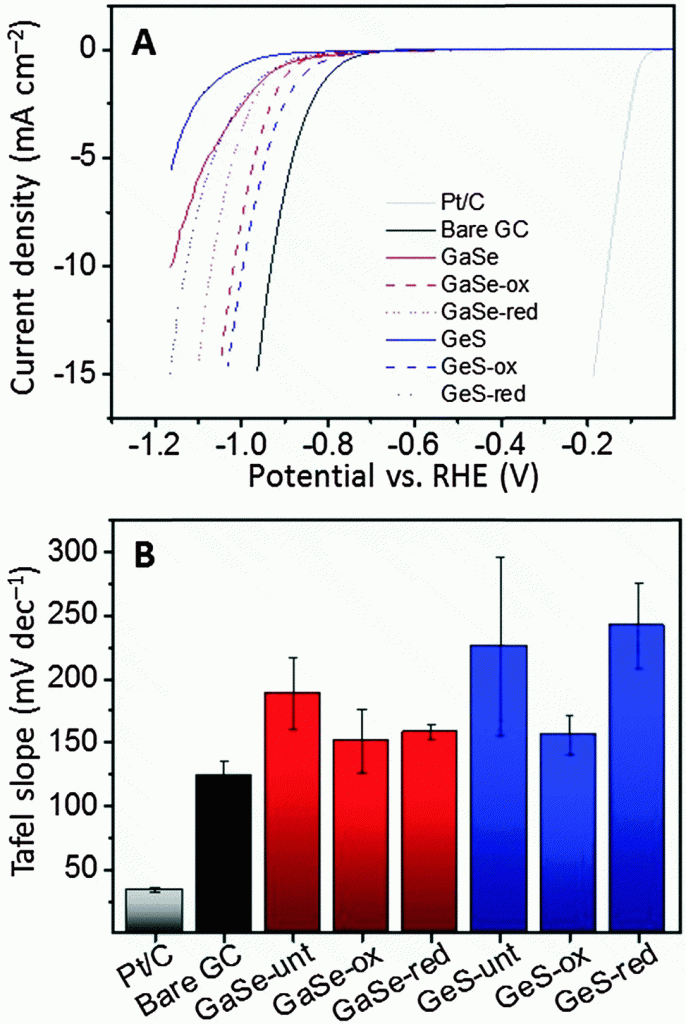
Though many studies examined the properties of the class of IIIA-VIA and IVA-VIA layered materials, few have delved into the electrochemical aspect of such materials. In light of the burgeoning interest in layered structures towards various electrocatalytic applications, we endeavored to study the inherent electrochemical properties of representative layered materials of this class, GaSe and …

Electrochemistry of layered GaSe and GeS: applications to ORR, OER and HER Read More »

Electrochemically Exfoliated Graphene and Graphene Oxide for Energy Storage and Electrochemistry Applications

Top-down methods are of key importance for large-scale graphene and graphene oxide preparation. Electrochemical exfoliation of graphite has lately gained much interest because of the simplicity of execution, the short process time, and the good quality of graphene that can be obtained. Here, we test three different electrolytes, that is, H2SO4, Na2SO4, and LiClO4, with …

Electrochemically Exfoliated Graphene and Graphene Oxide for Energy Storage and Electrochemistry Applications Read More »

Influence of pH on the Motion of Catalytic Janus Particles and Tubular Bubble-Propelled Micromotors

Self-propelled miniaturized machines harness the chemical potential of their environment for movement. Locomotion of chemically powered micromotors have been hugely dependent on the surroundings. The use of pH to alter the mobility of micromotors is demonstrated in this work through the manipulation of hydrogen peroxide chemistry in different acidity/alkalinity. The sequential addition of sodium hydroxide …

Influence of pH on the Motion of Catalytic Janus Particles and Tubular Bubble-Propelled Micromotors Read More »

Nanosized graphane (C1H1.14)(n) by hydrogenation of carbon nanofibers by Birch reduction method

Graphane, fully hydrogenated graphene with the composition (C1H1)(n), has been theoretically predicted but never experimentally realized. Graphane stands out of the variety of heteroatom modified graphene for its well defined structure. Here we show that by employing Birch reduction on graphite nanofibers, one can reach hydrogenation levels close to 100%. We name this material graphane …

Nanosized graphane (C1H1.14)(n) by hydrogenation of carbon nanofibers by Birch reduction method Read More »

Self-propelled autonomous nanomotors meet microfluidics

Self-propelled autonomous nano/micromotors are in the forefront of current materials science and technology research. These small machines convert chemical energy from the environment into propulsion, and they can move autonomously in the environment and are capable of chemotaxis or magnetotaxis. They can be used for drug delivery, microsurgeries or environmental remediation. It is of immense …

Self-propelled autonomous nanomotors meet microfluidics Read More »

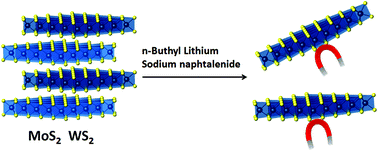
Origin of exotic ferromagnetic behavior in exfoliated layered transition metal dichalcogenides MoS2 and WS2

Bulk layered transition metal dichalcogenides (TMDs) show diamagnetic properties. When exfoliated, the materials’ band gap increases and changes from an indirect band gap to a direct one. During the exfoliation, the TMDs may undergo a phase transition from 2H to 1T polymorph, which is likely electronically driven and accompanied by a metal-insulator transition. A significantly …

Origin of exotic ferromagnetic behavior in exfoliated layered transition metal dichalcogenides MoS2 and WS2 Read More »

Few-layer black phosphorus nanoparticles

Herein, black phosphorus quantum dots and nanoparticles of a few layer thickness were prepared and characterized using STEM, AFM, dynamic light scattering, X-ray photoelectron spectroscopy, X-ray diffraction, Raman spectroscopy and photoluminescence. Impact electrochemistry of the induvidual black phosphorus nanoparticles allows their size determination. The centrifugation of colloidal black phosphorus nanoparticles allowed separation of quantum dots …

Few-layer black phosphorus nanoparticles Read More »

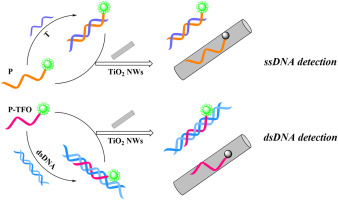
Strong dependence of fluorescence quenching on the transition metal in layered transition metal dichalcogenide nanoflakes for nucleic acid detection

In recent years, the application of transition metal dichalcogenides for the development of biosensors has been receiving widespread attention from researchers, as demonstrated by the surge in studies present in the field. While different transition metal dichalcogenide materials have been employed for the fabrication of fluorescent biosensors with superior performance, no research has been conducted …

Strong dependence of fluorescence quenching on the transition metal in layered transition metal dichalcogenide nanoflakes for nucleic acid detection Read More »

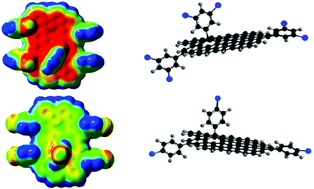
Fine tuning of graphene properties by modification with aryl halogens

Graphene and its derivatives belong to one of the most intensively studied materials. The radical reaction using halogen derivatives of arene-diazonium salts can be used for effective control of graphene’s electronic properties. In our work we investigated the influence of halogen atoms (fluorine, chlorine, bromine and iodine) as well as their position on the benzene …

Fine tuning of graphene properties by modification with aryl halogens Read More »

Reducing emission of carcinogenic by-products in the production of thermally reduced graphene oxide

In the last decade, researchers have been trying to find out a simple method for large scale fabrication of high-quality graphene. A typical method for the fabrication of gram quantities of graphene materials is the oxidation of graphite to graphite oxide and consequent thermal reduction and exfoliation to reduced graphene oxide at T = similar …

Reducing emission of carcinogenic by-products in the production of thermally reduced graphene oxide Read More »

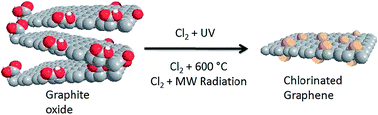
Toward graphene chloride: chlorination of graphene and graphene oxide

Halogenated graphene derivatives are interesting due to their outstanding physical and chemical properties. In this paper, we present various methods for the synthesis of chlorinated graphene derivatives from graphene oxide and thermally reduced graphene. We performed exfoliation of graphene oxide in a chlorine atmosphere, plasma assisted exfoliation of graphite oxide using microwave radiation and finally …

Toward graphene chloride: chlorination of graphene and graphene oxide Read More »

Multifunctional electrocatalytic hybrid carbon nanocables with highly active edges on their walls

Graphene sheets exhibit fast heterogeneous electron transfer at the edges while at the basal plane the electron transfer is much slower. Carbon nanotubes (CNTs) represent fascinating quasi-1-dimensional materials due to their electronic and mechanical properties which enable the formation of (unlike graphene) robust, flexible and well defined three dimensional structures. Because CNTs are created from …

Multifunctional electrocatalytic hybrid carbon nanocables with highly active edges on their walls Read More »

Beyond platinum: silver-catalyst based bubble-propelled tubular micromotors

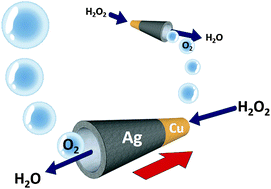
There has been enormous interest in autonomous self-propelled micro-/nanomotors, especially those that relied on the decomposition of hydrogen peroxide fuel to generate oxygen bubbles and usually consisted of platinum on their surface which acts as an efficient catalyst. In this study, we developed Pt-free tubular micromotors by using a less expensive silver catalyst for bubble …

Beyond platinum: silver-catalyst based bubble-propelled tubular micromotors Read More »

The reduction of graphene oxide with hydrazine: elucidating its reductive capability based on a reaction-model approach

We have performed an experimental investigation on the effects of hydrazine treatment on graphene oxide via a reaction-model approach. Hydrazine was reacted with small conjugated aromatic compounds containing various oxygen functional groups to mimic the structure of graphene oxide. The hydroxyl and carboxylic groups were not readily removed while carbonyl groups reacted with hydrazine to …

The reduction of graphene oxide with hydrazine: elucidating its reductive capability based on a reaction-model approach Read More »

Valence and oxide impurities in MoS2 and WS2 dramatically change their electrocatalytic activity towards proton reduction

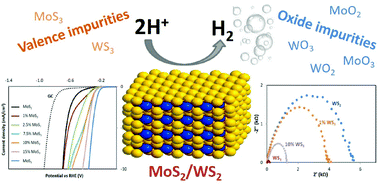
Layered molybdenum disulfide (MoS2) and tungsten disulfide (WS2) have received renewed interest in recent years as they are catalytic towards the hydrogen evolution reaction (HER) and they are touted as future replacements of platinum in electrolyzers. There is a significant discrepancy in the found onset potentials of MoS2 and WS2 towards the hydrogen evolution reaction. …

Valence and oxide impurities in MoS2 and WS2 dramatically change their electrocatalytic activity towards proton reduction Read More »

Electrocatalysis of layered Group 5 metallic transition metal dichalcogenides (MX2, M = V, Nb, and Ta; X = S, Se, and Te)

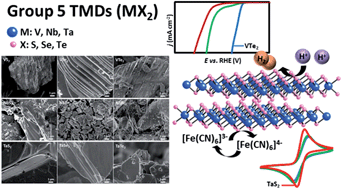
The revelation of MoS2 as an efficient electrocatalyst for the hydrogen evolution reaction (HER) has ratcheted up interest in other transition metal dichalcogenides (TMDs). To date, extensive studies have been focused towards semiconducting Group 6 TMDs while research into metallic Group 5 TMDs has been comparatively limited. Past computational screening of Group 5 TMDs showed …

Electrocatalysis of layered Group 5 metallic transition metal dichalcogenides (MX2, M = V, Nb, and Ta; X = S, Se, and Te) Read More »

Phenols as probes of chemical composition of graphene oxide

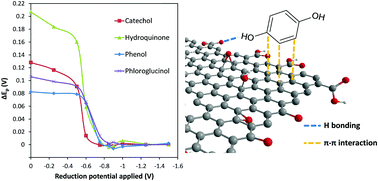
Graphene oxide (GO) can be conveniently used as a starting material for the preparation of selective and sensitive electrochemical sensing systems. The amount of oxygen groups present on the material can be precisely tuned by reduction methodologies which allow the selection of the optimal C/O ratio for specific analytes. An electrochemical reduction procedure is used …

Phenols as probes of chemical composition of graphene oxide Read More »

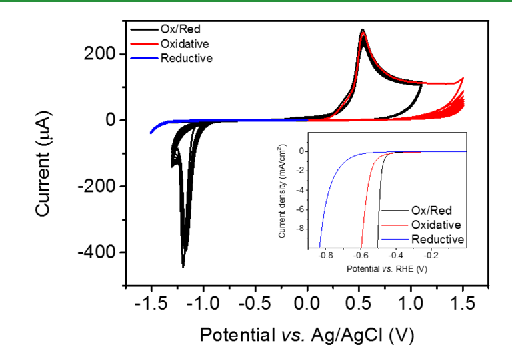
Remarkable electrochemical properties of electrochemically reduced graphene oxide towards oxygen reduction reaction are caused by residual metal-based impurities

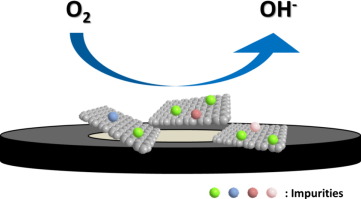
Oxygen reduction reaction (ORR) is one of the most important electrochemical reactions in the field of energy storage. Remarkable catalytic properties towards ORR at “metal-free” electrochemically reduced graphene oxide (ErGO) were previously reported. We demonstrate here that the remarkable enhancement towards ORR of a “metal-free” ErGO is caused by residual metallic impurities instead of ErGO …

Remarkable electrochemical properties of electrochemically reduced graphene oxide towards oxygen reduction reaction are caused by residual metal-based impurities Read More »
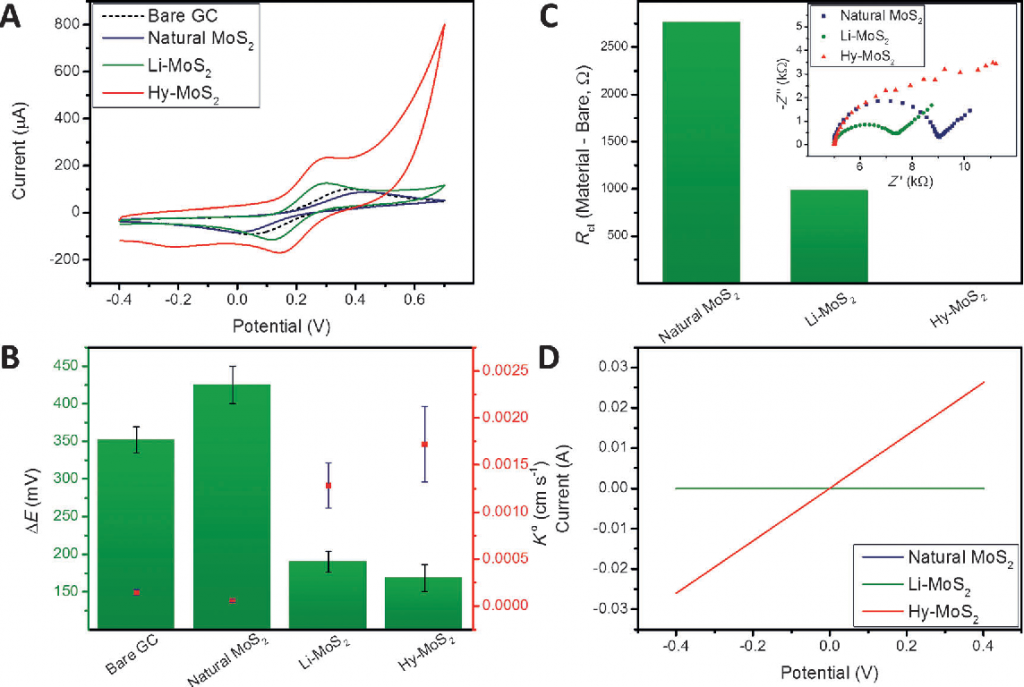
3D-printing technologies for electrochemical applications

Since its conception during the 80s, 3D-printing, also known as additive manufacturing, has been receiving unprecedented levels of attention and interest from industry and research laboratories. This is in addition to end users, who have benefited from the pervasiveness of desktop-size and relatively cheap printing machines available. 3D-printing enables almost infinite possibilities for rapid prototyping. …

3D-printing technologies for electrochemical applications Read More »
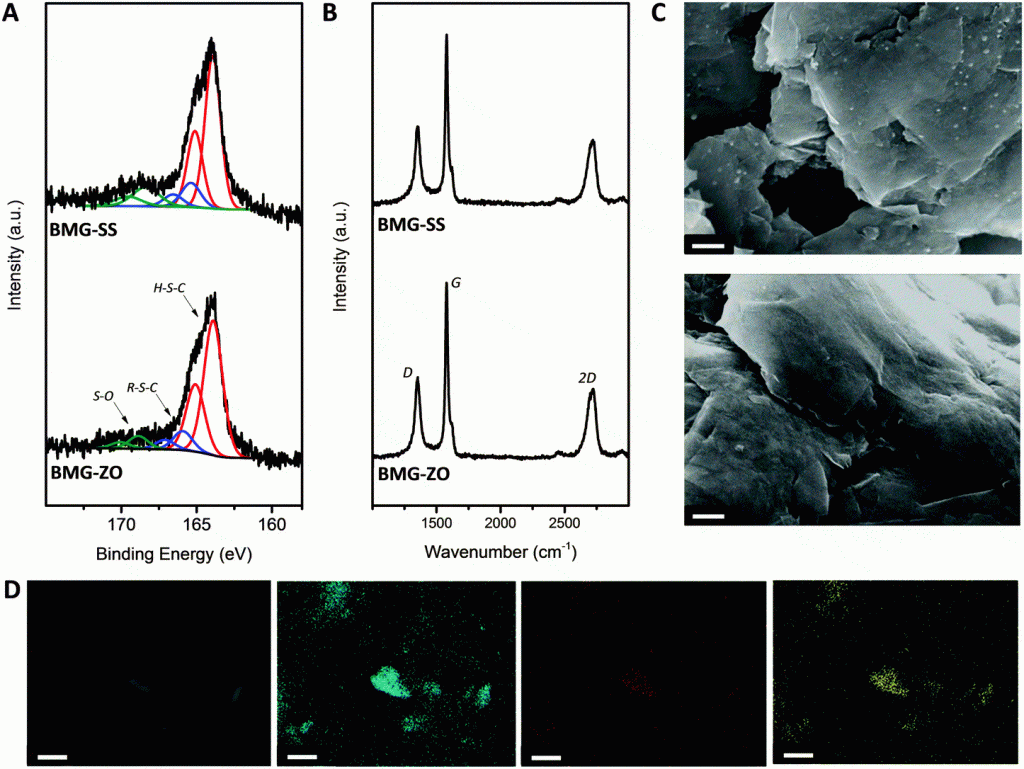
Detecting the complex motion of self-propelled micromotors in microchannels by electrochemistry

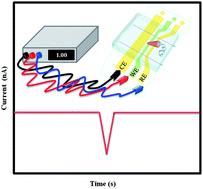
Autonomous self-propelled nano/micromotors are new frontiers in micro-and nanotechnology, with a plethora of possible applications in environmental remediation and biomedicine. However, key challenges remain, one of which is the monitoring of motion in these self-propelled nano-and microdevices. Tracking of these miniaturized objects is typically done by optical microscopy. Such a manual methodology has several inherent …

Detecting the complex motion of self-propelled micromotors in microchannels by electrochemistry Read More »

Graphene and its electrochemistry – an update

The electrochemistry of graphene and its derivatives has been extensively researched in recent years. In the aspect of graphene preparation methods, the efficiencies of the top-down electrochemical exfoliation of graphite, the electrochemical reduction of graphene oxide and the electrochemical delamination of CVD grown graphene, are currently on par with conventional procedures. Electrochemical analysis of graphene …

Graphene and its electrochemistry – an update Read More »
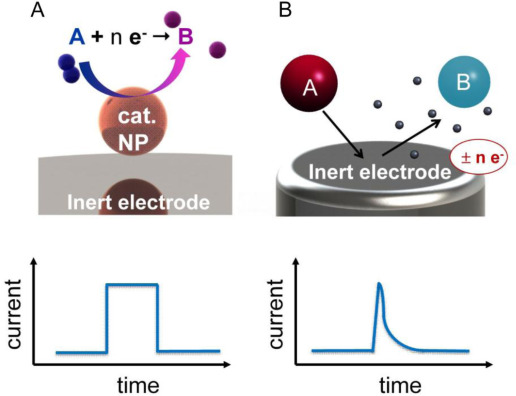
Anti-MoS2 Nanostructures: Tl2S and Its Electrochemical and Electronic Properties

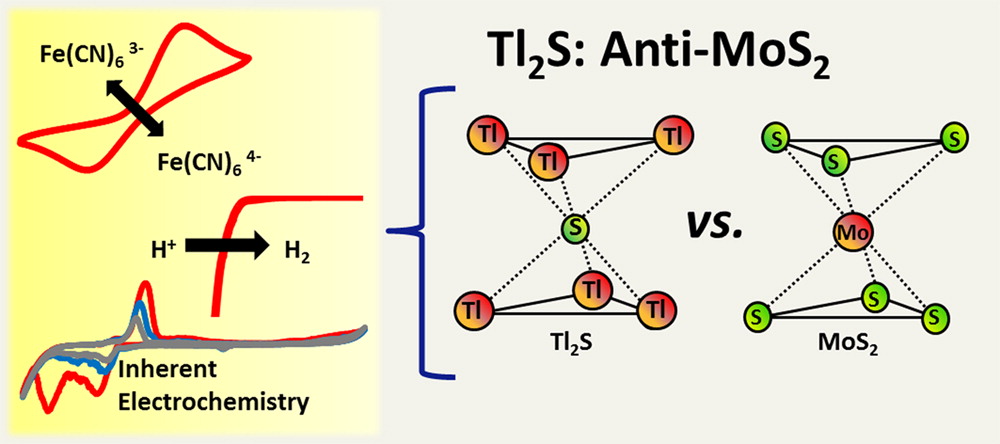
Layered transition metal dichalcogenides are catalytically important compounds. Unlike the mounting interest in transition metal dichalcogenides such as MoS2 and WS2 for electrochemical applications, other metal chalcogenides with layered structure but different chemical composition have received little attention among the scientific community. One such example is represented by thallium(I) sulfide (Tl2S), a Group 13 chalcogenide, …

Anti-MoS2 Nanostructures: Tl2S and Its Electrochemical and Electronic Properties Read More »