Keyword Author: Oxygen reduction reaction

Nanomaterials Electrochemistry: Insights for Materials Scientists and Electrochemists

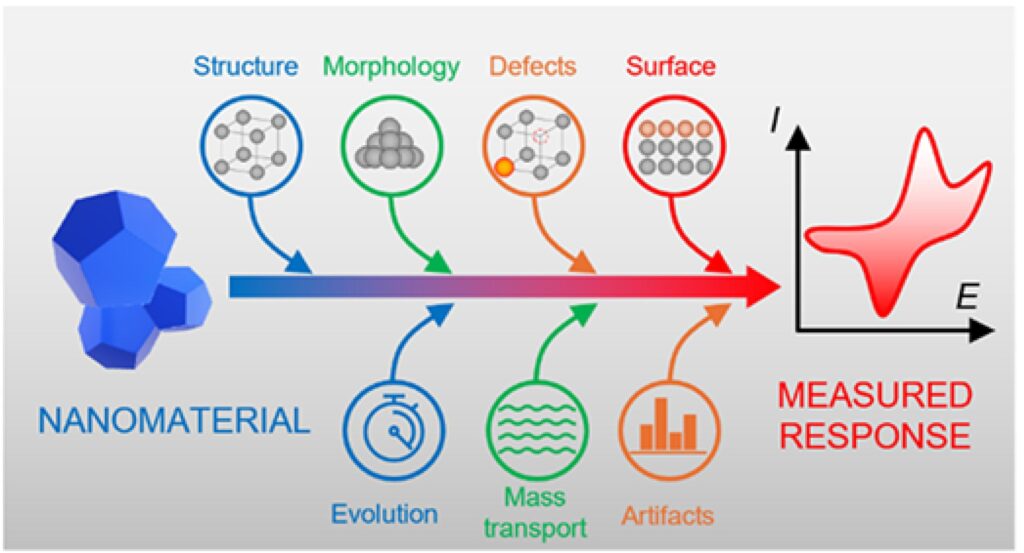
Electrochemistry is a key enabler of modern technology, underpinning materials processing, chemical synthesis, and energy storage and conversion. Electrochemistry requires electrodes─conducting materials to external circuit. However, the actual composition of these electrodes is often far removed from that assumed in electrochemical equations─atomically flat homogeneous surfaces. Electrochemical response of nanomaterials arises from a complex interplay of …

Nanomaterials Electrochemistry: Insights for Materials Scientists and Electrochemists Read More »

Single atom engineered materials for sensors

The pursuit of high-performance sensors necessitates the exploration of new materials to realize this potential. Single atom engineering (SAE) is used to plant individual atoms into the appropriate surrounding of (nano)materials in order to confer distinct materials properties. Hence, the nano architectonics principle utilized for single atom engineering allows us to build highly specific, selective, …

Single atom engineered materials for sensors Read More »

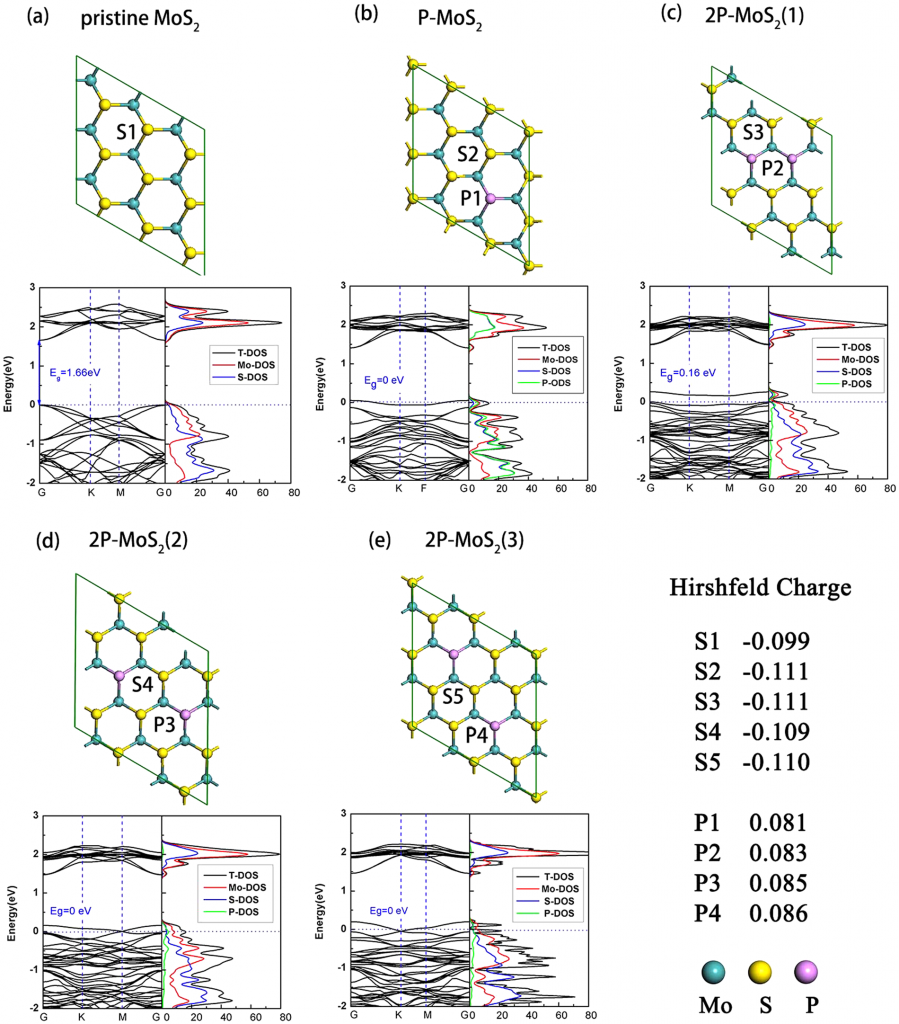
Vanadium Dopants: A Boon or a Bane for Molybdenum Dichalcogenides-Based Electrocatalysis Applications

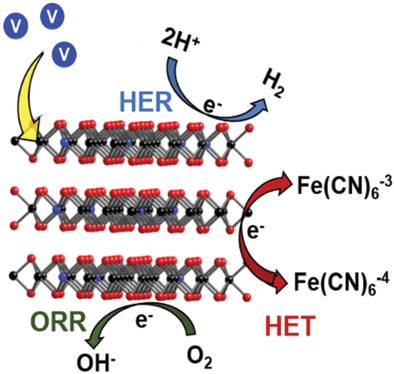
The ever-rising concerns with regards to energy shortages and climate change have made the search for clean and renewable energy sources a pressing priority for the sustainable development of societies. Although, conventional precious metal-based catalysts such as platinum, iridium, and ruthenium are able to efficiently catalyze the conversion of chemical to electrical energy, they are …

Vanadium Dopants: A Boon or a Bane for Molybdenum Dichalcogenides-Based Electrocatalysis Applications Read More »

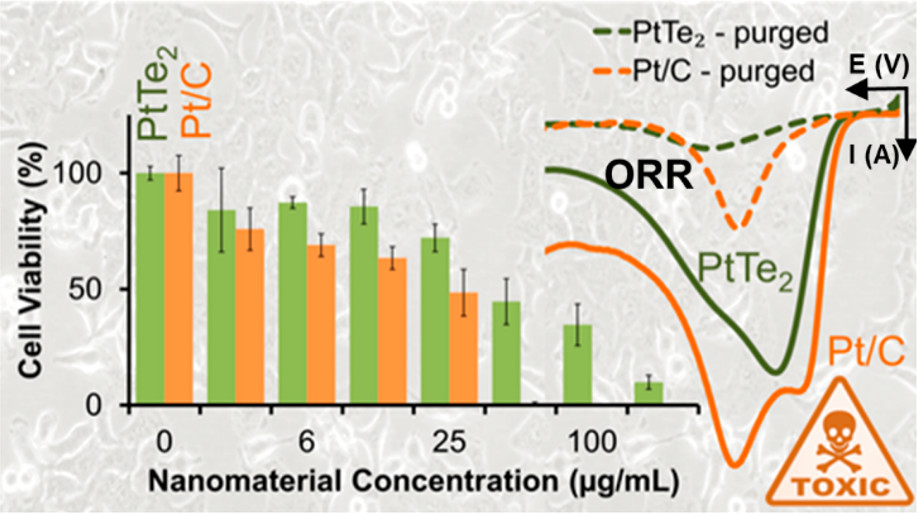
Layered PtTe2 Matches Electrocatalytic Performance of Pt/C for Oxygen Reduction Reaction with Significantly Lower Toxicity

Oxygen reduction reaction (ORR) is an important reaction for fuel cells and platinum on carbon (Pt/C) is a typical electrocatalyst for ORR in industrial applications. There is a constant search for a replacement for Pt/C with better ORR electrocatalytic performance but thus far, most materials show poorer electrocatalytic activity than Pt/C. Herein, we present electrocatalytical …

Layered PtTe2 Matches Electrocatalytic Performance of Pt/C for Oxygen Reduction Reaction with Significantly Lower Toxicity Read More »

The Role of the Metal Element in Layered Metal Phosphorus Triselenides upon Their Electrochemical Sensing and Energy Applications

The number of layered materials seems to be ever-growing, from mono-to multielement, with affiliates and applications being tested continuously. Chalcogenophosphites, also designated as metal phosphorus chalcogenides (MPX), have attracted great interest because of not only their magnetic properties but also promising capabilities in energy applications. Herein, bulk crystals of different layered metal triselenophosphites, with a …

The Role of the Metal Element in Layered Metal Phosphorus Triselenides upon Their Electrochemical Sensing and Energy Applications Read More »

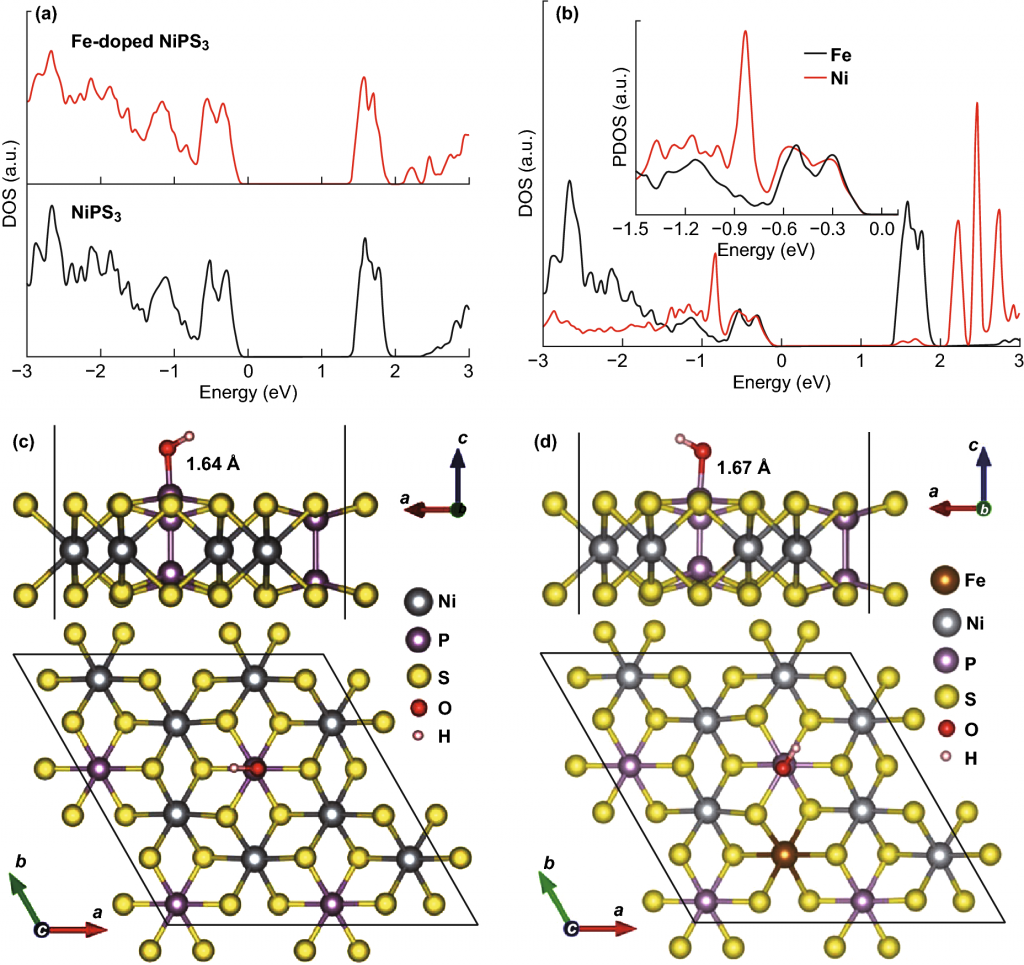
Layered Metal Thiophosphite Materials: Magnetic, Electrochemical, and Electronic Properties

Beyond graphene, transitional metal dichalcogenides, and black phosphorus, there are other layered materials called metal thiophosphites (MPSx), which are recently attracting the attention of scientists. Here we present the synthesis, structural and morphological characterization, magnetic properties, electrochemical performance, and the calculated density of states of different layered metal thiophosphite materials with a general formula MPSx …

Layered Metal Thiophosphite Materials: Magnetic, Electrochemical, and Electronic Properties Read More »

Microwave Exfoliation of Graphite Oxides in H2S Plasma for the Synthesis of Sulfur-Doped Graphenes as Oxygen Reduction Catalysts

Tuning the electronic and chemical properties of graphene can be carried out through heteroatomic doping, enabling its use as an electrocatalyst. Sulfur-doped graphene has been suggested to be a viable alternative to traditional Pt-based catalysts for oxygen reduction under alkaline conditions. Herein we present a fast and efficient route to synthesize S-doped graphenes through the …

Microwave Exfoliation of Graphite Oxides in H2S Plasma for the Synthesis of Sulfur-Doped Graphenes as Oxygen Reduction Catalysts Read More »

Negative Electrocatalytic Effects of p-Doping Niobium and Tantalum on MoS2 and WS2 for the Hydrogen Evolution Reaction and Oxygen Reduction Reaction

Transition-metal dichalcogenides (TMDs) are at the forefront of research for their promising catalytic abilities and unique materials properties. With great interest in the study of mono- or few-layered TMDs, we seek to fundamentally explore the effects of doping on bulk TMDs, particularly MoS2 and WS2 for the hydrogen evolution reaction (HER) and oxygen reduction reaction …

Negative Electrocatalytic Effects of p-Doping Niobium and Tantalum on MoS2 and WS2 for the Hydrogen Evolution Reaction and Oxygen Reduction Reaction Read More »

Electrochemistry of Layered Graphitic Carbon Nitride Synthesised from Various Precursors: Searching for Catalytic Effects

Graphitic carbon nitride (g-C3N4), synthesised by pyrolysis of different precursors (dicyandiamide, melamine and urea) under varying reaction conditions (air and nitrogen gas) is subjected to electrochemical studies for the elucidation of the inherent catalytic efficiency of the pristine material. Contrary to popular belief, pristine g-C3N4 shows negligible, if any, enhancement in its electrochemical behaviour in …

Electrochemistry of Layered Graphitic Carbon Nitride Synthesised from Various Precursors: Searching for Catalytic Effects Read More »

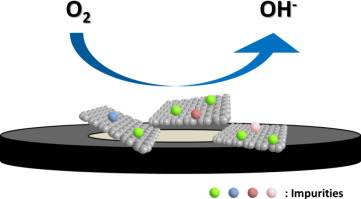
Remarkable electrochemical properties of electrochemically reduced graphene oxide towards oxygen reduction reaction are caused by residual metal-based impurities

Oxygen reduction reaction (ORR) is one of the most important electrochemical reactions in the field of energy storage. Remarkable catalytic properties towards ORR at “metal-free” electrochemically reduced graphene oxide (ErGO) were previously reported. We demonstrate here that the remarkable enhancement towards ORR of a “metal-free” ErGO is caused by residual metallic impurities instead of ErGO …

Remarkable electrochemical properties of electrochemically reduced graphene oxide towards oxygen reduction reaction are caused by residual metal-based impurities Read More »

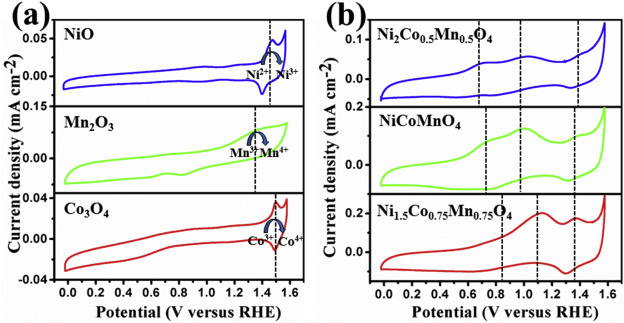
Ternary Transition Metal Oxide Nanoparticles with Spinel Structure for the Oxygen Reduction Reaction

It is crucial to develop electrocatalysts for the oxygen reduction reaction (ORR) for renewable energy applications. Mixed-valence transition-metal oxides with a spinel structure have been explored for this purpose. In this work, we study the influence of the composition of the catalysts (XY2O4, X=Ni, Zn and Y=Co, Mn) on the ORR. The four different types …

Ternary Transition Metal Oxide Nanoparticles with Spinel Structure for the Oxygen Reduction Reaction Read More »

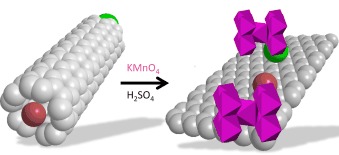
So-Called “Metal-Free” Oxygen Reduction at Graphene Nanoribbons is in fact Metal Driven

The oxygen reduction reaction (ORR) is of key importance in the field of electrochemical energy production. Remarkable catalytic properties of metal-free graphene nanoribbons towards the ORR were suggested in previous reports. Herein, we show that the electrocatalytic properties of an undoped supposedly metal-free graphene nanoribbon towards the ORR is actually caused by metallic impurities within …

So-Called “Metal-Free” Oxygen Reduction at Graphene Nanoribbons is in fact Metal Driven Read More »

Selective Nitrogen Functionalization of Graphene by Bucherer-Type Reaction

Nitrogen functionalization of graphene offers new hybrid materials with improved performance for important technological applications. Despite studies highlighting the dependence of the performance of nitrogen-functionalized graphene on the types of nitrogen functional groups that are present, precise synthetic control over their ratio is challenging. Herein, the synthesis of nitrogen-functionalized graphene rich in amino groups by …

Selective Nitrogen Functionalization of Graphene by Bucherer-Type Reaction Read More »

p-Element-Doped Graphene: Heteroatoms for Electrochemical Enhancement

Graphene is finding important applications in electrochemistry. Here, we discuss how the doping of graphene with heteroatoms, namely boron, nitrogen, phosphorus, sulfur, fluorine, chlorine, bromine, and iodine, change the electrochemical properties of the material. In addition, we summarize the different doping routes and show that the process has an influence upon electrochemical properties.

3D-graphene for electrocatalysis of oxygen reduction reaction: Increasing number of layers increases the catalytic effect

Oxygen reaction reaction (ORR) is of enormous importance for energy storage and generation devices. Graphene offers catalytic properties towards ORR; however, its performance is often hindered by restacking of the graphene sheets. Here we show that mechanically rigid 3D graphene deposited on nickel template can act as efficient catalyst for ORR. We compare electrocatalytic activity …

3D-graphene for electrocatalysis of oxygen reduction reaction: Increasing number of layers increases the catalytic effect Read More »