Year: 2013

“Metal-Free” Catalytic Oxygen Reduction Reaction on Heteroatom-Doped Graphene is Caused by Trace Metal Impurities

The oxygen reduction reaction (ORR) is of high industrial importance. There is a large body of literature showing that metal-based catalytic nanoparticles (e.g. Co, Mn, Fe or hybrid Mn/Co-based nanoparticles) supported on graphene act as efficient catalysts for the ORR. A significant research effort is also directed to the so-called metal-free oxygen reduction reaction on …
“Metal-Free” Catalytic Oxygen Reduction Reaction on Heteroatom-Doped Graphene is Caused by Trace Metal Impurities Read More »

Graphene platforms for the detection of caffeine in real samples

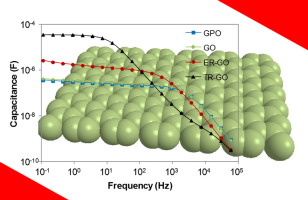
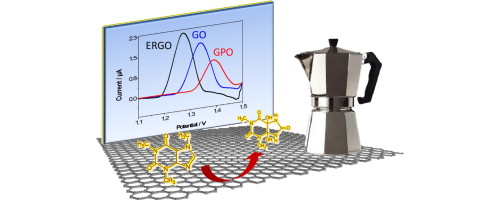
The analysis of food components is of high importance due to food safety and security. Here the electrochemical detection of caffeine was performed on different chemically modified graphene (CMG) surfaces carrying diverse amount of defects and oxygen functionalities. The analytical performances of graphite oxide (GPO), graphene oxide (GO), and electrochemically reduced graphene oxide (ERGO) were …

Graphene platforms for the detection of caffeine in real samples Read More »

Blood Proteins Strongly Reduce the Mobility of Artificial Self-Propelled Micromotors

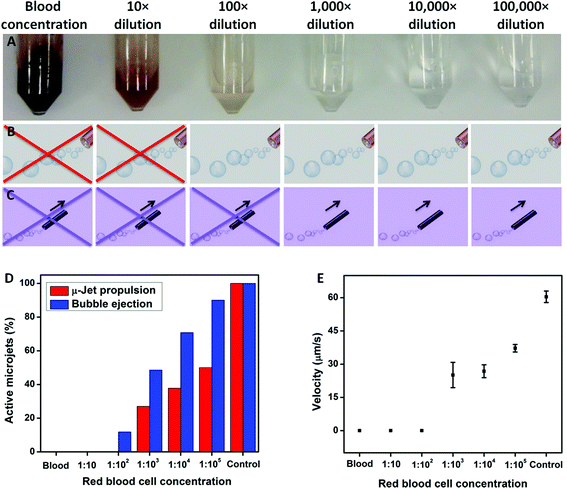
Autonomous self-propelled catalytic microjets are envisaged as an important technology in biomedical applications, including drug delivery, micro/nanosurgery, and active dynamic bioassays. The direct in vivo application of these microjets, specifically in blood, is however impeded by insufficient knowledge on the in vivo viability of the technique. This study highlights the effect of blood proteins on …
Blood Proteins Strongly Reduce the Mobility of Artificial Self-Propelled Micromotors Read More »

Highly Hydrogenated Graphene through Microwave Exfoliation of Graphite Oxide in Hydrogen Plasma: Towards Electrochemical Applications

Hydrogenated graphenes exhibit a variety of properties with potential applications in devices, ranging from a tunable band gap to fluorescence, ferromagnetism, and the storage of hydrogen. We utilize a one-step microwave-irradiation process in hydrogen plasma to create highly hydrogenated graphene from graphite oxides. The procedure serves the dual purposes of deoxygenation and concurrent hydrogenation of …

Highly Hydrogenated Graphene through Microwave Exfoliation of Graphite Oxide in Hydrogen Plasma: Towards Electrochemical Applications Read More »

Boron-Doped Graphene: Scalable and Tunable p-Type Carrier Concentration Doping

Precisely engineered changes in Fermi levels of graphene-based materials are of high importance for their applications in electronic and electrochemical devices. Such applications include photoelectrochemical reactions or enhanced electrochemical performance toward reduction of oxygen. Here we describe a method for scalable and tunable boron doping of graphene via thermal exfoliation of graphite oxide in BF3 …

Boron-Doped Graphene: Scalable and Tunable p-Type Carrier Concentration Doping Read More »

Electrochemistry of graphene, graphene oxide and other graphenoids: Review

The electrochemical behaviors of single-, few- and multi-layer graphene, graphene oxides, reduced graphene oxides, CVD graphene and three-dimensional graphene are discussed and critically evaluated, providing an up-to-date summary on the progress of the field. (C) 2013 Elsevier B.V. All rights reserved.

Carcinogenic Organic Residual Compounds Readsorbed on Thermally Reduced Graphene Materials are Released at Low Temperature

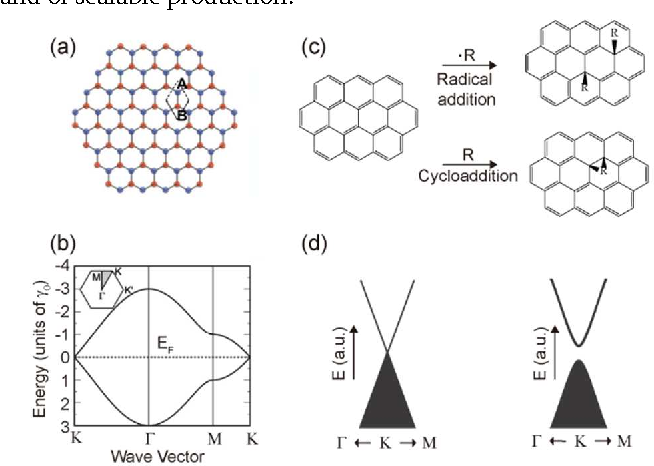
The preliminary oxidation of graphite to graphite oxide followed by a thermal exfoliation is one of the methods most frequently employed in the preparation of graphene. Such thermally reduced graphene can be widely used for several applications that range from coatings to sensing device fabrication. It is therefore important to investigate in detail the fabrication …
Carcinogenic Organic Residual Compounds Readsorbed on Thermally Reduced Graphene Materials are Released at Low Temperature Read More »

Unusual Inherent Electrochemistry of Graphene Oxides Prepared Using Permanganate Oxidants

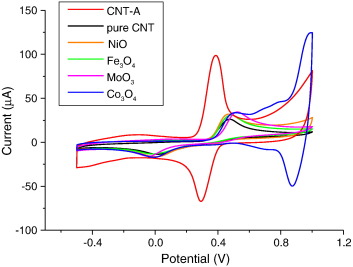
Graphene and graphene oxides are materials of significant interest in electrochemical devices such as supercapacitors, batteries, fuel cells, and sensors. Graphene oxides and reduced graphenes are typically prepared by oxidizing graphite in strong mineral acid mixtures with chlorate (Staudenmaier, Hofmann) or permanganate (Hummers, Tour) oxidants. Herein, we reveal that graphene oxides pose inherent electrochemistry, that …

Unusual Inherent Electrochemistry of Graphene Oxides Prepared Using Permanganate Oxidants Read More »

Carbonaceous Impurities in Carbon Nanotubes are Responsible for Accelerated Electrochemistry of Cytochrome c

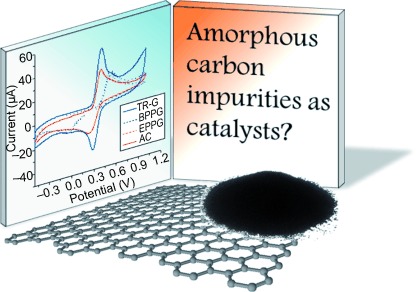
There have been many reports on the excellent electrocatalytic properties of carbon nanotubes toward many substrates. Here, we wish to address and investigate the apparent “good promotion” of the electron transfer to cytochrome c as previously shown and attributed to the electrocatalytic properties of carbon nanotubes (Wang et al. Anal. Chem. 2002, 74, 1993). We …

Carbonaceous Impurities in Carbon Nanotubes are Responsible for Accelerated Electrochemistry of Cytochrome c Read More »

Searching for Magnetism in Hydrogenated Graphene: Using Highly Hydrogenated Graphene Prepared via Birch Reduction of Graphite Oxides

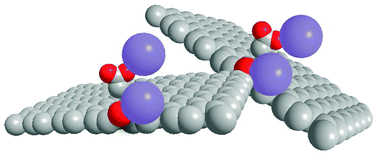
Fully hydrogenated graphene (graphane) and partially hydrogenated graphene materials are expected to possess various fundamentally different properties from graphene. We have prepared highly hydrogenated graphene containing 5% wt of hydrogen via Birch reduction of graphite oxide using elemental sodium in liquid NH3 as electron donor and methanol as proton donor in the reduction. We also …

Searching for Magnetism in Hydrogenated Graphene: Using Highly Hydrogenated Graphene Prepared via Birch Reduction of Graphite Oxides Read More »

Transition Metal (Mn, Fe, Co, Ni)-Doped Graphene Hybrids for Electrocatalysis

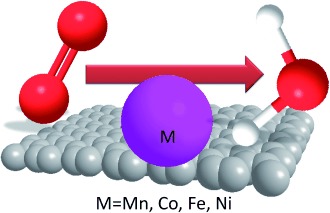
The development of electrocatalysts is crucial for renewable energy applications. Metal-doped graphene hybrid materials have been explored for this purpose, however, with much focus on noble metals, which are limited by their low availability and high costs. Transition metals may serve as promising alternatives. Here, transition metal-doped graphene hybrids were synthesized by a simple and …

Transition Metal (Mn, Fe, Co, Ni)-Doped Graphene Hybrids for Electrocatalysis Read More »

Sulfur-Doped Graphene via Thermal Exfoliation of Graphite Oxide in H2S, SO2, or CS2 Gas

Doping of graphene with heteroatoms is an effective way to tailor its properties. Here we describe a simple and scalable method of doping graphene lattice with sulfur atoms during the thermal exfoliation process of graphite oxides. The graphite oxides were first prepared by Staudenmaler, Hofmann, and Hummers methods followed by treatments in hydrogen sulfide, sulfur …

Sulfur-Doped Graphene via Thermal Exfoliation of Graphite Oxide in H2S, SO2, or CS2 Gas Read More »

The Toxicity of Graphene Oxides: Dependence on the Oxidative Methods Used

Graphene, a class of two-dimensional carbon nanomaterial, has attracted extensive interest in recent years, with a significant amount of research focusing on graphene oxides (GOs). They have been primed as potential candidates for biomedical applications such as cell labeling and drug delivery, thus the toxicity and behavior of graphene oxides in biological systems are fundamental …

The Toxicity of Graphene Oxides: Dependence on the Oxidative Methods Used Read More »

Chemically Modified Graphenes as Detectors in Lab-on-Chip Device

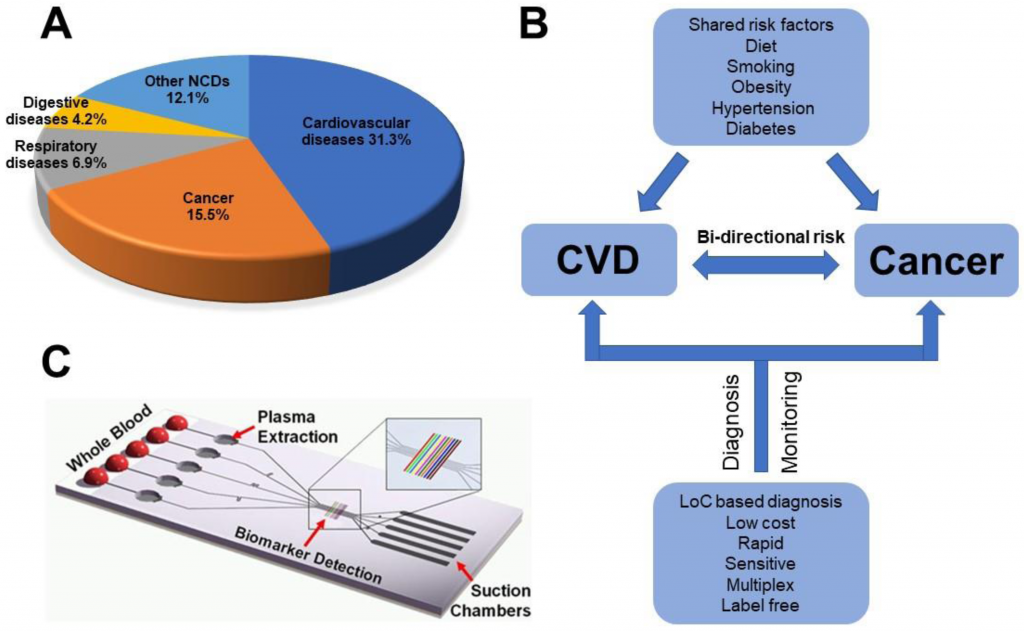
Graphene materials hold immense potentials for electrochemical detectors in lab-on-chip devices. The electronic and electrochemical properties of graphene based materials are significantly affected by the fabrication routes and by the structural features, such as density of defects and amount of oxygen containing groups. Therefore it is paramount to evaluate various graphene-based materials prior to their …

Chemically Modified Graphenes as Detectors in Lab-on-Chip Device Read More »

Precise Tuning of Surface Composition and Electron-Transfer Properties of Graphene Oxide Films through Electroreduction

Graphene materials are generally prepared from the exfoliation of graphite oxide (GO) to graphene oxide, followed by subsequent chemical or thermal reduction. These methods, although efficient in removing most of the oxygen functionalities from the GO material, lack control over the extent of the reduction process. We demonstrate here an electrochemical reduction procedure that not …

Precise Tuning of Surface Composition and Electron-Transfer Properties of Graphene Oxide Films through Electroreduction Read More »

Soldering DNA to graphene via 0, 1 and 2-point contacts: Electrochemical impedance spectroscopic investigation

DNA is one of the most programmable molecules available till date and it is immensely important for nanoarchitectonic works. Herein, we investigate the influence of topological constraints of single stranded DNA, which is attached to a graphene sheet, on its ability to hybridize with a complementary strand. These findings are expected to have a profound …

Soldering DNA to graphene via 0, 1 and 2-point contacts: Electrochemical impedance spectroscopic investigation Read More »

Direct electrochemistry of copper oxide nanoparticles in alkaline media

The use of metallic nanoparticles in consumer products is growing, posing health threatening issues as they are being released into the environment As such, there is an urgent need for a facile method to be used for the detection and quantification of metallic nanoparticles present in a sample. In this work, the electrochemical behavior of …

Direct electrochemistry of copper oxide nanoparticles in alkaline media Read More »

Electrochemistry at CVD Grown Multilayer Graphene Transferred onto Flexible Substrates

The application of graphene and graphene-related materials for the fabrication of improved electrochemical devices is a very active research field. Because of the need of bulk quantities of graphene for such applications, chemical vapor deposition (CVD) represents one of the most promising fabrication processes to obtain large area and good quality graphene films with controlled …

Electrochemistry at CVD Grown Multilayer Graphene Transferred onto Flexible Substrates Read More »

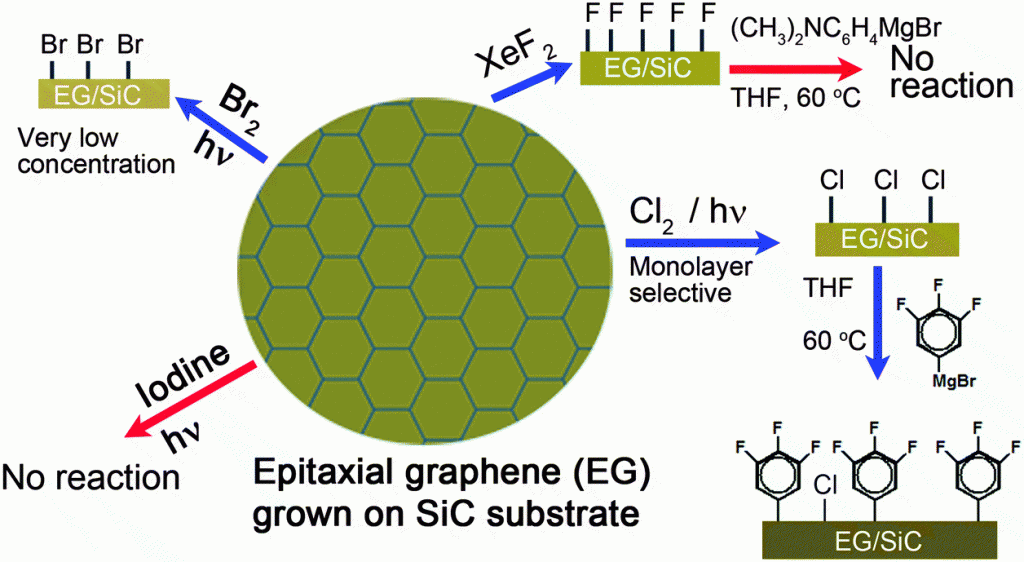
Halogenation of Graphene with Chlorine, Bromine, or Iodine by Exfoliation in a Halogen Atmosphere

Nanoarchitectonics on graphene implicates a specific and exact anchoring of molecules or nanoparticles onto the surface of graphene. One such example of an effective anchoring group that is highly reactive is the halogen moiety. Herein we describe a simple and scalable method for the introduction of halogen (chlorine, bromine, and iodine) moieties onto the surface …

Halogenation of Graphene with Chlorine, Bromine, or Iodine by Exfoliation in a Halogen Atmosphere Read More »

Inherently electroactive graphene oxide nanoplatelets as labels for specific protein-target recognition

Graphene related materials have been widely employed as highly efficient transducers for biorecognition. Here we show a conceptually new approach of using graphene oxide nanoplatelets (50 x 50 nm) as voltammetric inherently active labels for specific protein-target molecule recognition. This proof-of-principle is demonstrated by biotin-avidin recognition, which displays that graphene oxide nanoplatelet labels show excellent …

Inherently electroactive graphene oxide nanoplatelets as labels for specific protein-target recognition Read More »

Self-propelled nanojets via template electrodeposition

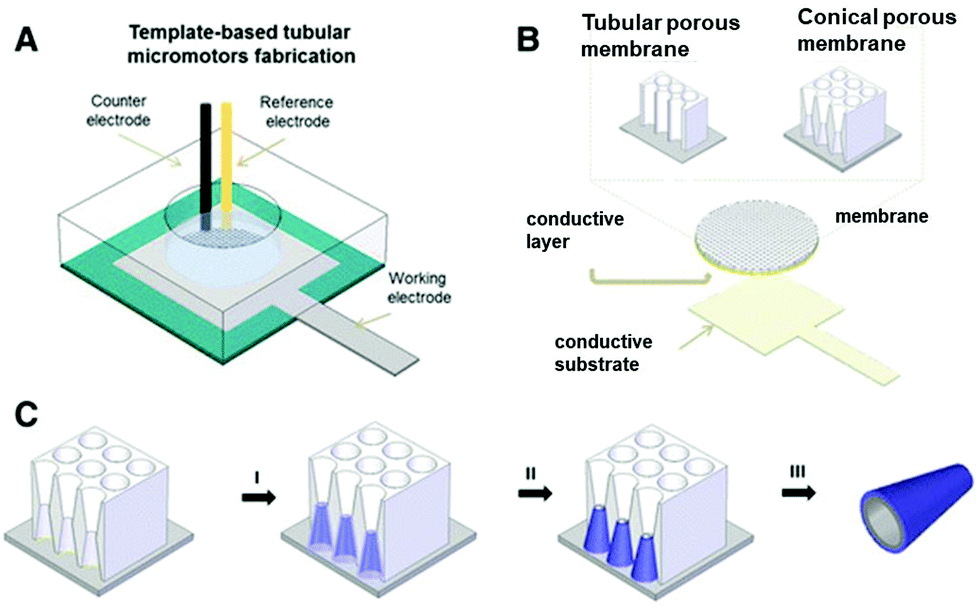
In this paper, we present a rapid, high-yield, low-end and low-cost fabrication of nanojet motors using a template directed electrochemical deposition method. Using an electrochemical deposition method, the bubble-ejecting nanojets were grown within the alumina template, which is commercially available. These fabricated nanosized devices have typical dimensions of 300 nm (diameter) by 4.5 mu m …

Self-propelled nanojets via template electrodeposition Read More »

Boron-doped graphene and boron-doped diamond electrodes: detection of biomarkers and resistance to fouling

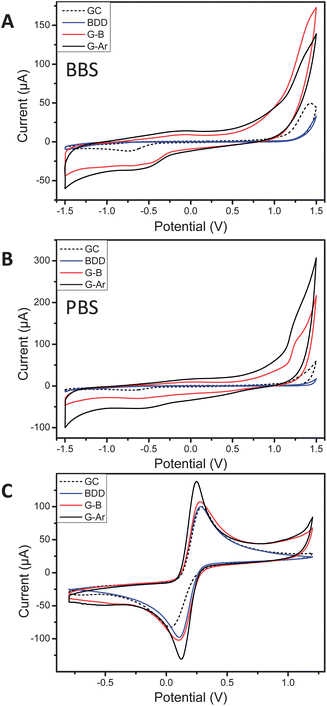
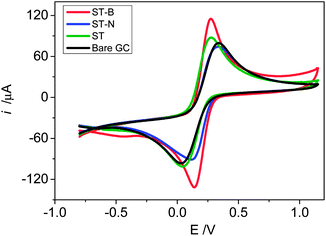
Doped carbon materials are of high interest as doping can change their properties. Here we wish to contrast the electrochemical behaviour of two carbon allotropes – sp(3) hybridized carbon as diamond and sp(2) hybridized carbon as graphene – doped by boron. We show that even though both materials exhibit similar heterogeneous electron transfer towards ferro/ferricyanide, …

Boron-doped graphene and boron-doped diamond electrodes: detection of biomarkers and resistance to fouling Read More »

Unscrolling of multi-walled carbon nanotubes: towards micrometre-scale graphene oxide sheets

Chemical routes toward obtaining graphene materials are commonly used in the field, and one such preparation method is the unzipping of carbon nanotubes into long, thin graphene nanoribbons. In this work, we show that oxidative permanganate treatment of Scroll type multi-walled carbon nanotubes can lead to large, stacked sheets instead of nanoribbons. This difference is …

Unscrolling of multi-walled carbon nanotubes: towards micrometre-scale graphene oxide sheets Read More »

Reynolds numbers influence the directionality of self-propelled microjet engines in the 10(-4) regime

The motion directionality of self-propelled bubble-jet microengines is influenced by their velocities and/or viscosity of the media in which they move. The influence of the fuel concentration from 1 to 3 wt% of H2O2 in 0.5% steps and of the glycerol fraction from 0 to 64% in aqueous solution on the directionality of the microjets …

Reynolds numbers influence the directionality of self-propelled microjet engines in the 10(-4) regime Read More »

Challenges of the movement of catalytic micromotors in blood

Catalytic microjet bubble-propelled engines have attracted a large amount of interest for their potential applications in biomedicine, environmental sciences and natural resources discovery. One of the current efforts in this field is focused on the search of biocompatible fuels. However, only a minimal amount of effort has been made to assess the challenges facing the …

Challenges of the movement of catalytic micromotors in blood Read More »

An insight into the hybridization mechanism of hairpin DNA physically immobilized on chemically modified graphenes

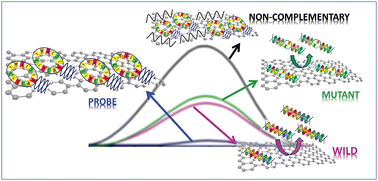
There is an emerging interest in developing electrochemical DNA biosensors which rely on label-free protocols for the detection of DNA hybridization and polymorphism. Lately, many of them have been using DNA probes which were physically adsorbed onto different graphene platforms. In these works, the biorecognition event is monitored by electrochemical impedance spectroscopy and the detection …

An insight into the hybridization mechanism of hairpin DNA physically immobilized on chemically modified graphenes Read More »

Reduction of graphene oxide with substituted borohydrides

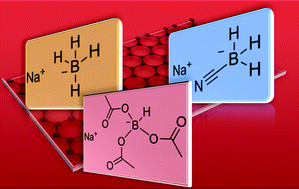
The emergence of graphene as a next-generation material promises enhanced improvement in various fields of materials science. So far, the oxidation of graphite to graphite oxide and consequent reduction to chemically reduced graphene oxide is the most relevant method towards large scale production of graphene materials. Our long-standing aim in the investigation of reductive chemical …
Reduction of graphene oxide with substituted borohydrides Read More »

Metallic impurities availability in reduced graphene is greatly enhanced by its ultrasonication

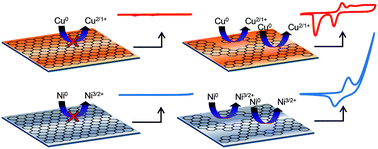
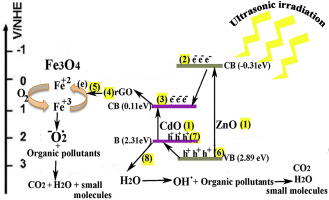
Ultrasonication is an inherent part of the major routes for preparation of reduced graphene. It is used to exfoliate graphite oxide to graphene oxide with consequent reduction to reduced graphenes. Metallic impurities in graphenes, originating from the starting material, graphite, have a profound influence on many properties of graphene, such as the electrochemical, catalytic and …
Metallic impurities availability in reduced graphene is greatly enhanced by its ultrasonication Read More »

Biorecognition on Graphene: Physical, Covalent, and Affinity Immobilization Methods Exhibiting Dramatic Differences

The preparation of biorecognition layers on the surface of a sensing platform is a very crucial step for the development of sensitive and selective biosensors. Different protocols have been used thus far for the immobilization of biomolecules onto various electrode surfaces. In this work, we investigate how the protocol followed for the immobilization of a …

Biorecognition on Graphene: Physical, Covalent, and Affinity Immobilization Methods Exhibiting Dramatic Differences Read More »

Covalent chemistry on graphene

The recent growth in graphene has witnessed the utilization of graphene as promising materials in a plethora of applications. The potential of graphene could be improved exponentially provided that the processability and band gap could be finely controlled. To this aim, chemical functionalization of graphene remains an important and fundamental approach. This tutorial review aims …

Covalent chemistry on graphene Read More »

Electrocatalytic effect of ZnO nanoparticles on reduction of nitroaromatic compounds

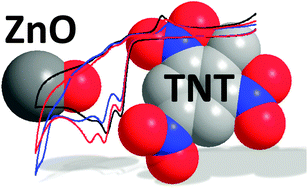
Nitroaromatic compounds have garnered a lot of attention due to their wide applications in military and industrial fields. Electrochemical techniques can be applied for sensing these compounds due to their electrochemical activity. Electrocatalytic reduction of nitroaromatic explosives was shown previously on silver nanoparticles and graphene based surfaces. Here, we demonstrate electrocatalytic reduction of explosives on …

Electrocatalytic effect of ZnO nanoparticles on reduction of nitroaromatic compounds Read More »

Poisoning of bubble propelled catalytic micromotors: the chemical environment matters

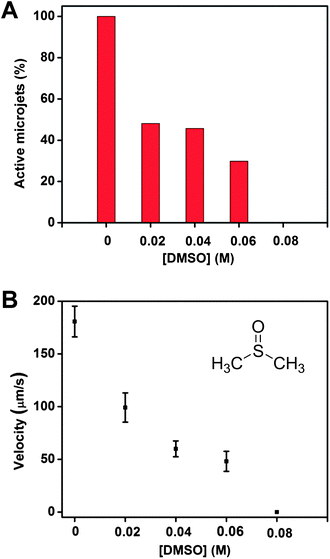
Self-propelled catalytic microjets have attracted considerable attention in recent years and these devices have exhibited the ability to move in complex media. The mechanism of propulsion is via the Pt catalysed decomposition of H2O2 and it is understood that the Pt surface is highly susceptible to poisoning by sulphur-containing molecules. Here, we show that important …

Poisoning of bubble propelled catalytic micromotors: the chemical environment matters Read More »

Graphane and hydrogenated graphene

Graphane, the fully hydrogenated analogue of graphene, and its partially hydrogenated counterparts are attracting increasing attention. We review here its structure and predicted material properties, as well as the current methods of preparation. Graphane and hydrogenated graphenes are far more complex materials than graphene, expected to have a tuneable band gap via the extent of …

Graphane and hydrogenated graphene Read More »

Purification of carbon nanotubes by high temperature chlorine gas treatment

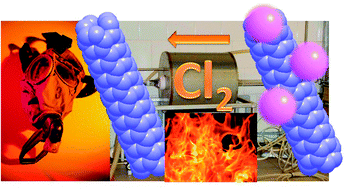
Carbon nanotubes (CNTs) have a tremendous amount of potential to become useful components for future practical applications that may become a part of everyday life. While the sp(2) carbon itself is a rather chemically inert material, the issue of residual metal nanoparticle catalysts remains a prominent barrier in the utilization of CNTs in many areas …

Purification of carbon nanotubes by high temperature chlorine gas treatment Read More »

High-resolution impedance spectroscopy for graphene characterization

In this work we report a method based on high-resolution electrical impedance spectroscopy able to distinguish between oxidized and reduced graphene platforms. The high sensitivity of the technique coupled with the structural refinement software allowed also the estimation of the thickness of the different chemically modified graphene layers. (C) 2012 Elsevier B.V. All rights reserved.

Prolonged exposure of graphite oxide to soft X-ray irradiation during XPS measurements leads to alterations of the chemical composition

X-ray photoelectron spectroscopy is an indispensable technique to analyse the structural and chemical features of graphene-based materials. Such detailed characterization is often imperative prior to the usage of these materials for various applications. In this work, the effects of the continuous irradiation with soft X-rays during the analysis of graphite oxide with X-ray photoelectron spectroscopy …

Prolonged exposure of graphite oxide to soft X-ray irradiation during XPS measurements leads to alterations of the chemical composition Read More »

Potassium assisted reduction and doping of graphene oxides: towards faster electron transfer kinetics

The current scientific interest and fervour in graphene research is fuelled by their potential uses in a variety of fields such as energy storage, electrochemical and biomolecule sensing applications. In particular, many of these require the bulk production of graphene materials, using approaches such as the oxidation of graphite to graphite oxide with chlorate or …

Potassium assisted reduction and doping of graphene oxides: towards faster electron transfer kinetics Read More »

Large-scale quantification of CVD graphene surface coverage

The extraordinary properties demonstrated for graphene and graphene-related materials can be fully exploited when a large-scale fabrication procedure is made available. Chemical vapor deposition (CVD) of graphene on Cu and Ni substrates is one of the most promising procedures to synthesize large-area and good quality graphene films. Parallel to the fabrication process, a large-scale quality …

Large-scale quantification of CVD graphene surface coverage Read More »

Boron and nitrogen doping of graphene via thermal exfoliation of graphite oxide in a BF3 or NH3 atmosphere: contrasting properties

The fabrication of graphenes doped with electron withdrawing/donating elements can be realized through the synthesis procedures reported in this paper. Doping of the graphenes occurs during the thermal exfoliation step of graphite oxide in the presence of the dopant containing gas (BF3 or NH3). The materials are extensively characterized by high-resolution X-ray photoelectron spectroscopy, prompt …

Boron and nitrogen doping of graphene via thermal exfoliation of graphite oxide in a BF3 or NH3 atmosphere: contrasting properties Read More »

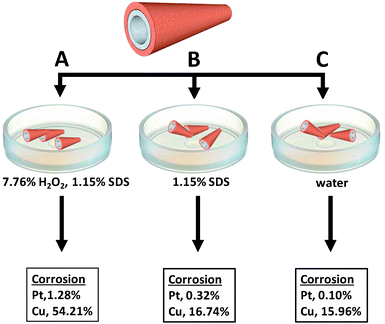
Concentric bimetallic microjets by electrodeposition

Self-propelled micro and nanosystems are at the forefront of nanotechnology research. Here we describe a method for fabrication of concentric bimetallic microjets via an electrochemical deposition route. These microjet engines consist of an inner platinum layer which is responsible for the catalytic decomposition of H2O2, which subsequently results in bubble-propelled movement. The outer copper layer …

Concentric bimetallic microjets by electrodeposition Read More »

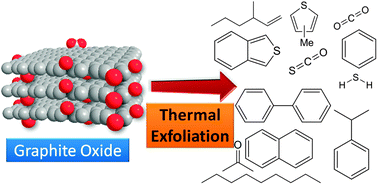
Complex organic molecules are released during thermal reduction of graphite oxides

Thermal exfoliation and deoxygenation of graphite oxide is one of the major routes for the preparation of large quantities of graphene-based materials. It is commonly believed that thermal exfoliation leads to the release of H2O, CO and CO2 gases. Here we show for the first time that in addition to these small simple molecules, there …

Complex organic molecules are released during thermal reduction of graphite oxides Read More »

Graphenes prepared from multi-walled carbon nanotubes and stacked graphene nanofibers for detection of 2,4,6-trinitrotoluene (TNT) in seawater

The study on explosive materials is paramount due to the potential hazards to national security and health. When disposed of, explosives can cause seawater pollution. The detection of 2,4,6-trinitrotoluene (TNT) in seawater has been examined on two different forms of graphene, mainly graphene prepared from the unzipping of multi-walled carbon nanotubes (MWCNTs) and from the …

Graphenes prepared from multi-walled carbon nanotubes and stacked graphene nanofibers for detection of 2,4,6-trinitrotoluene (TNT) in seawater Read More »

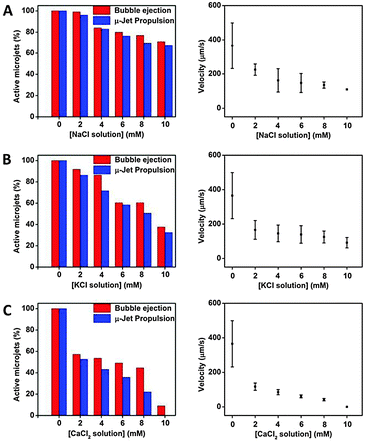
Blood electrolytes exhibit a strong influence on the mobility of artificial catalytic microengines

The developments in biomedical sciences foresee the inclusion of self-propelled catalytic micromotors for in vivo therapeutic strategies in the near future. We show here that blood electrolytes, such as Na+, K+, Ca2+, Cl, SO42 and phosphates, decrease the mobility of the Pt catalyzed tubular microjets. This effect is significant and in many cases, the microjets …

Blood electrolytes exhibit a strong influence on the mobility of artificial catalytic microengines Read More »

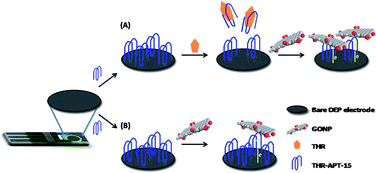
Thrombin aptasensing with inherently electroactive graphene oxide nanoplatelets as labels

Graphene and its associated materials are commonly used as the transducing platform in biosensing. We propose a different approach for the application of graphene in biosensing. Here, we utilized graphene oxide nanoplatelets as the inherently electroactive labels for the aptasensing of thrombin. The basis of detection lies in the ability of graphene oxide to be …

Thrombin aptasensing with inherently electroactive graphene oxide nanoplatelets as labels Read More »