Year: 2010

Electrochemistry of a Whole Group of Compounds Affected by Metallic Impurities within Carbon Nanotubes

In this article, we demonstrate that iron oxide nanoparticles are responsible for the “electrocatalytic” effect of carbon nanotubes toward the reduction of organic peroxides. Taking into account earlier findings that hydrogen peroxide is susceptible to the same effect, we suggest that the electrochemistry of the entire class of compounds containing the peroxide group is affected …
Electrochemistry of a Whole Group of Compounds Affected by Metallic Impurities within Carbon Nanotubes Read More »

Stacked graphene nanofibers doped polypyrrole nanocomposites for electrochemical sensing

This publication shows a single-step electropolymerization which has been carried out by the incorporation of an anionic stacked graphene nanofiber (SGNF) dopant into a polypyrrole (PPy) film, at a disposable screen-printed electrode. The incorporation of the SGNFs into the polymer does not affect their electrochemical properties, shown through cyclic voltammetry by the earlier oxidation of …

Stacked graphene nanofibers doped polypyrrole nanocomposites for electrochemical sensing Read More »

Graphene for electrochemical sensing and biosensing

Graphene has proved to be an excellent nanomaterial for applications in electrochemistry. We review progress in constructing high-performance electrochemical sensors and biosensors. We also discuss: different routes for graphene fabrication; graphene-modified electrodes and graphene-composite electrodes for sensing, including those based on ionic liquids; incorporation of biorecognition elements into graphene-based electrodes; and, graphene-supported electrocatalytic nanoparticle-based electrochemical …

Graphene for electrochemical sensing and biosensing Read More »

Single-, Few-, and Multilayer Graphene Not Exhibiting Significant Advantages over Graphite Microparticles in Electroanalysis

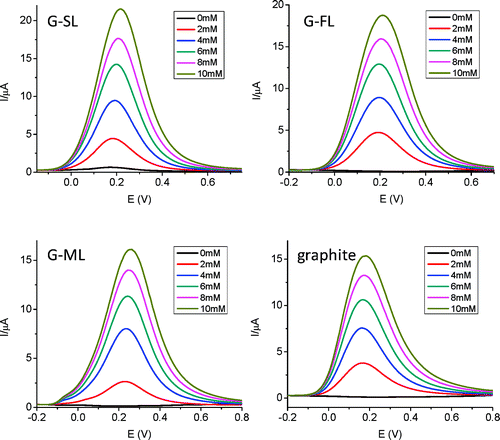
This report compares the electroanalytical performances of single- (G-SL), few- (G-FL), and multilayer graphene (G-ML), graphite microparticles, and edge-plane pyrolytic graphite electrodes in terms of sensitivity, linearity, and repeatability. We show that in the case of differential pulse voltammetric (DPV) detection of ascorbic acid, the sensitivity of a G-SL electrode is about 30% greater than …

Single-, Few-, and Multilayer Graphene Not Exhibiting Significant Advantages over Graphite Microparticles in Electroanalysis Read More »

Multilayer graphene nanoribbons exhibit larger capacitance than their few-layer and single-layer graphene counterparts

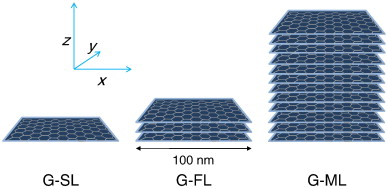
This article demonstrates that it is not always beneficial to exfoliate graphitic structures to single-layer graphene to achieve maximum electrochemical performance. Using electrochemical impedance spectroscopy, we show that multilayer graphene nanoribbons with cross sections of 100 x 100 nm provide larger capacitance (15.6 F/g) than do few-layer graphene nanoribbons (14.9 F/g) and far larger capacitance …

Multilayer graphene nanoribbons exhibit larger capacitance than their few-layer and single-layer graphene counterparts Read More »

Magnetic Control of Tubular Catalytic Microbots for the Transport, Assembly, and Delivery of Micro-objects

Recently a significant amount of attention has been paid towards the development of man-made synthetic catalytic micro- and nanomotors that can mimic biological counterparts in terms of propulsion power, motion control, and speed. However, only a few applications of such self-propelled vehicles have been described. Here the magnetic control of self-propelled catalytic Ti/Fe/Pt rolled-up microtubes …

Magnetic Control of Tubular Catalytic Microbots for the Transport, Assembly, and Delivery of Micro-objects Read More »

Rapid, Sensitive, and Label-Free Impedimetric Detection of a Single-Nucleotide Polymorphism Correlated to Kidney Disease

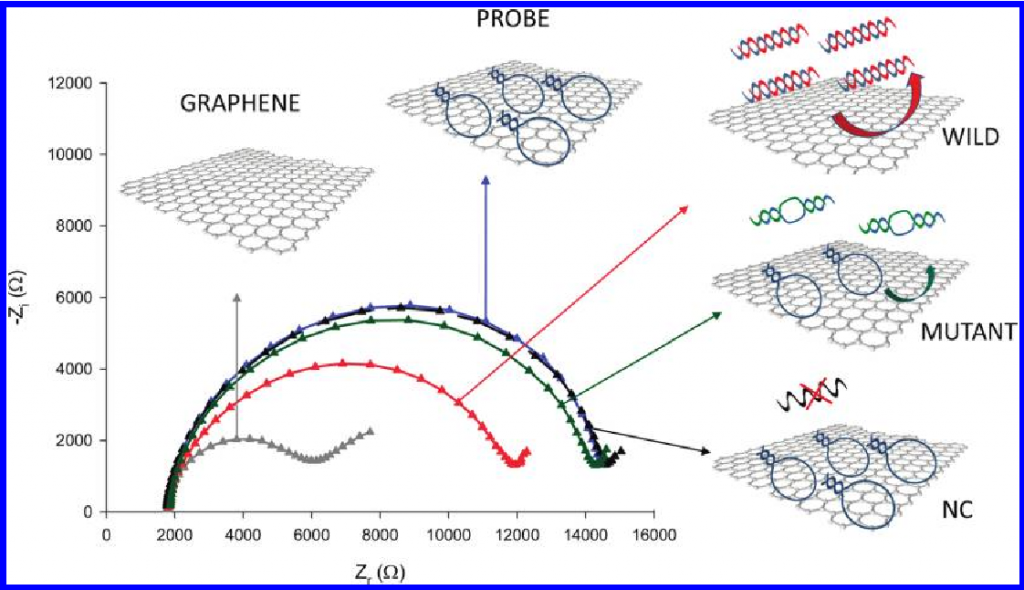
We present a protocol for the very rapid and sensitive detection of a specific mutation of the COL4A5 gene (exon 29, A-C mismatch) which was found in people affected by Alport syndrome (AS) and their families. Disposable electrochemically printed electrodes were used to immobilize a single-stranded oligonucleotide probe that was complementary to the AS-correlated gene. …

Rapid, Sensitive, and Label-Free Impedimetric Detection of a Single-Nucleotide Polymorphism Correlated to Kidney Disease Read More »

Effect of Nitric Acid “Washing” Procedure on Electrochemical Behavior of Carbon Nanotubes and Glassy Carbon mu-Particles

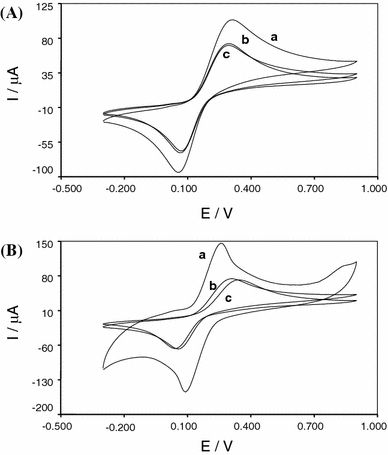
The electroanalytic performances of glassy carbon paste electrode (GCPE), multi-walled carbon nanotube (MWCNT)-GCPE and double-walled carbon nanotube (DWCNT)-GCPE, which include HNO(3) washed/unwashed materials, were compared by monitoring cyclic voltammograms of potassium ferricyanide and catechol. Electrodes were prepared by introducing proper amount of DWCNT and MWCNT into GCPE. First untreated materials (DWCNT, MWCNT, GC mu-particles) were …

Effect of Nitric Acid “Washing” Procedure on Electrochemical Behavior of Carbon Nanotubes and Glassy Carbon mu-Particles Read More »

Electrochemically powered self-propelled electrophoretic nanosubmarines

In the past few years, we have witnessed rapid developments in the realization of the old nanotechnology dream, autonomous nanosubmarines. These nanomachines are self-powered, taking energy from their environment by electrocatalytic conversion of chemicals present in the solution, self-propelled by flux of the electrons within the submarine and the hydronium ions on the surface of …

Electrochemically powered self-propelled electrophoretic nanosubmarines Read More »

Stacked graphene nanofibers for electrochemical oxidation of DNA bases

In this article, we show that stacked graphene nanofibers (SGNFs) demonstrate superior electrochemical performance for oxidation of DNA bases over carbon nanotubes (CNTs). This is due to an exceptionally high number of accessible graphene sheet edges on the surface of the nanofibers when compared to carbon nanotubes, as shown by transmission electron microscopy and Raman …

Stacked graphene nanofibers for electrochemical oxidation of DNA bases Read More »

Regulatory Peptides Are Susceptible to Oxidation by Metallic Impurities within Carbon Nanotubes

In this article, we show that the redox properties of the regulatory peptide L-glutathione are affected by the presence of nickel oxide impurities within single-walled carbon nanotubes (SWCNTs). Glutathione is a powerful antioxidant that protects cells from oxidative stress by removing free radicals and peroxides. We show that the L-cysteine moiety in L-glutathione is responsible …

Regulatory Peptides Are Susceptible to Oxidation by Metallic Impurities within Carbon Nanotubes Read More »

Platelet Graphite Nanofibers for Electrochemical Sensing and Biosensing: The Influence of Graphene Sheet Orientation

Here, we demonstrate that platelet graphite nanofibers (PGNFs) exhibit fast heterogeneous electron-transfer rates for a wide variety of compounds such as FeCl3, ferrocyanide, dopamine, uric acid, ascorbic acid, and the reduced form of beta-nicotinamide adenine dinucleotide. The electrochemical properties of PGNFs are superior to those of multiwalled carbon nanotubes (MWCNTs) or graphite microparticles (GMPs). Transmission …

Platelet Graphite Nanofibers for Electrochemical Sensing and Biosensing: The Influence of Graphene Sheet Orientation Read More »

Carbon nanotube-chalcogenide glass composite

This article describes the preparation of multi-walled carbon nanotube-chalcogenide glass composite by direct synthesis and the melt-quenching method. The carbon nanotubes-chalcogenide glass composite was characterized by high-resolution transmission electron microscopy (HRTEM). TEM/energy-dispersive X-ray spectroscopy, low energy electron excited X-ray spectroscopy, Raman spectroscopy, spectroscopic ellipsometry, microhardness, and impedance spectroscopy. CNTs-AgAsS2 glass composite possess highly increased ionic …

Carbon nanotube-chalcogenide glass composite Read More »

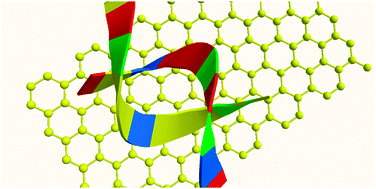
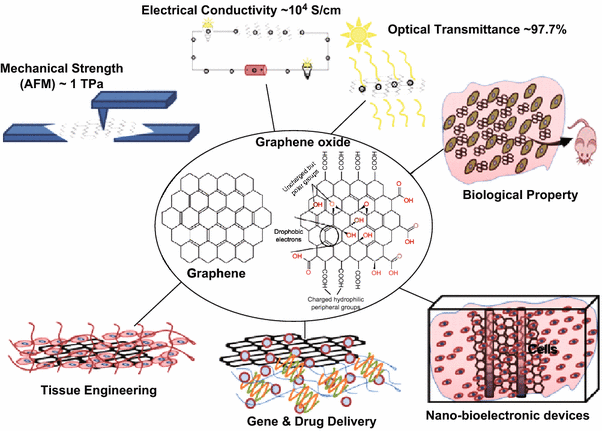
Graphene-based nanomaterials and their electrochemistry

Graphene-based nanomaterials are in the forefront of chemical research. This tutorial review provides an introduction to their electrochemistry, its fundamentals and applications. Selected examples of applications in energy storage and sensing are presented. The synthetic methods for preparing graphenes as well as their materials chemistry are thoroughly discussed, as they have a profound influence on …

Graphene-based nanomaterials and their electrochemistry Read More »

Investigation of the Mechanism of Adsorption of beta-Nicotinamide Adenine Dinucleotide on Single-Walled Carbon Nanotubes

We address in this manuscript the important issue of the stability of single-walled carbon nanotube (SWCNT)-based electrodes upon oxidation of NADH to NAD(+). NADH and NAD(+) play a key role in the development of electrochemical enzyme-based biofuel cells and biosensors. However, most of the electrode, materials exhibit strong surface passivation when oxidation of NADH to …

Investigation of the Mechanism of Adsorption of beta-Nicotinamide Adenine Dinucleotide on Single-Walled Carbon Nanotubes Read More »