Year: 2007

Nanoprecise spontaneous coating of carbon nanotubes with a europium hydroxide layer

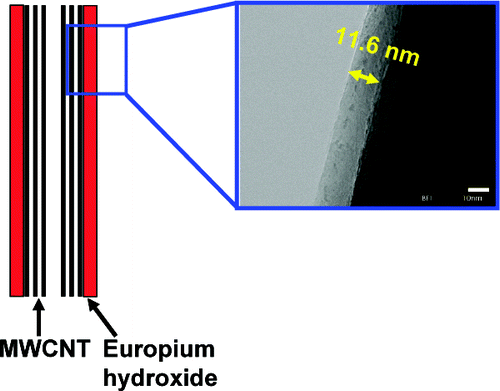
A protocol for ultrathin nanoprecise coating of individual multiwall carbon nanotubes with amorphous europium hydroxide was developed. The nanocoated carbon nanotubes were successfully prepared by in situ deposition of europium hydroxide in the aqueous suspension by means of dative bonds to oxygen containing groups on the surface of a multiwall carbon nanotube. The coating layer …

Nanoprecise spontaneous coating of carbon nanotubes with a europium hydroxide layer Read More »
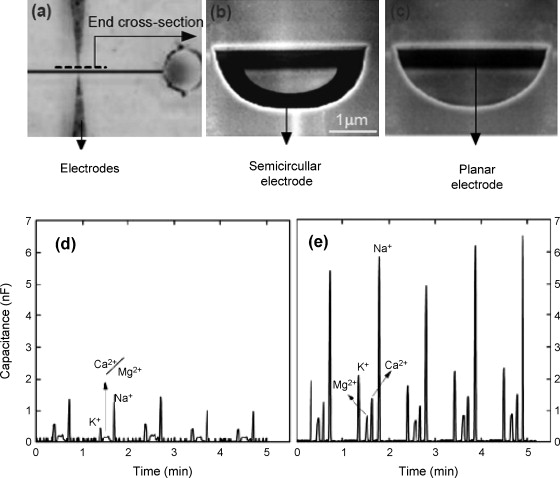
Contactless conductivity detection for microfluidics: Designs and applications

Different methods for construction of contactless conductivity detectors (CCD) for microchip electrophoresis device are described in this review. This includes three main schemes of CCD for microchips, such as (i) the detection electrodes are placed along the microchannel from outside of the microchip and they are insulated from the channel by the cover lid of …

Contactless conductivity detection for microfluidics: Designs and applications Read More »

Carbon nanotube/polysulfone screen-printed electrochemical immunosensor

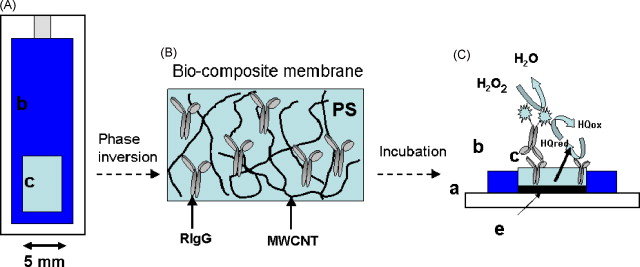
The simple and efficient method for preparing sensitive carbon nanotube/polysulfone/RIgG immunocomposite is described. The membrane of the modified disposable screen-printed electrochemical immunosensor is based on phase inversion method. Carbon nanotube/polysulfone membrane acts both as reservoir of immunological material and transducer while offering high surface area, high toughness and mechanical flexibility. The comparison with graphite/polysulfone/RIgG immunosensors …

Carbon nanotube/polysulfone screen-printed electrochemical immunosensor Read More »

Redox protein noncovalent functionalization of double-wall carbon nanotubes: Electrochemical binder-less glucose biosensor

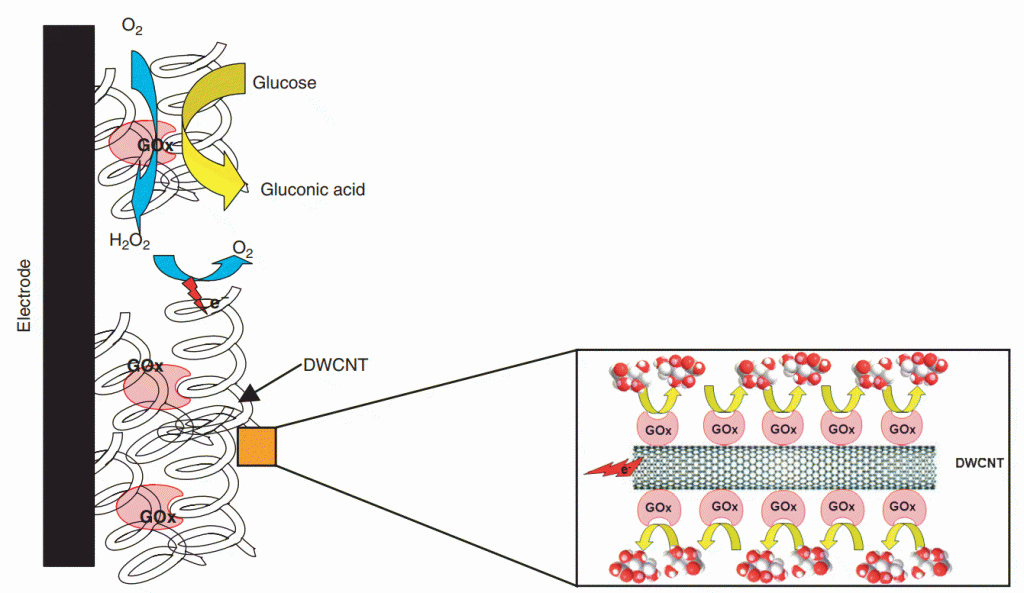
Double wall carbon nanotubes are noncovalently functionalized with redox protein and such assembly is used for construction of electrochemical binder-less glucose biosensor. Redox protein glucose oxidase performs as biorecognition element and double wall carbon nanotubes act both as immobilization platform for redox enzyme and as signal transducer. The double carbon nanotubes are characterized by cyclic …

Redox protein noncovalent functionalization of double-wall carbon nanotubes: Electrochemical binder-less glucose biosensor Read More »

Food analysis on microfluidic devices using ultrasensitive carbon nanotubes detectors

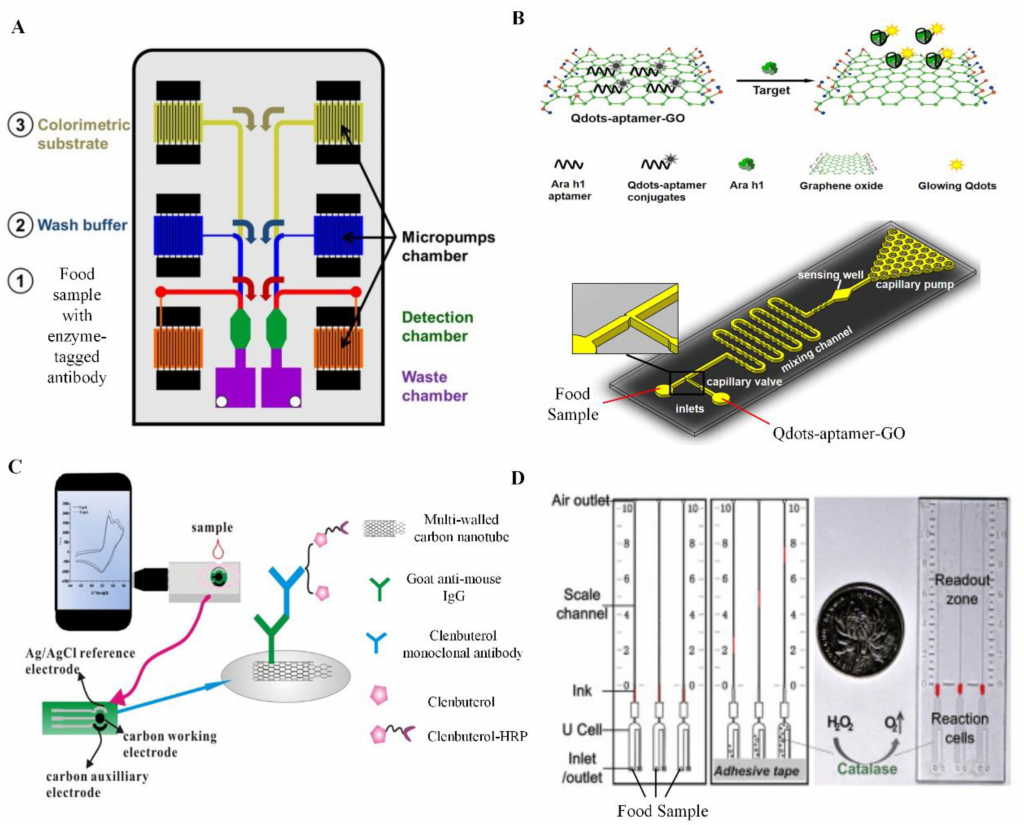
Microfluidic devices using carbon nanotube (CNT) materials (single-walled and two multiwalled (MWCNT)) for the analysis of selected analyte groups of significance in foods such as dietary antioxidants, water-soluble vitamins, vanilla flavors, and isoflavones involved in representative food samples have been explored for the first time. Ultrafast separations resulted in well-defined and resolved peaks with enhanced …

Food analysis on microfluidic devices using ultrasensitive carbon nanotubes detectors Read More »

Microfluidics in amino acid analysis

Microfluidic devices have been widely used to derivatize, separate, and detect amino acids employing many different strategies. Virtually zero-dead volume interconnections and fast mass transfer in small volume microchannels enable dramatic increases in on-chip derivatization reaction speed, while only minute amounts of sample and reagent are needed. Due to short channel path, fast subsecond separations …

Microfluidics in amino acid analysis Read More »

Carbon nanotubes contain residual metal catalyst nanoparticles even after washing with nitric acid at elevated temperature because these metal nanoparticles are sheathed by several graphene sheets

It is demonstrated that multiwalled (MWCNT) and single-walled (SWCNT) carbon nanotube materials contain residual metal impurities (Fe, Ni, Co, Mo) even after prolonged periods of “washing” with concentrated nitric acid at temperature of 80 degrees C. Transmission electron microscopy (TEM) and high-resolution TEM (HR-TEM) reveals that this is because such metal impurities are intercalated in …

Carbon nanotubes contain residual metal catalyst nanoparticles even after washing with nitric acid at elevated temperature because these metal nanoparticles are sheathed by several graphene sheets Read More »

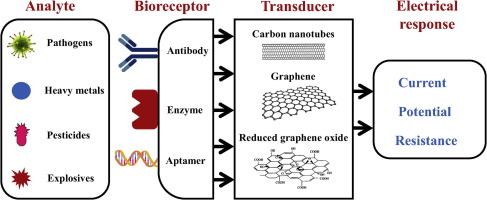
Electrochemical nanobiosensors

This review discusses main techniques and methods which use nanoscale materials for construction of electrochemical biosensors. Described approaches include nanotube and nanoparticle-based electrodes relying on aligned nanotube arrays, direct electron transfer between biomolecule and electrode. novel binding materials and mass production technology; and nanoscale materials as biomolecule tracers, including gold nanoparticles, quantum dots for DNA …

Electrochemical nanobiosensors Read More »

Organically modified sols as pseudostationary phases for microchip electrophoresis

We demonstrate that the selectivity of microchip electrophoresis separations is greatly improved by the presence of organically modified silica (Ormosil) sols in the run buffer. A negatively-charged N-(trimethoxysilylpropyl)ethylenediamine triacetic-acid (TETT)-based sol is used for improving the selectivity between nitroaromatic explosives and a methyltrimethoxysilane (MTMOS)-based sol is employed for enhancing the microchip separation of environmental pollutants, …

Organically modified sols as pseudostationary phases for microchip electrophoresis Read More »

Electrochemical genosensors for biomedical applications based on gold nanoparticles

Two cold nanoparticles-based genomagnetic sensors designs for detection of DNA hybridization are described. Both assays are based on a magnetically induced direct electrochemical detection of gold tags on magnetic graphite-epoxy composite electrodes. The first design is a two strands assay format that consists of the hybridization between a capture DNA strand which is linked with …

Electrochemical genosensors for biomedical applications based on gold nanoparticles Read More »

Electrochemical properties of double wall carbon nanotube electrodes

Electrochemical properties of double wall carbon nanotubes (DWNT) were assessed and compared to their single wall (SWNT) counterparts. The double and single wall carbon nanotube materials were characterized by Raman spectroscopy, scanning and transmission electron microscopy and electrochemistry. The electrochemical behavior of DWNT film electrodes was characterized by using cyclic voltammetry of ferricyanide and NADH. …

Electrochemical properties of double wall carbon nanotube electrodes Read More »

Spontaneous coating of carbon nanotubes with an ultrathin polypyrrole layer

A novel protocol for precisely coating individual multiwall carbon nanotubes (MWCNTs) with an ultrathin layer of polypyrrole was developed. The nanocoated MWCNTs were successfully prepared by in situ chemical deposition of polypyrrole in an aqueous suspension of MWCNTs. The coating layer was very uniform and the thickness of the layer was determined by controlling the …

Spontaneous coating of carbon nanotubes with an ultrathin polypyrrole layer Read More »

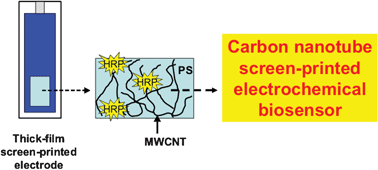
Carbon nanotube/polysulfone composite screen-printed electrochemical enzyme biosensors

The fabrication, evaluation and attractive performance of multiwall carbon nanotube(MWCNT)/polysulfone biocomposite membrane modified thick-film screen-printed electrochemical biosensors are reported. The fabricated carbon nanotube/polysulfone (CNT/PS) strips combine the attractive advantages of carbon nanotube materials, polysulfone matrix and disposable screen-printed electrodes. Such thick-film carbon nanotubes/ polysulfone sensors have a well defined performance, are mechanically stable, and exhibit …

Carbon nanotube/polysulfone composite screen-printed electrochemical enzyme biosensors Read More »