Year: 2005

Nonaqueous capillary electrophoretic assays of p-phenylene-bis-4,4′-(1-aryl-2,6-diphenylpyridinium) molecular wires

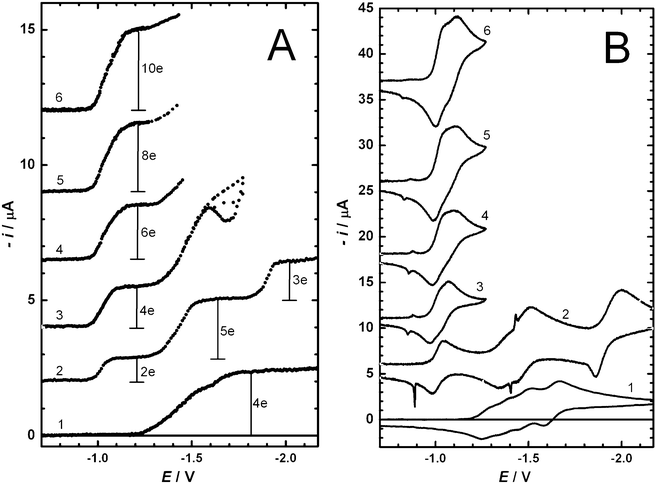
A nonaqueous CE system for separation and detection of novel electron-dopable molecular wires based on p-phenylene-bis-4,4′-(1-aryl-2,6-diphenylpyridinium) oligomers is described. The method is based on the coupling of CE separation in pure organic solvent, DMF with 50 mM acetic acid, and UV detection at 338 nm. The system offers a rapid measurement in less than 20 …
Nonaqueous capillary electrophoretic assays of p-phenylene-bis-4,4′-(1-aryl-2,6-diphenylpyridinium) molecular wires Read More »

Magnetically trigged direct electrochemical detection of DNA hybridization using Au-67 quantum dot as electrical tracer

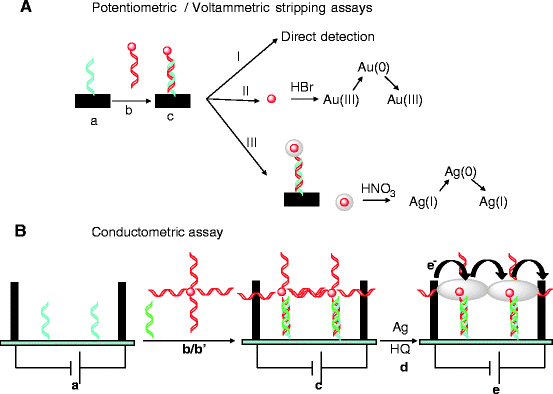
A novel gold nanoparticle-based protocol for detection of DNA hybridization based on a magnetically trigged direct electrochemical detection of gold quantum dot tracers is described. It relies on binding target DNA (here called DNA1) with Au-67 quantum dot in a ratio 1:1, followed by a genomagnetic hybridization assay between Au-67-DNA1 and complementary probe DNA (here …

Magnetically trigged direct electrochemical detection of DNA hybridization using Au-67 quantum dot as electrical tracer Read More »

New materials for electrochemical sensing VI: Carbon nanotubes

Carbon nanotubes (CNTs) combine in a unique way high electrical conductivity, high chemical stability and extremely high mechanical strength. These special properties of both single-wall (SW) and multi-wall (MW) CNTs have attracted the interest of many researchers in the field of electrochemical sensors. This article demonstrates the latest advances and future trends in producing, modifying, …

New materials for electrochemical sensing VI: Carbon nanotubes Read More »

Direct voltammetric determination of gold nanoparticles using graphite-epoxy composite electrode

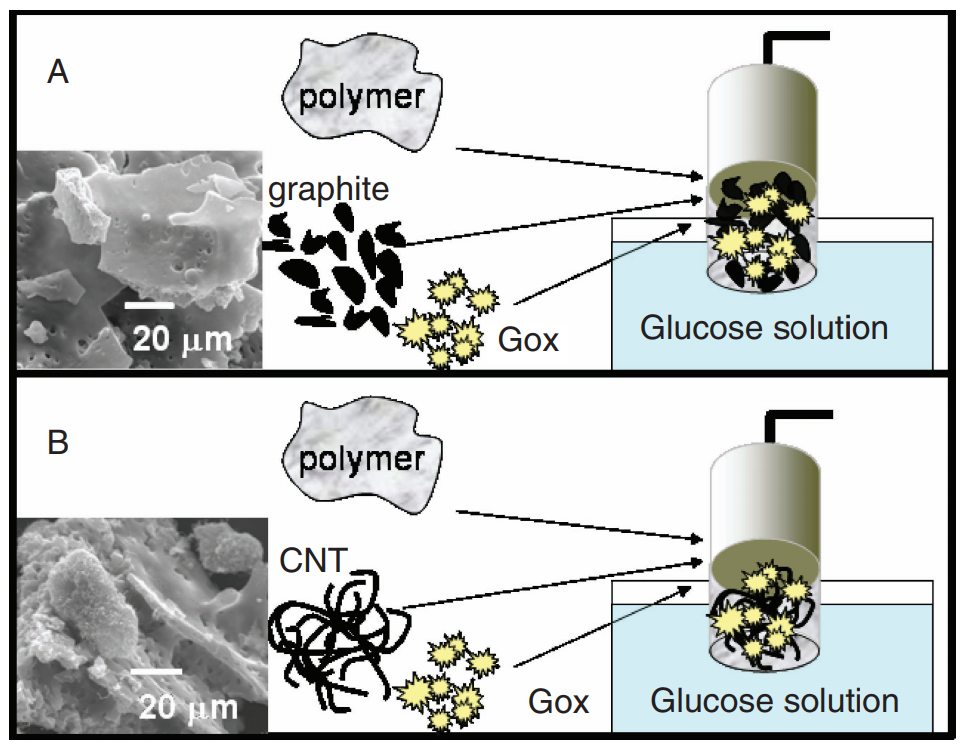
A new voltammetric method for a direct determination of gold nanoparticles, based on adsorption and electrochemical detection of colloidal gold, is described. In this protocol, the absorption of gold nanoparticles onto the rough surface of graphite-epoxy composite electrode is followed by their electrochemical oxidation in 0.1 M HCl medium at a potential of +1.25 V. …

Direct voltammetric determination of gold nanoparticles using graphite-epoxy composite electrode Read More »

Microchip-based electrochromatography: designs and applications

Different techniques and methods of electrochromatography on “lab on a chip” devices are reviewed. Described approaches include open-channel microchip electrochromatography relying on C-8, C-18 and novel gold nanoparticle (GNP) coating of microchannel wall; packed-channel microchip electrochromatography with new ways of automated loading and unloading of conventional octadecylsilica beads; monolith-based microchip electrochromatography with tailored casting of …

Microchip-based electrochromatography: designs and applications Read More »

Stripping voltammetry with bismuth modified graphite-epoxy composite electrodes

The attractive performance of graphite-epoxy composite electrodes (GECE) surface-modified with a bismuth film (Bi-GECE) for simultaneous and separate stripping determination of trace amounts of heavy metals (lead, cadmium and zinc) is described. Several key parameters have been optimized. Bi-GECEi electrode shows superior accumulation properties when compared to bare GECE or even to Hg-GECE. Bi-GECE exhibits …

Stripping voltammetry with bismuth modified graphite-epoxy composite electrodes Read More »

Sensitive stripping voltammetry of heavy metals by using a composite sensor based on a built-in bismuth precursor

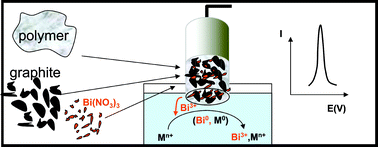
A new graphite – epoxy composite electrode (GECE) containing Bi(NO3)(3) as a built-in bismuth precursor for simultaneous and individual anodic stripping analysis of heavy trace metals like lead and cadmium is reported. The developed Bi(NO3)(3)-GECE is compatible with bismuth film electrodes reported previously including the composite electrodes (Bi-GECE) recently reported by our group. Bi(NO3)(3)-GECE displays …

Sensitive stripping voltammetry of heavy metals by using a composite sensor based on a built-in bismuth precursor Read More »