Year: 2003

Microchip separation and electrochemical detection of amino acids and peptides following precolumn derivatization with naphthalene-2,3-dicarboxyaldehyde

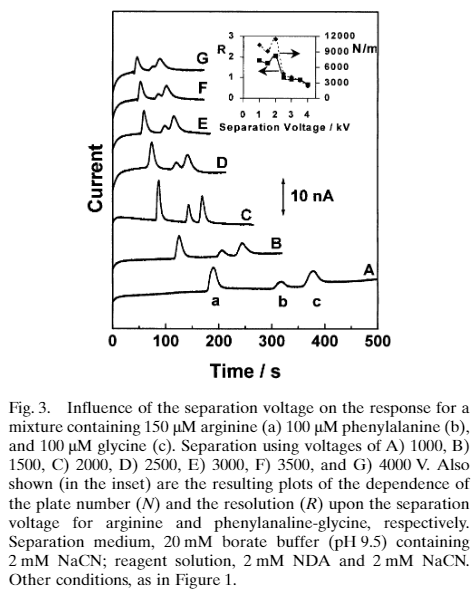
An integrated microfluidic device is used to derivatize, separate, and amperometrically detect amino acids and peptides in the presence of naphthalene-2,3-dicarboxyaldehyde (NDA). The integrated system offers a rapid (4 min) simultaneous measurements of 5 amino acids (Arg, Lys, Gly, Cys, PhenA) down to the 3.2 muM level in connection to a precolumn reaction chamber, an …
Microchip separation and electrochemical detection of amino acids and peptides following precolumn derivatization with naphthalene-2,3-dicarboxyaldehyde Read More »

Nonaqueous electrophoresis microchip separations: Conductivity detection in UV-absorbing solvents

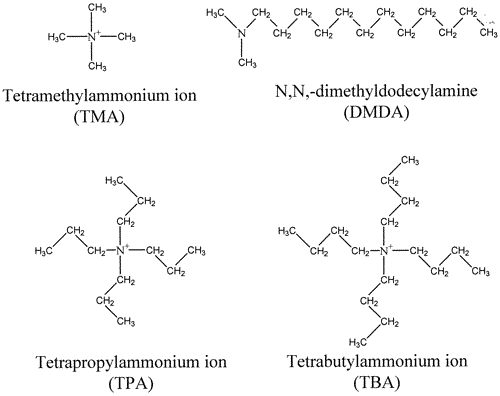
The use of organic solvents in microfabricated capillary electrophoresis (CE) devices is demonstrated in connection with the separation of aliphatic amines in pure dimethylformamide, dimethylacetamide, dimethyl sulfoxide, or propylene carbonate media. Contactless conductivity detection is employed for monitoring the separated solutes in these UV-absorbing solvents. The effect of the physicochemical properties of the organic solvent …

Nonaqueous electrophoresis microchip separations: Conductivity detection in UV-absorbing solvents Read More »

Capillary zone electrophoretic assay of biologically active thioacridine derivatives

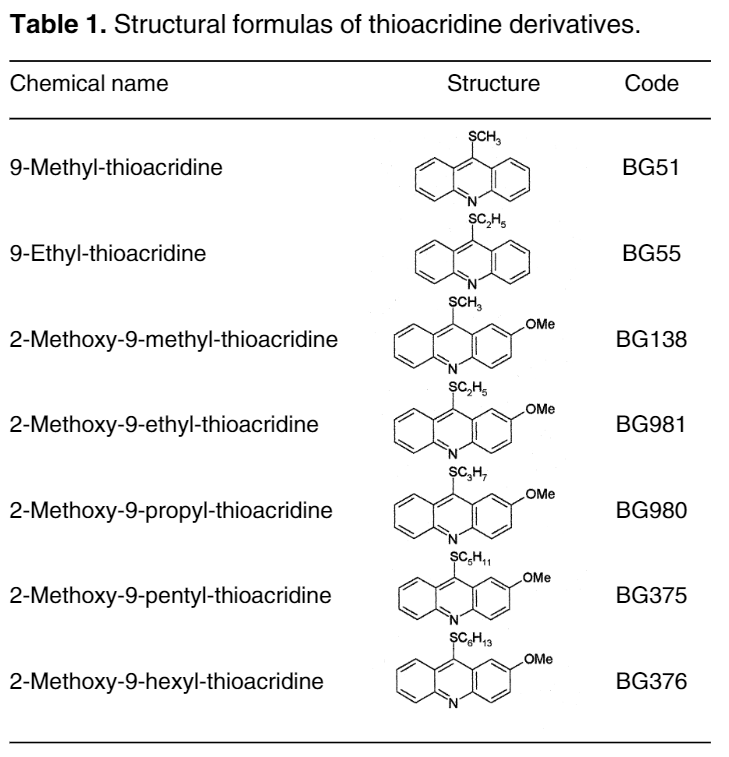
A capillary zone electrophoretic method was developed for the analytical evaluation of newly synthesized biologically active thioacridine derivatives. Based on background electrolyte pH optimization, the experimental conditions ensuring satisfactory resolution of the studied set of thioacridine derivatives and their accompanying synthetic impurities were found. Optimum background electrolyte consists of 30 mM citric acid and 30 …

Capillary zone electrophoretic assay of biologically active thioacridine derivatives Read More »