Point-of-use upcycling of 3D printing waste for developing 3D-printed Zn–I2 batteries

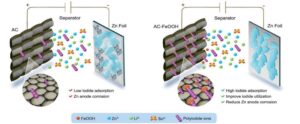
Aqueous zinc‑iodine (Znsingle bondI2) batteries herald huge potential for energy storage devices because of the constitutional safety of the zinc anode and attractive energy density. However, cathode hosts with low iodide utilisation and adsorption, sluggish redox kinetics, lengthy and costly fabrication process impede their scalability and electrochemical performance. Herein, we propose a low-cost electrochemical iron-based cathode to expand the Znsingle bondI2 battery's electrochemical performance by harnessing iron earth richness, high conductivity and redox versatility. A straightforward and scalable electrodeposition approach is demonstrated at room temperature to fabricate AC-FeOOH cathode iodine host. The assembled Znsingle bondI2 cell for AC-FeOOH | | Zn device displayed an excellent capacity of ∼ 0.56 mAh cm−2 at 2 mA cm−2. The outstanding performance of the AC-FeOOH based device corresponds to the integration of FeOOH on the matrix of AC, which enhances the iodide adsorption and utilisation, alleviating the polyiodide shutting effect and Zn anode corrosion. The present technique provides a cost-effective route to employ iron for Znsingle bondI2 battery systems, making the process more economical for grid-scale energy storage applications, delivering a sustainable route for alleviating the shortcomings of Znsingle bondI2 battery system, and paving way for their implementation in wider areas in the electrochemical energy storage devices.
Point-of-use upcycling of 3D printing waste for developing 3D-printed Zn–I2 batteries
Tunable Pt-MoSx Hybrid Catalysts for Hydrogen Evolution
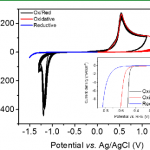
Bottom-up Electrosynthesis of Highly Active Tungsten Sulfide (WS3-x) Films for Hydrogen Evolution