Magnetic MXene-based microrobots for soil microplastics removal


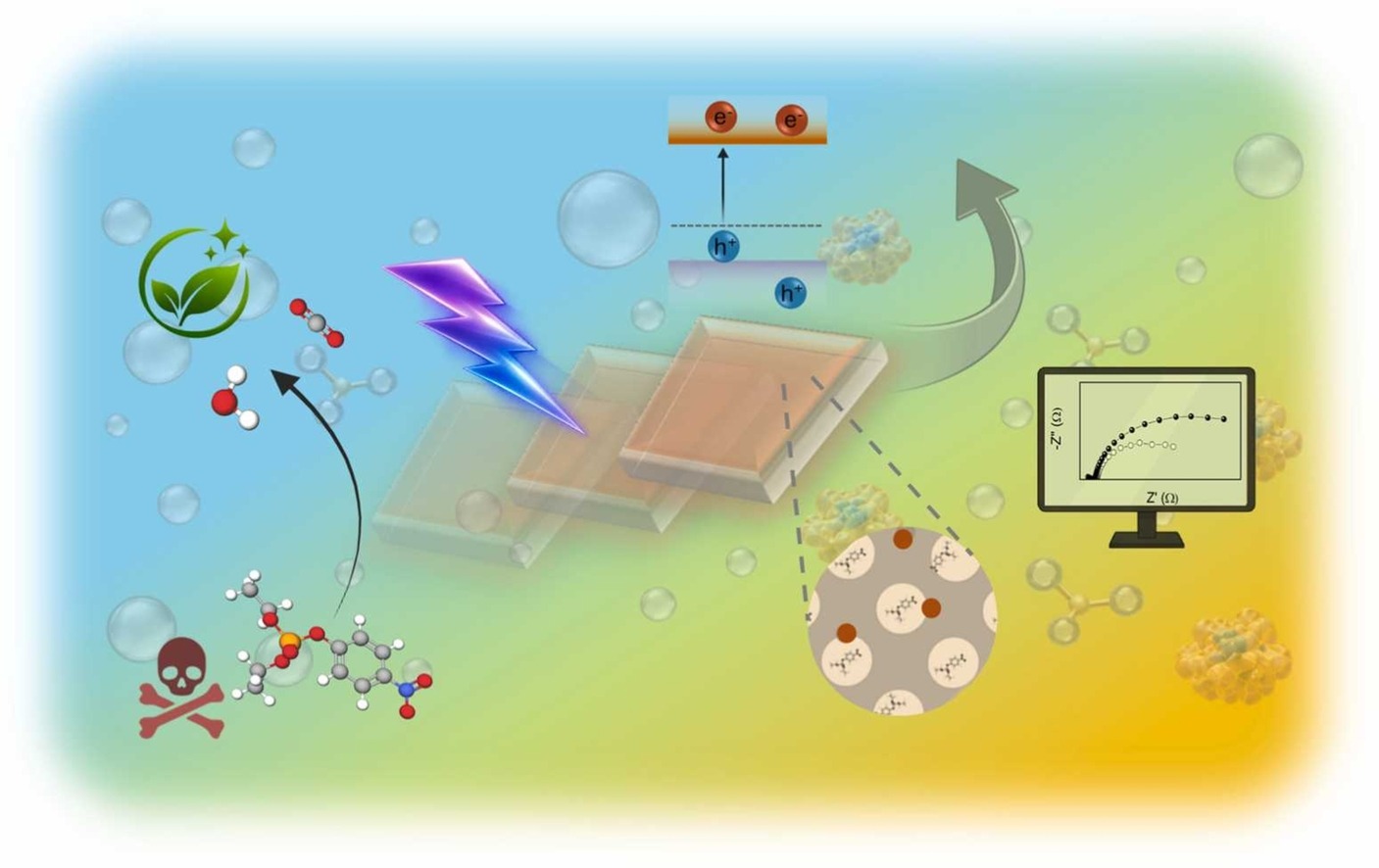
Micro/nanorobots with untethered motion have received immense attention in biomedicine and environmental applications. However, conventional wide bandgap semiconductor microrobots suffer from poor light-harvesting capacity, lack of enrichment of molecules at interface and low photocatalytic activity. This work presents bandgap-engineered, UV and Visible light-absorbing mesoporous titania (TiO2) microrobots with nitrogen (N) defects. Microrobots are investigated for their improved light-propelled motion behavior in aqueous and biofluid environments. The diffusiophoretic repulsion-based expansion movement, self-propulsion and bubble-propelled rapid movement were analyzed. Further, impedimetric detection of chemical warfare organophosphate nerve-agent paraoxon-ethyl, using microrobots, on a facile 3D-printed carbon electrode is demonstrated. The mesoporous framework of the microrobot provides high surface area and pore-size matching with nerve agent molecule, allowing its efficient enrichment. Further, in aqueous and biofluid environments, photocatalytic remediation of nerve-agent by the microrobots is demonstrated. The high-performance of mesoporous N-doped microrobots is supported by estimation of photonic quantum efficiency, energy efficiency and incident-photon-to-current efficiency. This novel approach of defect-induced bandgap-engineered mesoporous microrobots offers immense potential in future design of multifunctional and high-performance light-powered microrobots in molecular enrichment, biosensing and environmental remediation.
Magnetic MXene-based microrobots for soil microplastics removal
Image-Guided Magnetic Microrobots for Microplastic Capture and Biofilm Removal in the Female Reproductive System

Artificial Intelligence Meets Micro/Nanorobotics