Keyword Author: pnictogens

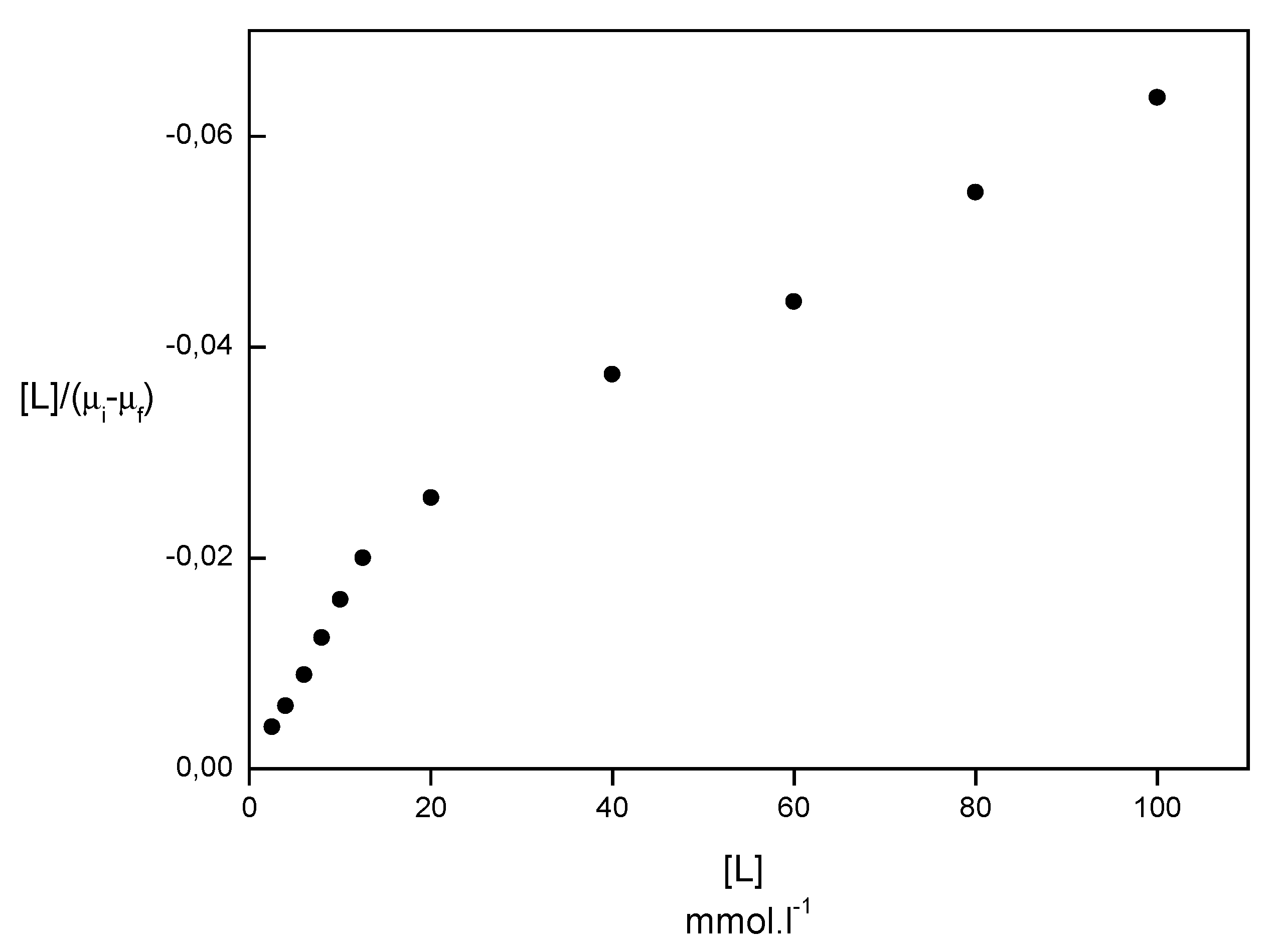
Edge vs. basal plane electrochemistry of layered pnictogens (As, Sb, Bi): Does edge always offer faster electron transfer?

Materials with layered structure are at the forefront of material research. Graphite, MoS2 and black phosphorus, as layered materials, exhibit, in general, fast heterogeneous transfer at the edge planes and slow at the basal plane for many electroactive molecules. There is a fundamental question whether this is general behaviour of layered materials. Here, we examined fundamental …

Edge vs. basal plane electrochemistry of layered pnictogens (As, Sb, Bi): Does edge always offer faster electron transfer? Read More »

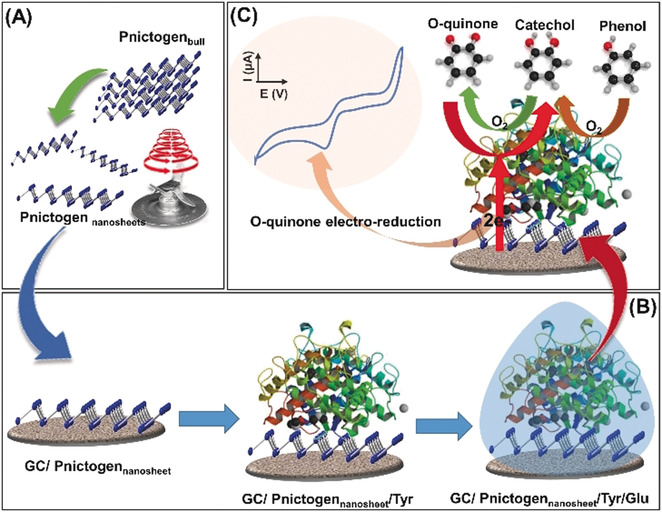
Pnictogen-Based Enzymatic Phenol Biosensors: Phosphorene, Arsenene, Antimonene, and Bismuthene

Two-dimensional materials have allowed for great advances in the biosensors field and to obtain sophisticated, smart, and miniaturized devices. In this work, we optimized a highly sensitive and selective phenol biosensor using 2D pnictogens (phosphorene, arsenene, antimonene, and bismuthene) as sensing platforms. Exfoliated pnictogen were obtained by the shear-force method, undergoing delamination and downsizing to …

Pnictogen-Based Enzymatic Phenol Biosensors: Phosphorene, Arsenene, Antimonene, and Bismuthene Read More »

Pnictogen (As, Sb, Bi) Nanosheets for Electrochemical Applications Are Produced by Shear Exfoliation Using Kitchen Blenders

Layered materials are of high importance because of their anisotropy and as a source of 2D materials. Whilst there is a plethora of multi-elemental 2D materials, the number mono-elemental 2D materials is rather limited. Herein, we demonstrate that aqueous shear exfoliation can be used to obtain As, Sb, and Bi exfoliated nanosheets. Morphological and chemical …

Pnictogen (As, Sb, Bi) Nanosheets for Electrochemical Applications Are Produced by Shear Exfoliation Using Kitchen Blenders Read More »