Keyword Author: photocatalysis

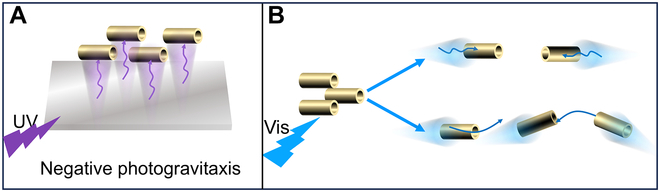
Light-Programmable g-C3N4 Microrobots with Negative Photogravitaxis for Photocatalytic Antibiotic Degradation

Microrobots enhance contact with pollutants through their movement and flow-induced mixing, substantially improving wastewater treatment efficiency beyond traditional diffusion-limited methods. g-C3N4 is an affordable and environmentally friendly photocatalyst that has been extensively researched in various fields such as biomedicine and environmental remediation. However, compared to other photocatalytic materials like TiO2 and ZnO, which are widely …
Light-Programmable g-C3N4 Microrobots with Negative Photogravitaxis for Photocatalytic Antibiotic Degradation Read More »

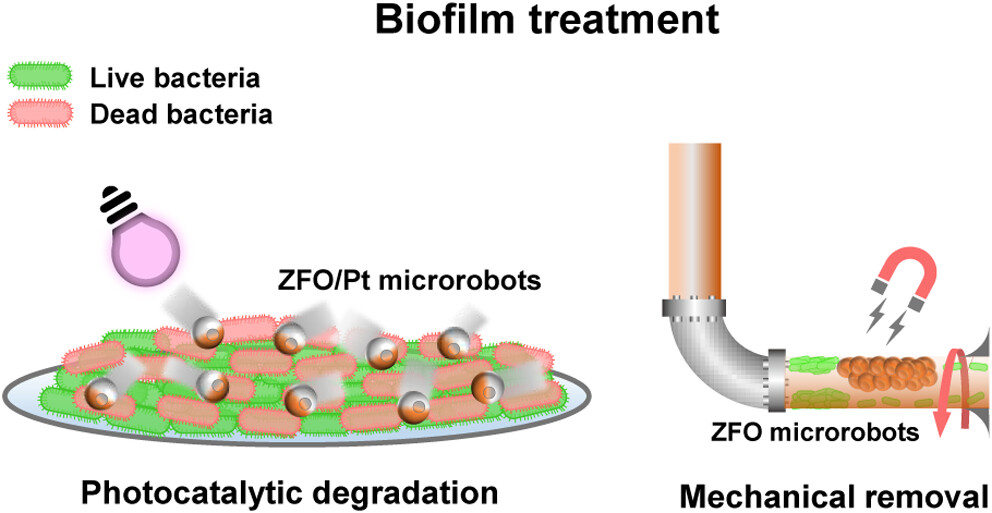
Active Microrobots for Dual Removal of Biofilms via Chemical and Physical Mechanisms

Bacterial biofilms are complex multicellular communities that adhere firmly to solid surfaces. They are widely recognized as major threats to human health, contributing to issues such as persistent infections on medical implants and severe contamination in drinking water systems. As a potential treatment for biofilms, this work proposes two strategies: (i) light-driven ZnFe2O4 (ZFO)/Pt microrobots …

Active Microrobots for Dual Removal of Biofilms via Chemical and Physical Mechanisms Read More »

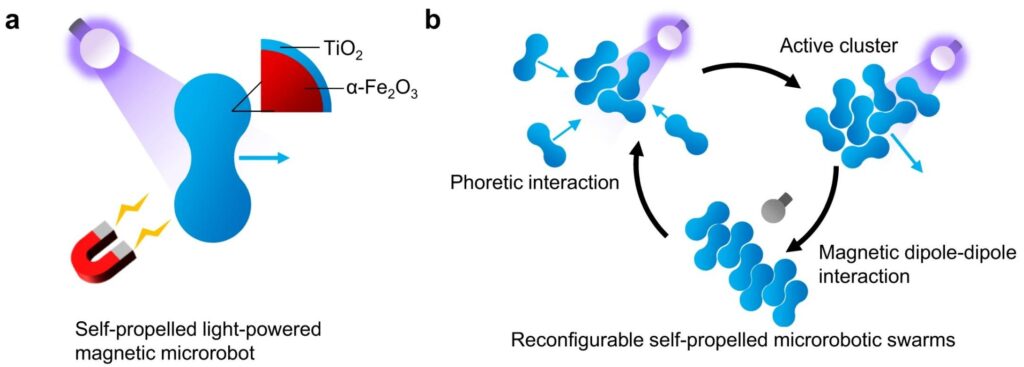
Reconfigurable self-assembly of photocatalytic magnetic microrobots for water purification

The development of artificial small-scale robotic swarms with nature-mimicking collective behaviors represents the frontier of research in robotics. While microrobot swarming under magnetic manipulation has been extensively explored, light-induced self-organization of micro- and nanorobots is still challenging. This study demonstrates the interaction-controlled, reconfigurable, reversible, and active self-assembly of TiO2/α-Fe2O3 microrobots, consisting of peanut-shaped α-Fe2O3 (hematite) …

Reconfigurable self-assembly of photocatalytic magnetic microrobots for water purification Read More »

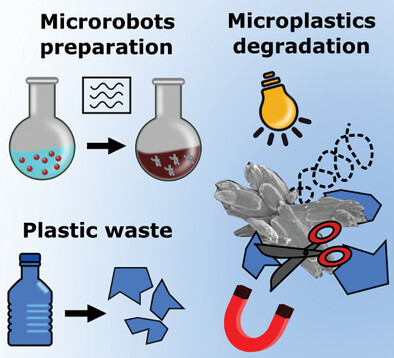
Photocatalytic Microplastics “On-The-fly” Degradation via Motile Quantum Materials-Based Microrobots

Nano/micro-plastics pollution is an emerging global concern. A variety of biodegradable polymers have been synthesized to enhance the degradation of plastic materials and thereby avoid their accumulation in the environment. However, even biodegradable polymers can accumulate in environments under specific conditions and present a potential hazard. Here, antimony sulfide-based microrobots decorated with magnetite nanoparticles are …

Photocatalytic Microplastics “On-The-fly” Degradation via Motile Quantum Materials-Based Microrobots Read More »

Nanohybrids of Two-Dimensional Transition-Metal Dichalcogenides and Titanium Dioxide for Photocatalytic Applications

The ever increasing need for renewable and clean energy resources as well as environmental concerns are considered as two serious challenges of today’s society. Photocatalysis has proved to be a reliable and effective technology to overcome these issues. However, to bring the full potential of this approach into reality, two main hurdles of fast charge …

Nanohybrids of Two-Dimensional Transition-Metal Dichalcogenides and Titanium Dioxide for Photocatalytic Applications Read More »