Keyword Author: nanostructures

Layered Transition-Metal Ditellurides in Electrocatalytic Applications-Contrasting Properties

The layered compounds and especially transition-metal dichalcogenides are at the forefront of current research on electrocatalytic materials. Despite the fact that electrocatalytical properties of molybdenum and tungsten disulfides are well-known, their tellurium analogues are significantly less explored. Here we show an effective method for MoTe2 and WTe2 chemical exfoliation based on alkali metal intercalation and …
Layered Transition-Metal Ditellurides in Electrocatalytic Applications-Contrasting Properties Read More »

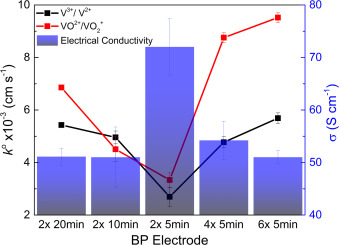
Electrochemical Exfoliation of Layered Black Phosphorus into Phosphorene

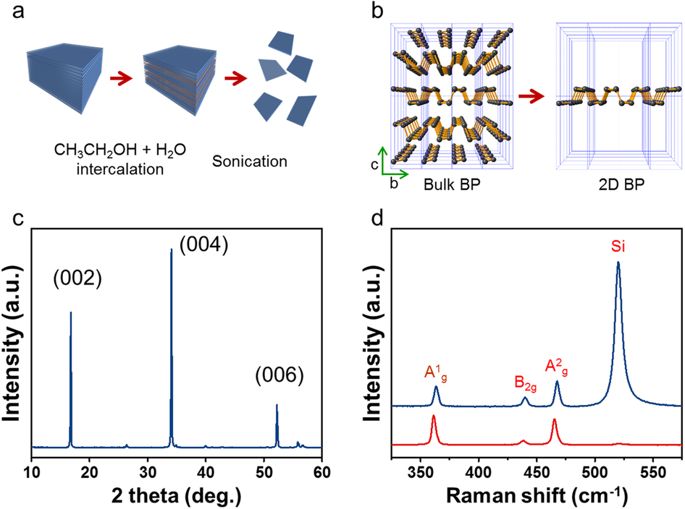
Among 2D materials that recently have attracted enormous interest, black phosphorus (BP) is gaining a rising popularity due to its tunable band-gap structure, which is strongly correlated to the thickness and can enable its use in optoelectronic and electronic applications. It is therefore important to provide a facile and scalable methodology to prepare single or …

Electrochemical Exfoliation of Layered Black Phosphorus into Phosphorene Read More »

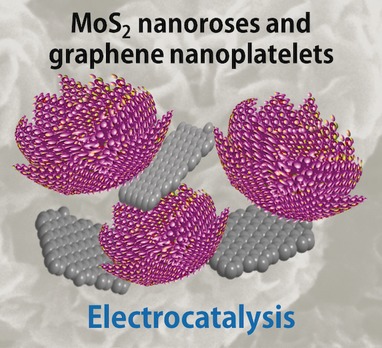
Nanostructured MoS2 Nanorose/Graphene Nanoplatelet Hybrids for Electrocatalysis

Tailoring and enhancing electrocatalytic activity is of the utmost importance from the viewpoints of sustainable energy and sensing. MoS2 and graphene show great promise for the electrocatalysis of many reactions. Given that both graphene and MoS2 are highly anisotropic in nature, with edge planes that are several orders of magnitude more catalytically active than basal …

Nanostructured MoS2 Nanorose/Graphene Nanoplatelet Hybrids for Electrocatalysis Read More »

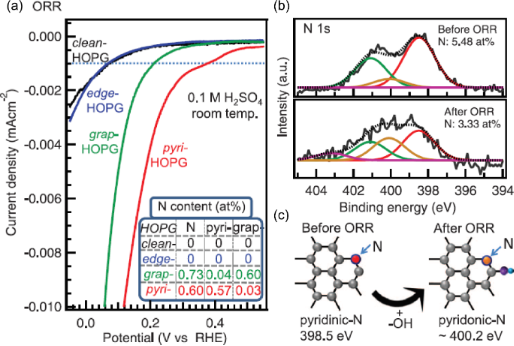
p-Element-Doped Graphene: Heteroatoms for Electrochemical Enhancement

Graphene is finding important applications in electrochemistry. Here, we discuss how the doping of graphene with heteroatoms, namely boron, nitrogen, phosphorus, sulfur, fluorine, chlorine, bromine, and iodine, change the electrochemical properties of the material. In addition, we summarize the different doping routes and show that the process has an influence upon electrochemical properties.

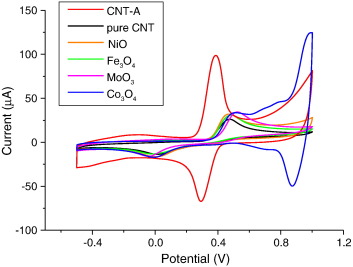
Relationship between Carbon Nanotube Structure and Electrochemical Behavior: Heterogeneous Electron Transfer at Electrochemically Activated Carbon Nanotubes

The electrochemical activation of multiwalled carbon nanotubes (MWCNTs) (at potentials of 1.5-2.0 V vs Ag/AgCl for 60-360 s) results in significantly increased rate constants (k(obs)(0)) for heterogeneous electron-transfer with [Fe(CN)(6)](3-14-) (from 8.34 x 10(-5)cms(-1) for as-received MWCNTs to 3.67 x 10(-3) cm s(-1) for MWCNTs that were electrochemically activated at 2.0 V for 180s). The …

Relationship between Carbon Nanotube Structure and Electrochemical Behavior: Heterogeneous Electron Transfer at Electrochemically Activated Carbon Nanotubes Read More »