Keyword Author: nanomaterials

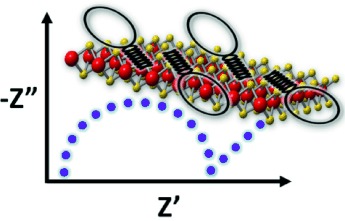
Transitional Metal/Chalcogen Dependant Interactions of Hairpin DNA with Transition Metal Dichalcogenides, MX2

Owing to the attractive properties that transition metal dichalcogenides (TMDs) display, they have found recent application in the fabrication of biosensing devices. These devices involve the immobilization of a recognition element such as DNA onto the surface of TMDs. Therefore, it is imperative to examine the interactions between TMDs and DNA. Herein, we explore the …

Transitional Metal/Chalcogen Dependant Interactions of Hairpin DNA with Transition Metal Dichalcogenides, MX2 Read More »

Cytotoxicity of Exfoliated Transition-Metal Dichalcogenides (MoS2, WS2, and WSe2) is Lower Than That of Graphene and its Analogues

Studies involving transition-metal dichalcogenides (TMDs) have been around for many decades and in recent years, many were focused on using TMDs to synthesize inorganic analogues of carbon nanotubes, fullerene, as well as graphene and its derivatives with the ultimate aim of employing these materials into consumer products. In view of this rising trend, we investigated …

Cytotoxicity of Exfoliated Transition-Metal Dichalcogenides (MoS2, WS2, and WSe2) is Lower Than That of Graphene and its Analogues Read More »

Graphene Oxides: Transformations in Natural Waters over a Period of Three Months

Graphene oxide (GO), a derivative of graphene consisting of various oxygen moieties, has gained popularity owing to its excellent physiochemical properties and applicability in various fields. GO nanomaterials can be synthesized by using Hofmann (HO), Hummers (HU), and Staudenmaier (ST) methods of oxidative treatment of graphite to give GO-HO, GO-HU, and GO-ST, respectively. These GO …

Graphene Oxides: Transformations in Natural Waters over a Period of Three Months Read More »

The Toxicity of Graphene Oxides: Dependence on the Oxidative Methods Used

Graphene, a class of two-dimensional carbon nanomaterial, has attracted extensive interest in recent years, with a significant amount of research focusing on graphene oxides (GOs). They have been primed as potential candidates for biomedical applications such as cell labeling and drug delivery, thus the toxicity and behavior of graphene oxides in biological systems are fundamental …

The Toxicity of Graphene Oxides: Dependence on the Oxidative Methods Used Read More »

Nanogold Spacing of Stacked Graphene Nanofibers for Supercapacitors

Graphene exhibits great potential for energy storage devices in electrochemical supercapacitors as it is a lightweight, inexpensive material. However, as graphene nanomaterials are prone to stacking and therefore blocking electroactive sites, its real capacity is low. Recently, there has been a significant interest in quasi 1D structures of carbon nanofibers with radially oriented graphene sheets, …

Nanogold Spacing of Stacked Graphene Nanofibers for Supercapacitors Read More »

Nanotoxicology: The Molecular Science Point of View

Research on nanotoxicity is of extremely high scientific, social, and economic value. As nanomaterial-based products enter the market, there is an urgent need for related research in order to prevent dramatic consequences of any health-oriented issues caused by nanotechnology-driven products. The results of research on nanotoxicity have profound significance because the design of nanomaterials used …

Nanotoxicology: The Molecular Science Point of View Read More »

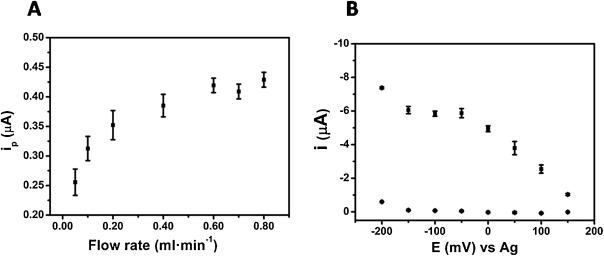
Nanomaterials as electrochemical detectors in microfluidics and CE: Fundamentals, designs, and applications

The different approaches for constructing nanomaterial-based detectors for conventional CE and microchip electrophoresis are described in this review. They include three main types of nanomaterials, including carbon nanotubes, nanoparticles, and nanorods in various designs. The fundamental reasons for the enhanced detection performance of nanomaterial-based detectors, such as higher sensitivity, improved limits of detection, and higher …

Nanomaterials as electrochemical detectors in microfluidics and CE: Fundamentals, designs, and applications Read More »

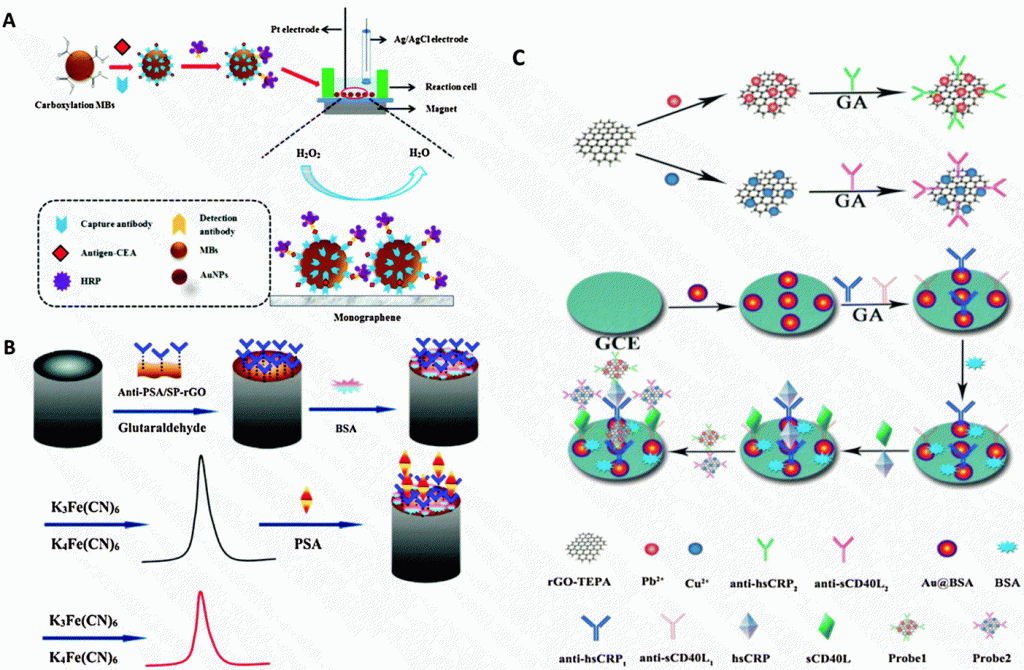
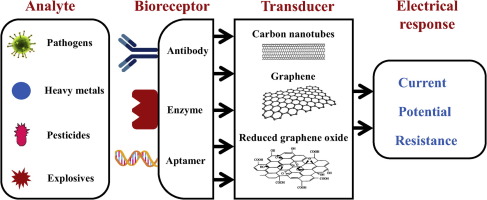
Electrochemical nanobiosensors

This review discusses main techniques and methods which use nanoscale materials for construction of electrochemical biosensors. Described approaches include nanotube and nanoparticle-based electrodes relying on aligned nanotube arrays, direct electron transfer between biomolecule and electrode. novel binding materials and mass production technology; and nanoscale materials as biomolecule tracers, including gold nanoparticles, quantum dots for DNA …

Electrochemical nanobiosensors Read More »