Keyword Author: MoS2

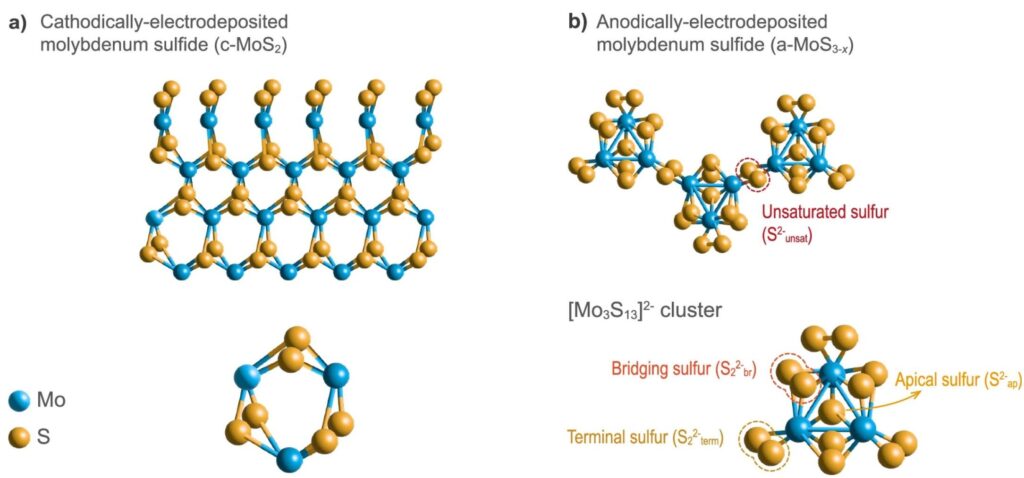
Allotrope-dependent activity-stability relationships of molybdenum sulfide hydrogen evolution electrocatalysts

Molybdenum disulfide (MoS2) is widely regarded as a competitive hydrogen evolution reaction (HER) catalyst to replace platinum in proton exchange membrane water electrolysers (PEMWEs). Despite the extensive knowledge of its HER activity, stability insights under HER operation are scarce. This is paramount to ensure long-term operation of Pt-free PEMWEs, and gain full understanding on the …
Allotrope-dependent activity-stability relationships of molybdenum sulfide hydrogen evolution electrocatalysts Read More »

Single atom engineered materials for sensors

The pursuit of high-performance sensors necessitates the exploration of new materials to realize this potential. Single atom engineering (SAE) is used to plant individual atoms into the appropriate surrounding of (nano)materials in order to confer distinct materials properties. Hence, the nano architectonics principle utilized for single atom engineering allows us to build highly specific, selective, …

Single atom engineered materials for sensors Read More »

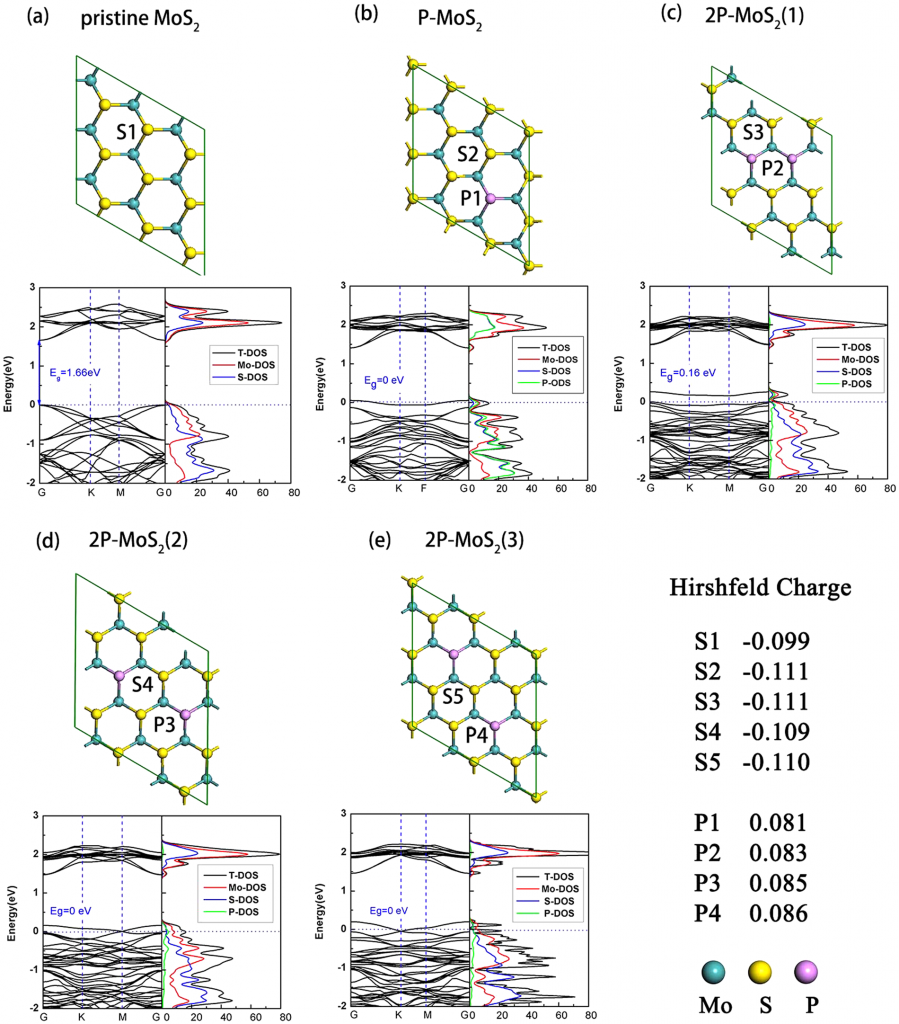
Negative Electrocatalytic Effects of p-Doping Niobium and Tantalum on MoS2 and WS2 for the Hydrogen Evolution Reaction and Oxygen Reduction Reaction

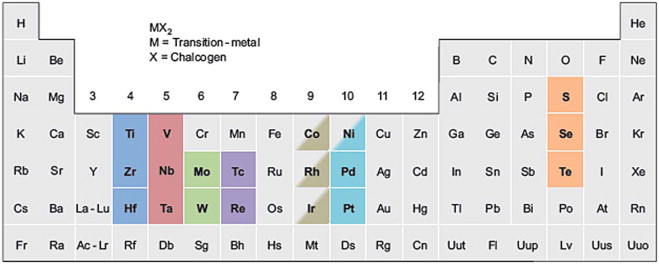
Transition-metal dichalcogenides (TMDs) are at the forefront of research for their promising catalytic abilities and unique materials properties. With great interest in the study of mono- or few-layered TMDs, we seek to fundamentally explore the effects of doping on bulk TMDs, particularly MoS2 and WS2 for the hydrogen evolution reaction (HER) and oxygen reduction reaction …

Negative Electrocatalytic Effects of p-Doping Niobium and Tantalum on MoS2 and WS2 for the Hydrogen Evolution Reaction and Oxygen Reduction Reaction Read More »

Layered transition-metal dichalcogenides (MoS2 and WS2) for sensing and biosensing

Layered transition-metal dichalcogenides comprise a category of two-dimensional materials that offer exciting properties, including metallic and semi-conducting electrical capabilities, fluorescence and fast heterogeneous electron transfer. To date, these materials have mostly been employed in energy-storage and generation devices. However, in very recent times, there was a significant emerging trend in their utilization in analytical chemistry. …

Layered transition-metal dichalcogenides (MoS2 and WS2) for sensing and biosensing Read More »