Keyword Author: heavy metals

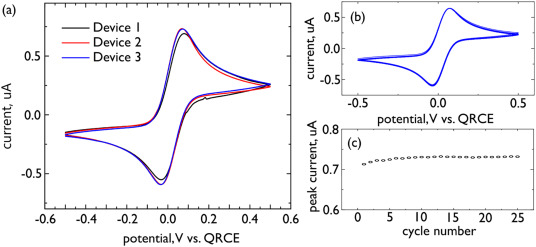
3D-printed Metal Electrodes for Heavy Metals Detection by Anodic Stripping Voltammetry

Heavy metals, being one of the most toxic and hazardous pollutants in natural water, are of great public health concern. Much effort is still being devoted to the optimization of the electroanalytical methods and devices, particularly for the development of novel electrode materials in order to enhance selectivity and sensitivity for the analysis of heavy …

3D-printed Metal Electrodes for Heavy Metals Detection by Anodic Stripping Voltammetry Read More »


Graphene Oxides Prepared by Hummers’, Hofmann’s, and Staudenmaier’s Methods: Dramatic Influences on Heavy-Metal-Ion Adsorption

Graphene oxide (GO), an up-and-coming material rich in oxygenated groups, shows much promise in pollution management. GO is synthesised using several synthetic routes, and the adsorption behaviour of GO is investigated to establish its ability to remove the heavy-metal pollutants of lead and cadmium ions. The GO is synthesised by Hummers’ (HU), Hofmann’s (HO) and …

Graphene Oxides Prepared by Hummers’, Hofmann’s, and Staudenmaier’s Methods: Dramatic Influences on Heavy-Metal-Ion Adsorption Read More »

Biomimetic Artificial Inorganic Enzyme-Free Self-Propelled Microfish Robot for Selective Detection of Pb2+ in Water

The availability of drinking water is of utmost importance for the world population. Anthropogenic pollutants of water, such as heavy-metal ions, are major problems in water contamination. The toxicity assays used range from cell assays to animal tests. Herein, we replace biological toxicity assays, which use higher organisms, with artificial inorganic self-propelled microtubular robots. The …

Biomimetic Artificial Inorganic Enzyme-Free Self-Propelled Microfish Robot for Selective Detection of Pb2+ in Water Read More »