Keyword Author: graphane

Planar Polyolefin Nanostripes: Perhydrogenated Graphene

Graphene hydrogenation gives an opportunity to introduce a band gap into the graphene electronic structure. Complete hydrogenation may lead to the graphane, a fully hydrogenated counterpart of graphene. However, pure graphane has not been successfully prepared to this day. Here, we show that hydrogenation of single-walled carbon nanotubes by means of Birch reduction leads to …

Planar Polyolefin Nanostripes: Perhydrogenated Graphene Read More »
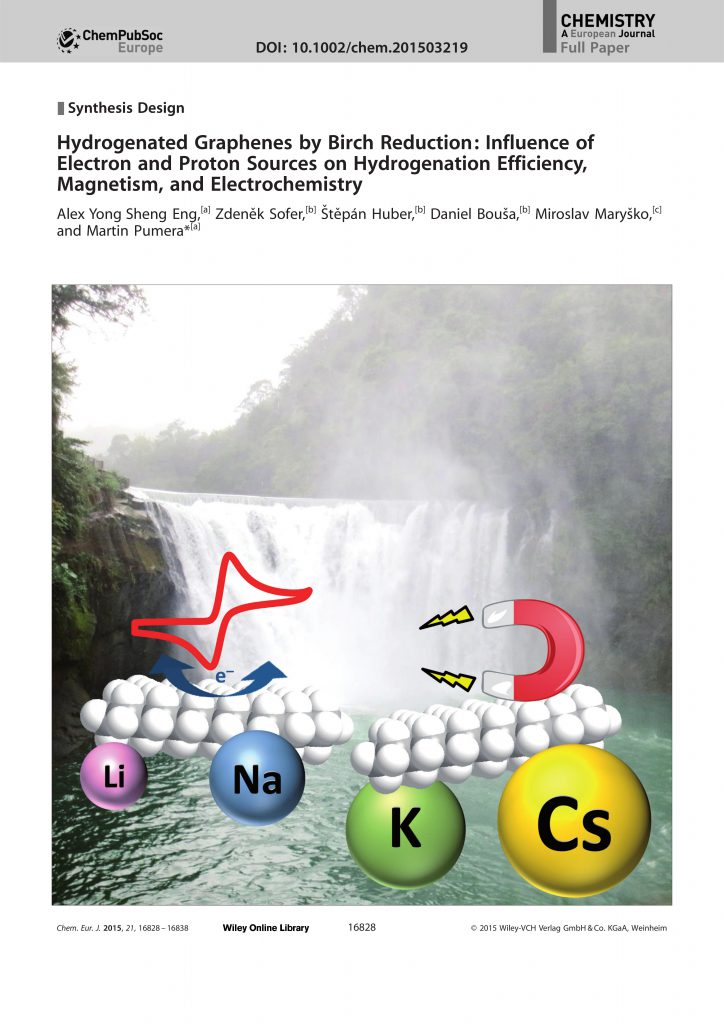
Hydrogenated Graphenes by Birch Reduction: Influence of Electron and Proton Sources on Hydrogenation Efficiency, Magnetism, and Electrochemistry

Interest in chemical functionalisation of graphenes today is largely driven by associated changes to its physical and material properties. Functionalisation with hydrogen was employed to obtain hydrogenated graphenes (also termed graphane if fully hydrogenated), which exhibited properties including fluorescence, magnetism and a tuneable band gap. Although the classical Birch reduction has been employed for hydrogenation …

Hydrogenated Graphenes by Birch Reduction: Influence of Electron and Proton Sources on Hydrogenation Efficiency, Magnetism, and Electrochemistry Read More »

Towards Graphane Applications in Security: The Electrochemical Detection of Trinitrotoluene in Seawater on Hydrogenated Graphene

With greater security and humanitarian concerns, the pressing need to develop fast and sensitive point-of-care explosives detectors has never been more pronounced. Electrochemical detectors facilitate accurate and swift detection of these explosive traces to provide opportunities for preemptive measures. Sensitivity of the electrode material is one of the many important factors in the development of …

Towards Graphane Applications in Security: The Electrochemical Detection of Trinitrotoluene in Seawater on Hydrogenated Graphene Read More »

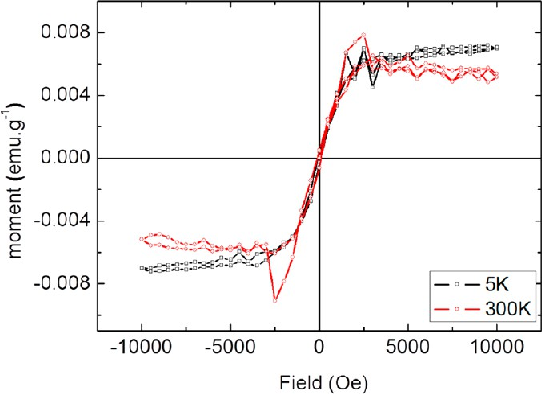
Searching for Magnetism in Hydrogenated Graphene: Using Highly Hydrogenated Graphene Prepared via Birch Reduction of Graphite Oxides

Fully hydrogenated graphene (graphane) and partially hydrogenated graphene materials are expected to possess various fundamentally different properties from graphene. We have prepared highly hydrogenated graphene containing 5% wt of hydrogen via Birch reduction of graphite oxide using elemental sodium in liquid NH3 as electron donor and methanol as proton donor in the reduction. We also …

Searching for Magnetism in Hydrogenated Graphene: Using Highly Hydrogenated Graphene Prepared via Birch Reduction of Graphite Oxides Read More »

Graphane electrochemistry: Electron transfer at hydrogenated graphenes

Graphane, the hydrogenated derivate of graphene is a highly novel material in the field of two dimensional nanocarbon related research. Preparation of hydrogenated graphene is achieved via a high-pressure/high-temperature (up to 150 bar and 500 degrees C) thermal exfoliation procedure of graphite oxide. We investigated the properties of the materials via voltammetry and electrochemical impedance …

Graphane electrochemistry: Electron transfer at hydrogenated graphenes Read More »