Keyword Author: explosives

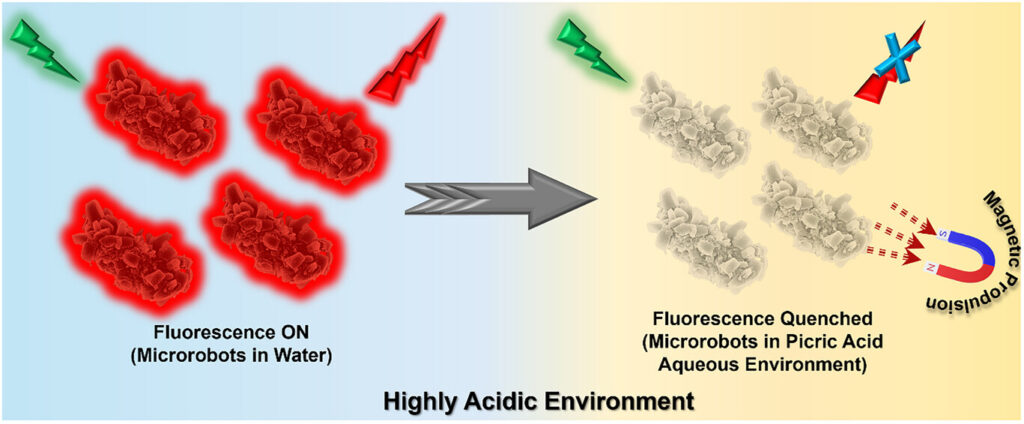
Molecularly Engineered Fluorescent Magnetic Microrobots for Sensing High-Energy Nitroaromatic Explosives in Highly Acidic Aqueous Environments

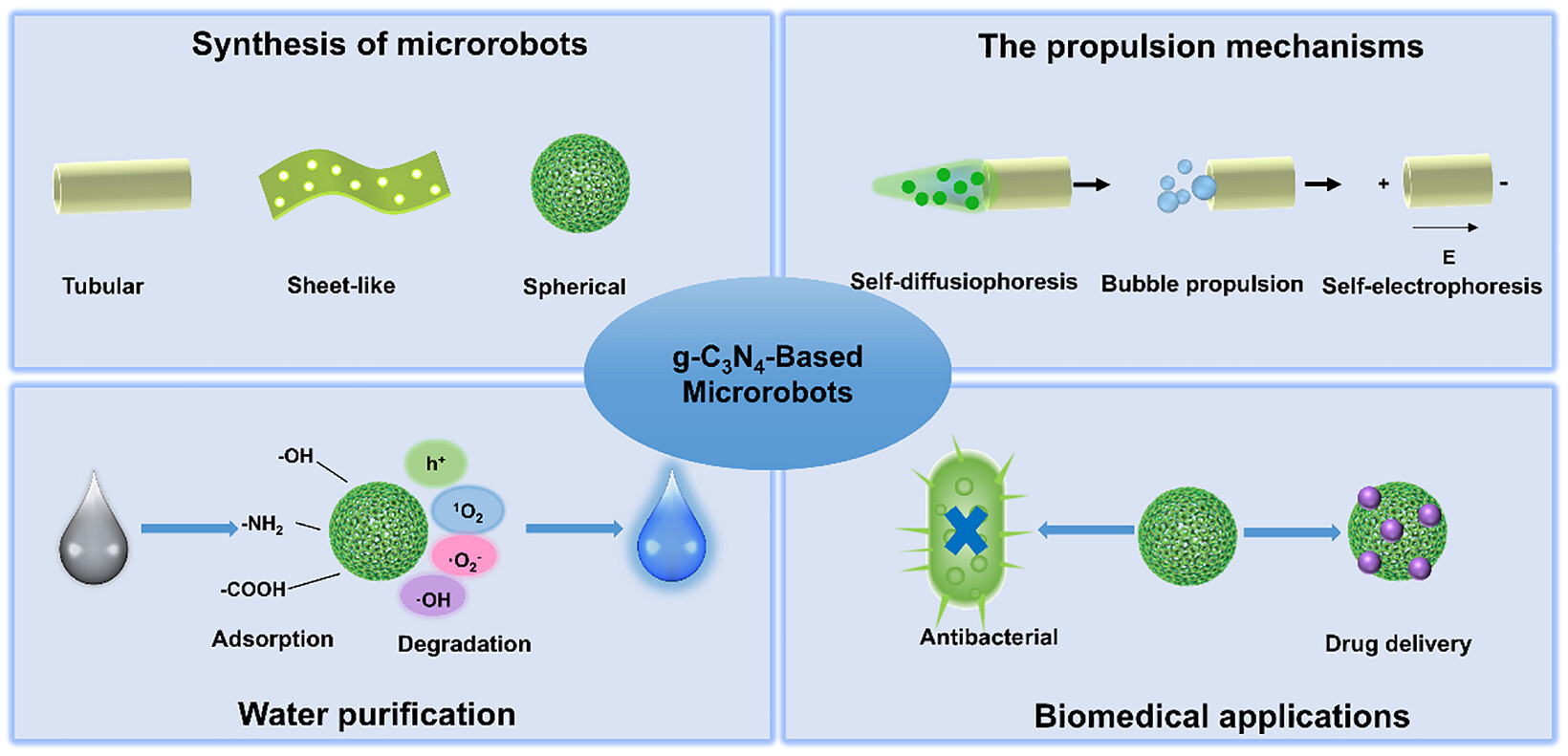
Among various analytical sensing approaches currently in use, fluorescence sensing is known for its high sensitivity, rapid response, and applicability in monitoring a wide range of target molecules. Pairing an appropriate navigation system with a fluorescent molecule that can carry it to inaccessible or hard-to-reach environments can pave the way for remote and selective sensing …
Molecularly Engineered Fluorescent Magnetic Microrobots for Sensing High-Energy Nitroaromatic Explosives in Highly Acidic Aqueous Environments Read More »

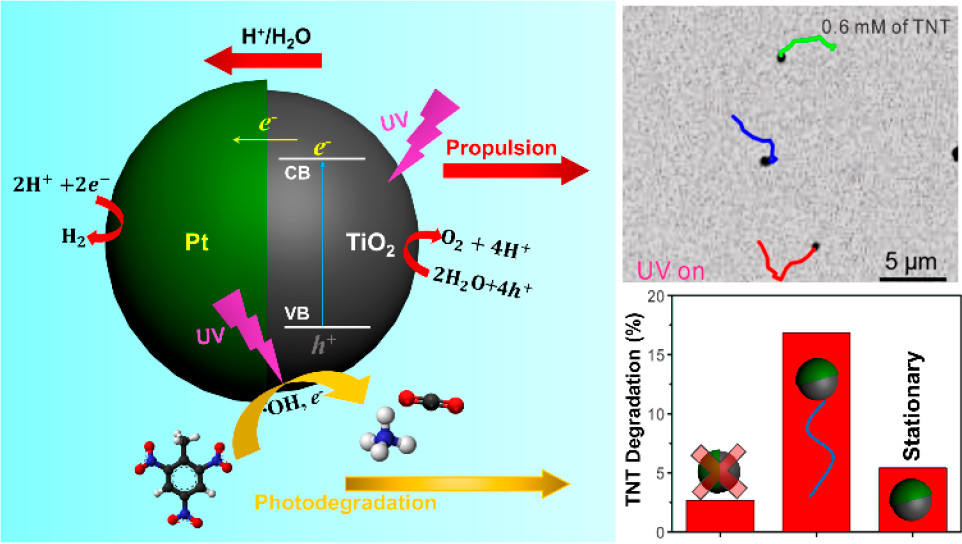
Fuel-Free Light-Powered TiO2/Pt Janus Micromotors for Enhanced Nitroaromatic Explosives Degradation

Nitroaromatic explosives such as 2,4,6-trinitrotoluene (2,4,6-TNT) and 2,4-dinitrotoluene (2,4-DNT) are two common nitroaromatic compounds in ammunition. Their leakage leads to serious environmental pollution and threatens human health. It is important to remove or decompose them rapidly and efficiently. In this work, we present that light-powered TiO2/Pt Janus micromotors have high efficiency for the “on-the-fly” photocatalytic …

Fuel-Free Light-Powered TiO2/Pt Janus Micromotors for Enhanced Nitroaromatic Explosives Degradation Read More »

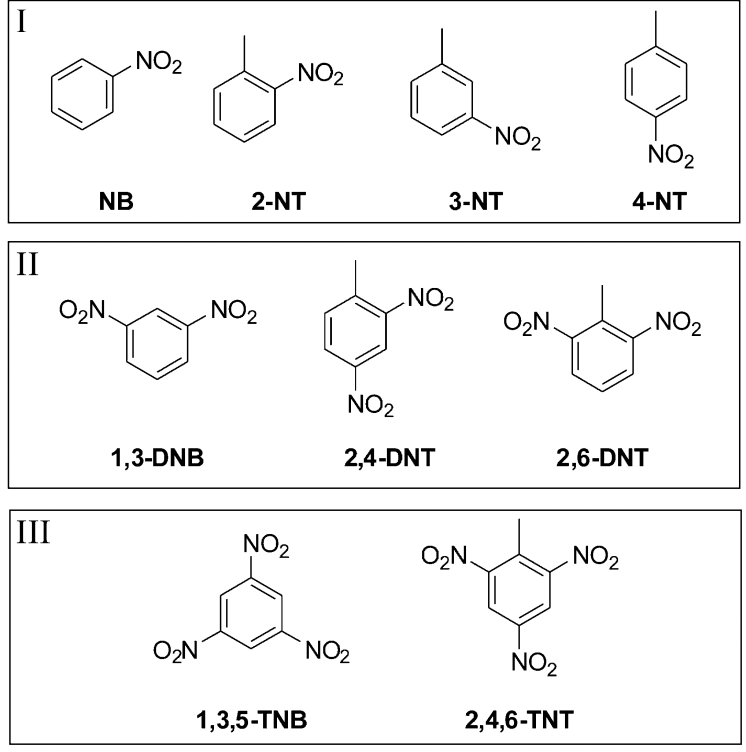
Influence of Methyl Substituent Position on Redox Properties of Nitroaromatics Related to 2,4,6-Trinitrotoluene

The environmental remediation of military installation sites is very important due to frequently large presence of carcinogenic derivatives of explosives in the ground and in ground waters. These nitroaromatic explosives and their derivatives are assessed by sensing devices. It is highly important to have insight on the reasons affecting the reduction potentials of these compounds. …

Influence of Methyl Substituent Position on Redox Properties of Nitroaromatics Related to 2,4,6-Trinitrotoluene Read More »

Graphene-based electrochemical sensor for detection of 2,4,6-trinitrotoluene (TNT) in seawater: the comparison of single-, few-, and multilayer graphene nanoribbons and graphite microparticles

The detection of explosives in seawater is of great interest. We compared response single-, few-, and multilayer graphene nanoribbons and graphite microparticle-based electrodes toward the electrochemical reduction of 2,4,6-trinitrotoluene (TNT). We optimized parameters such as accumulation time, accumulation potential, and pH. We found that few-layer graphene exhibits about 20% enhanced signal for TNT after accumulation …

Graphene-based electrochemical sensor for detection of 2,4,6-trinitrotoluene (TNT) in seawater: the comparison of single-, few-, and multilayer graphene nanoribbons and graphite microparticles Read More »

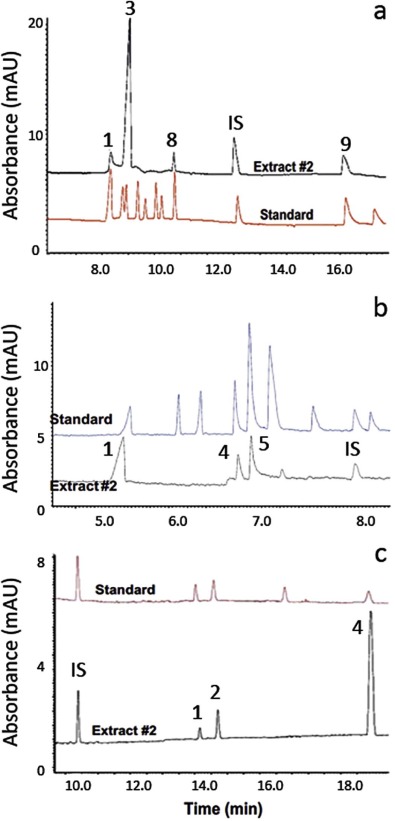
Trends in analysis of explosives by microchip electrophoresis and conventional CE

The continuous upsurge in terrorist activity has generated tremendous demand for innovative tools capable of detecting nitrated organic, inorganic, and peroxide-based explosives. This article directly extends the previous exhaustive review (Electrophoresis 2006, 27, 244256) and overviews the research activity in the field of microchip and conventional capillary electrophoresis for analysis of a variety of explosive …

Trends in analysis of explosives by microchip electrophoresis and conventional CE Read More »

Organically modified sols as pseudostationary phases for microchip electrophoresis

We demonstrate that the selectivity of microchip electrophoresis separations is greatly improved by the presence of organically modified silica (Ormosil) sols in the run buffer. A negatively-charged N-(trimethoxysilylpropyl)ethylenediamine triacetic-acid (TETT)-based sol is used for improving the selectivity between nitroaromatic explosives and a methyltrimethoxysilane (MTMOS)-based sol is employed for enhancing the microchip separation of environmental pollutants, …

Organically modified sols as pseudostationary phases for microchip electrophoresis Read More »

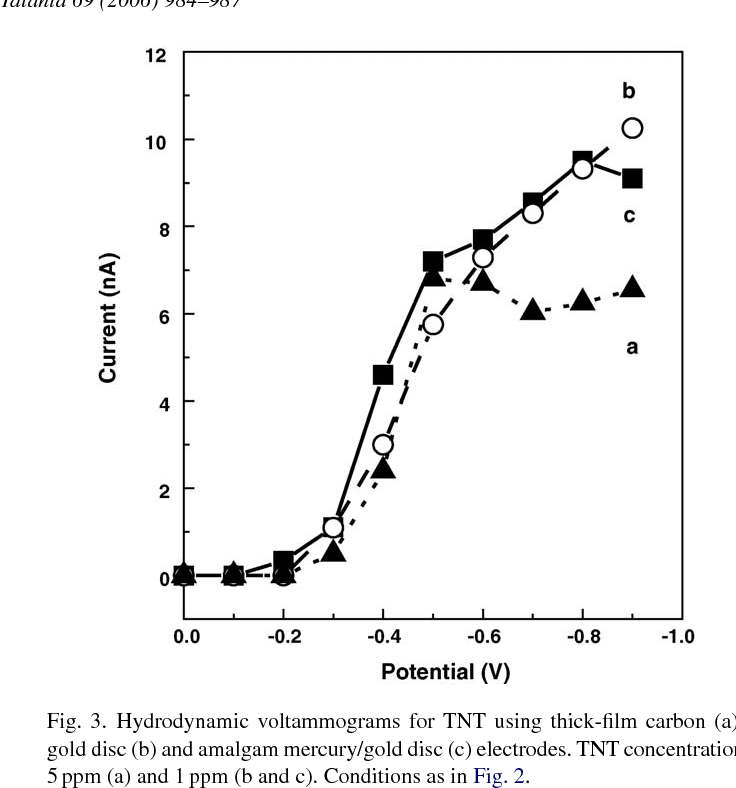
Microchip flow-injection analysis of trace 2,4,6-trinitrotoluene (TNT) using mercury-amalgam electrochemical detector

This paper reports on a microfluidic device for the flow-injection/electrochemistry analysis of nitroaromatic explosive. The response is very fast (150assays/h), highly sensitive (detection limit 7.0 mu gL(-1),), reproducible and stable (R.S.D. = 2.0%; n=30) and linear (over 20-100 [mu g L-1 range). Relevant experimental parameters have been optimized. The new microsystem offers great promise for …

Microchip flow-injection analysis of trace 2,4,6-trinitrotoluene (TNT) using mercury-amalgam electrochemical detector Read More »

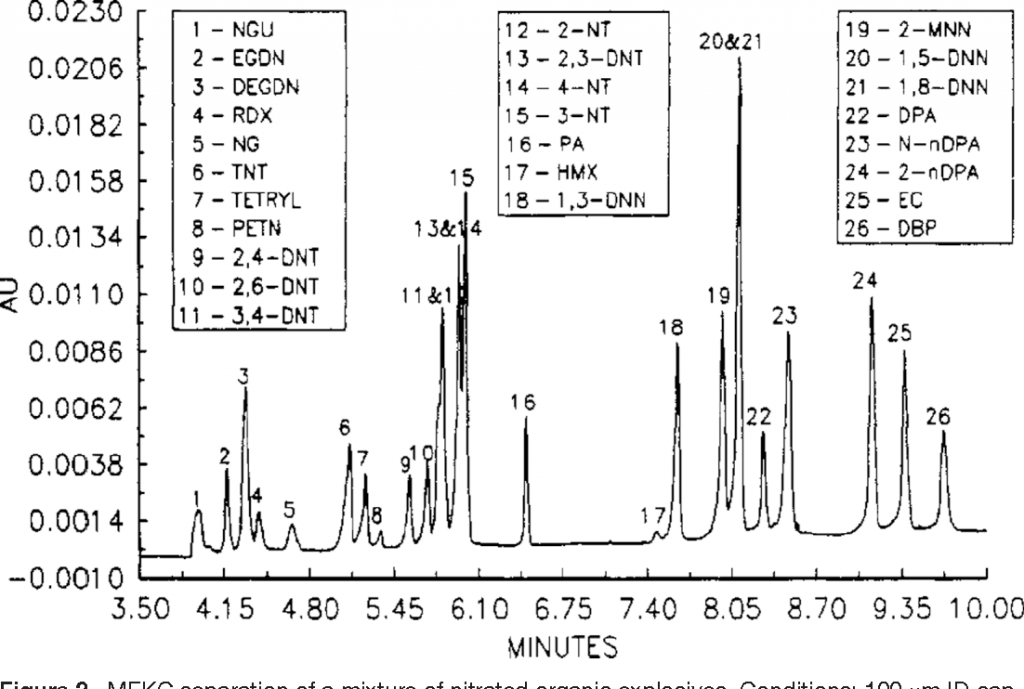
Analysis of explosives via microchip electrophoresis and conventional capillary electrophoresis: A review

The upsurge in terrorist activity has generated tremendous demand for innovative tools capable of detecting major industrial, military, and home-made (improvised) explosives. Fast, sensitive, and reliable detection of explosives in the field is a very important issue in nowadays. CE, especially in its miniaturized format (lab-on-a-chip), offers great possibilities to create portable, field deployable, rapidly …

Analysis of explosives via microchip electrophoresis and conventional capillary electrophoresis: A review Read More »