Keyword Author: electrocatalysts

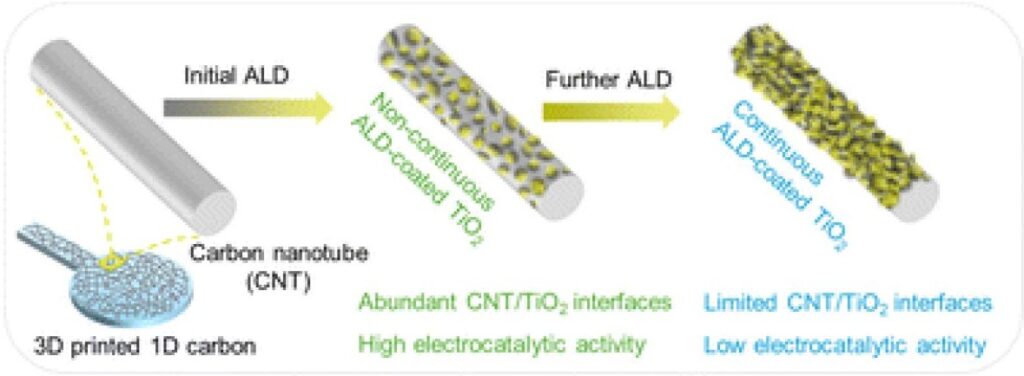
Atomic tuning of 3D printed carbon surface chemistry for electrocatalytic nitrite oxidation and reduction to ammonia

Nitrite contamination in agricultural and industrial wastewater presents a critical impact on environmental sustainability, demanding efficient strategies for monitoring and remediation. This study addresses this challenge by developing cost-effective electrocatalysts for both nitrite detection and conversion to value-added ammonia. 3D printed carbon materials are explored as bifunctional platforms for the electrochemical nitrite oxidation reaction (NO2OR) …
Atomic tuning of 3D printed carbon surface chemistry for electrocatalytic nitrite oxidation and reduction to ammonia Read More »

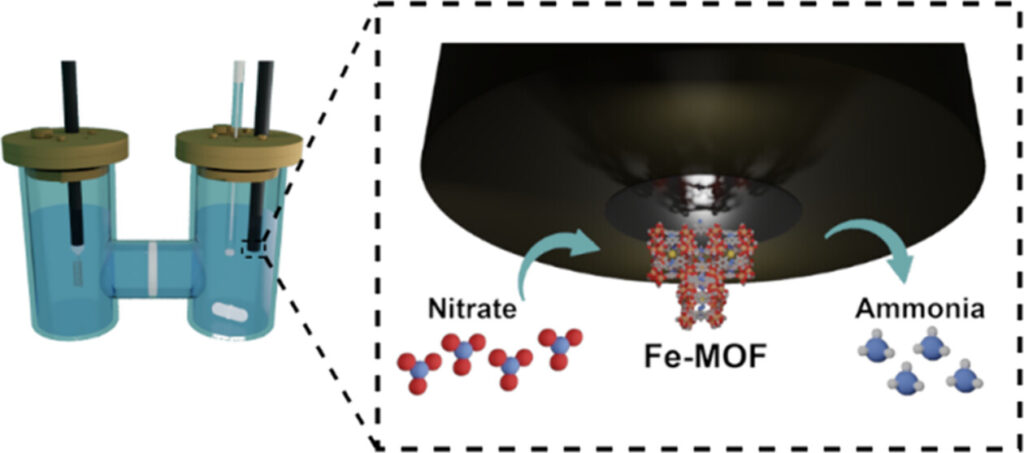
Fe-MOF Catalytic Nanoarchitectonic toward Electrochemical Ammonia Production

Electrochemical reduction of nitrate into ammonia has lately been identified as one among the promising solutions to address the challenges triggered by the growing global energy demand. Exploring newer electrocatalyst materials is vital to make this process effective and feasible. Recently, metal–organic framework (MOF)-based catalysts are being well investigated for electrocatalytic ammonia synthesis, accounting for …

Fe-MOF Catalytic Nanoarchitectonic toward Electrochemical Ammonia Production Read More »

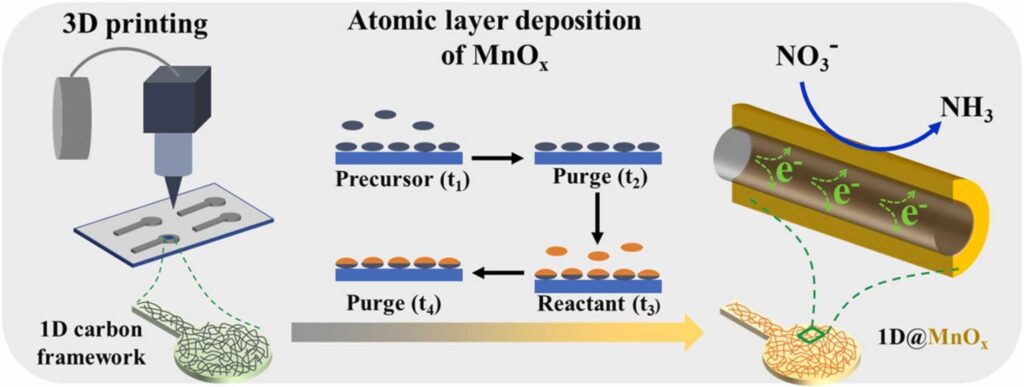
Ultrathin manganese oxides enhance the electrocatalytic properties of 3D printed carbon catalysts for electrochemical nitrate reduction to ammonia

Electrochemical nitrate reduction reaction (NO3RR) is a promising approach to remedying the environmental pollution from nitrate, and simultaneously a sustainable alternative to traditional Haber-Bosch process especially for decentralized ammonia production. Here, we firstly explore the electrocatalytic activity of two 3D printed carbon frameworks consisting of 0-dimentional (0D) carbon black and 1-dimentional (1D) carbon nanotubes towards …

Ultrathin manganese oxides enhance the electrocatalytic properties of 3D printed carbon catalysts for electrochemical nitrate reduction to ammonia Read More »

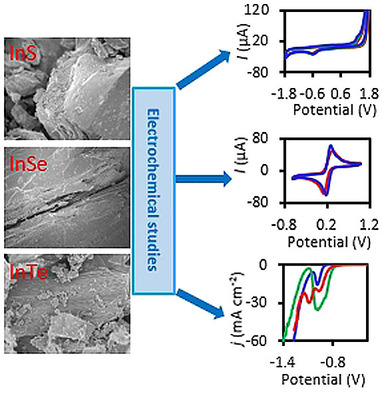
Electrochemistry of Layered Semiconducting A(III)B(VI) Chalcogenides: Indium Monochalcogenides (InS, InSe, InTe)

Layered A(III)B(VI) chalcogenides represent an interesting class semiconductors, where most of adopting 2D structures. Unlike the typical sandwiched structure of transition metal dichalcogenides (TMDs), layered A(III)B(VI) chalcogenides like InSe and GaSe are composed of X-M-M-X motif where M is gallium/indium and X is sulfur/selenium/tellurium. The exception is InS, which adopt an orthorhombic 3D structure. Herein, …

Electrochemistry of Layered Semiconducting A(III)B(VI) Chalcogenides: Indium Monochalcogenides (InS, InSe, InTe) Read More »

Unconventionally Layered CoTe2 and NiTe2 as Electrocatalysts for Hydrogen Evolution

Two members of the transition metal ditelluride family, CoTe2 and NiTe2, exist in multiple structures encompassing marcasite-, pyrite- and CdI2 related structures. The allotrope modification is influenced by weak changes in stoichiometry and synthesis. It is crucial to emphasize that the CdI2 structure type is manifested by NiTe2 while the CoTe2 adopts a related structure …

Unconventionally Layered CoTe2 and NiTe2 as Electrocatalysts for Hydrogen Evolution Read More »