Keyword Author: carbon

Single atom engineered materials for sensors

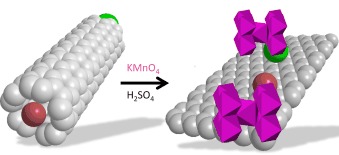
The pursuit of high-performance sensors necessitates the exploration of new materials to realize this potential. Single atom engineering (SAE) is used to plant individual atoms into the appropriate surrounding of (nano)materials in order to confer distinct materials properties. Hence, the nano architectonics principle utilized for single atom engineering allows us to build highly specific, selective, …
Single atom engineered materials for sensors Read More »

Fluorinated Nanocarbons Cytotoxicity

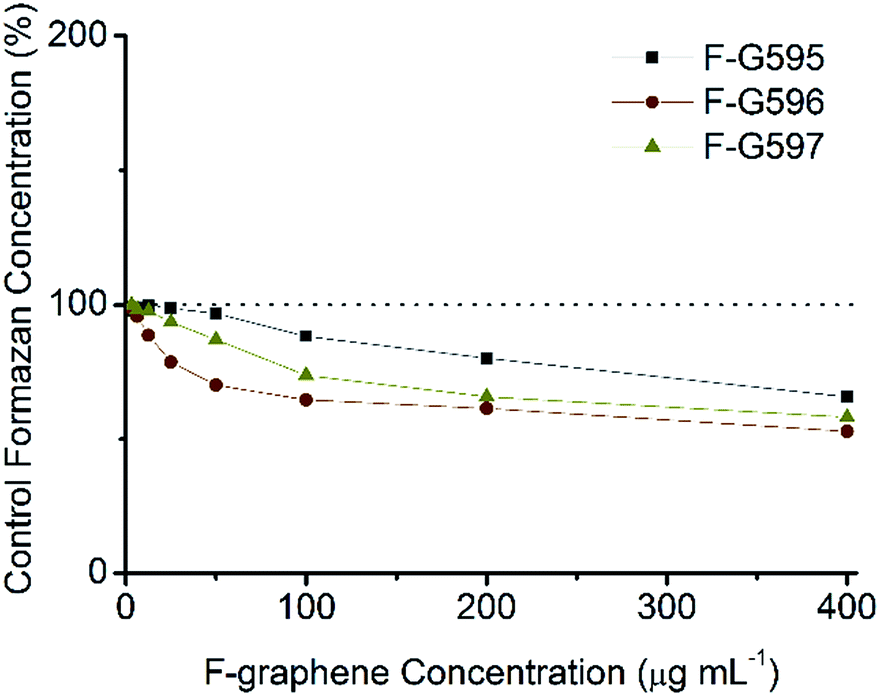
As the research in nanotechnology progresses, there will eventually be an influx in the number of commercial products containing different types of nanomaterials. This phenomenon might damage our health and environment if the nanomaterials used are found to be toxic and they are released into the waters when the products degrade. In this study, we …

Fluorinated Nanocarbons Cytotoxicity Read More »

So-Called “Metal-Free” Oxygen Reduction at Graphene Nanoribbons is in fact Metal Driven

The oxygen reduction reaction (ORR) is of key importance in the field of electrochemical energy production. Remarkable catalytic properties of metal-free graphene nanoribbons towards the ORR were suggested in previous reports. Herein, we show that the electrocatalytic properties of an undoped supposedly metal-free graphene nanoribbon towards the ORR is actually caused by metallic impurities within …

So-Called “Metal-Free” Oxygen Reduction at Graphene Nanoribbons is in fact Metal Driven Read More »

“Metal-Free” Catalytic Oxygen Reduction Reaction on Heteroatom-Doped Graphene is Caused by Trace Metal Impurities

The oxygen reduction reaction (ORR) is of high industrial importance. There is a large body of literature showing that metal-based catalytic nanoparticles (e.g. Co, Mn, Fe or hybrid Mn/Co-based nanoparticles) supported on graphene act as efficient catalysts for the ORR. A significant research effort is also directed to the so-called metal-free oxygen reduction reaction on …

“Metal-Free” Catalytic Oxygen Reduction Reaction on Heteroatom-Doped Graphene is Caused by Trace Metal Impurities Read More »

Bioavailability of Metallic Impurities in Carbon Nanotubes Is Greatly Enhanced by Ultrasonication

Metallic impurities within carbon nanotubes (CNTs) are considered as the main cause of their toxicity. Ultrasonication is a common procedure used to purify and obtain homogeneous dispersions of CNTs as well as to mix them with other components for further processing into composites. Herein, the influence of ultrasonication upon the bioavailability of metallic impurities in …

Bioavailability of Metallic Impurities in Carbon Nanotubes Is Greatly Enhanced by Ultrasonication Read More »

Platelet Graphite Nanofibers for Electrochemical Sensing and Biosensing: The Influence of Graphene Sheet Orientation

Here, we demonstrate that platelet graphite nanofibers (PGNFs) exhibit fast heterogeneous electron-transfer rates for a wide variety of compounds such as FeCl3, ferrocyanide, dopamine, uric acid, ascorbic acid, and the reduced form of beta-nicotinamide adenine dinucleotide. The electrochemical properties of PGNFs are superior to those of multiwalled carbon nanotubes (MWCNTs) or graphite microparticles (GMPs). Transmission …

Platelet Graphite Nanofibers for Electrochemical Sensing and Biosensing: The Influence of Graphene Sheet Orientation Read More »

Ultrathin Organically Modified Silica Layer Coated Carbon Nanotubes: Fabrication, Characterization and Electrical Insulating Properties

This paper describes the use of organically modified silica (ormosil) for the Ultrathin nanoprecise coating of individual multiwall carbon nanotubes using a soft-chemistry approach. Hybrid organic/inorganic ormosil nano-coated carbon nanotubes were Successfully prepared by in-situ deposition of 3-aminopropyltrimethoxysilane or N-methylaminopropyltrimethoxysilane in an aqueous suspension by means of their electrostatic interactions with carboxylic group functionalized multiwall …

Ultrathin Organically Modified Silica Layer Coated Carbon Nanotubes: Fabrication, Characterization and Electrical Insulating Properties Read More »

Metallic Impurities within Residual Catalyst Metallic Nanoparticles Are in Some Cases Responsible for “Electrocatalytic” Effect of Carbon Nanotubes

We show that in some cases, the metallic impurities within residual catalyst metallic nanoparticle impurities, which remain in carbon nanotubes from their synthesis even after purification, are responsible for “electrocatalytic” properties of carbon nanotubes. Ibis is demonstrated in an example of double-walled carbon nanotubes (DWCNTs) containing cobalt residual catalyst nanoparticle impurities, which themselves contain iron-based …

Metallic Impurities within Residual Catalyst Metallic Nanoparticles Are in Some Cases Responsible for “Electrocatalytic” Effect of Carbon Nanotubes Read More »