Laser-Induced MXene-Functionalized Graphene Nanoarchitectonics-Based Microsupercapacitor for Health Monitoring Application

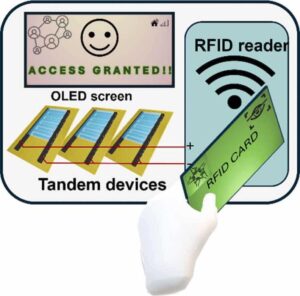
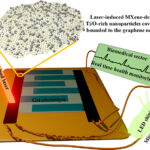
The development of energy storage systems for wireless and wearable electronics requires electrode materials that combine high energy density, mechanical flexibility, and long-term cycling stability. Here, we present a laser-engineering strategy for Ti3C2Tx MXene electrodes that induces surface oxidation and forms a hybrid structure comprising in-situ grown TiO2 nanostructures embedded on a conductive MXene matrix. This laser processing restructures the Ti3C2Tx electrode surface into a porous, heterogeneous interface that enhances ion accessibility, suppresses sheet restacking, and introduces additional Ti4+/Ti3+ redox-active sites. Electrochemical characterisation reveals enhanced areal capacitance and rate performance across aqueous, redox-active, and quasi-solid-state gel electrolytes compared to untreated Ti3C2Tx and laser-induced graphene electrodes. Laser-induced Ti3C2Tx-based supercapacitors exhibit a two-fold increase in specific areal capacitance compared to the laser-induced graphene-based cell, along with an excellent cycling stability over 20,000 charge-discharge cycles. Furthermore, integrating these cells with low-power electronic components, including wireless card readers, validates the potential of this approach for practical energy storage in next-generation portable devices.
Laser-Induced MXene-Functionalized Graphene Nanoarchitectonics-Based Microsupercapacitor for Health Monitoring Application